
Chester: Roman origins, medieval heritage and modern city life
An illustrated summary of Chester, a historic city on the River Dee in northwest England: origins, major landmarks (Walls, Rows, Cathedral, Eastgate Clock), Chester Zoo and cultural significance.
Overview
Chester is a historic city on the River Dee in northwest England, known for a compact medieval centre and unusually complete defensive walls. The settlement traces its origins to Roman times and is commonly described as nearly two thousand years old: it began life as a Roman fortress and supply base. Residents are often called Cestrians. Chester serves as the county town of Cheshire and lies close to the border with Wales, giving it a position that has been both strategically important and commercially active through centuries of English history. northwest England nearly two millennia Romans
Image gallery
10 Images


Characteristics and structure
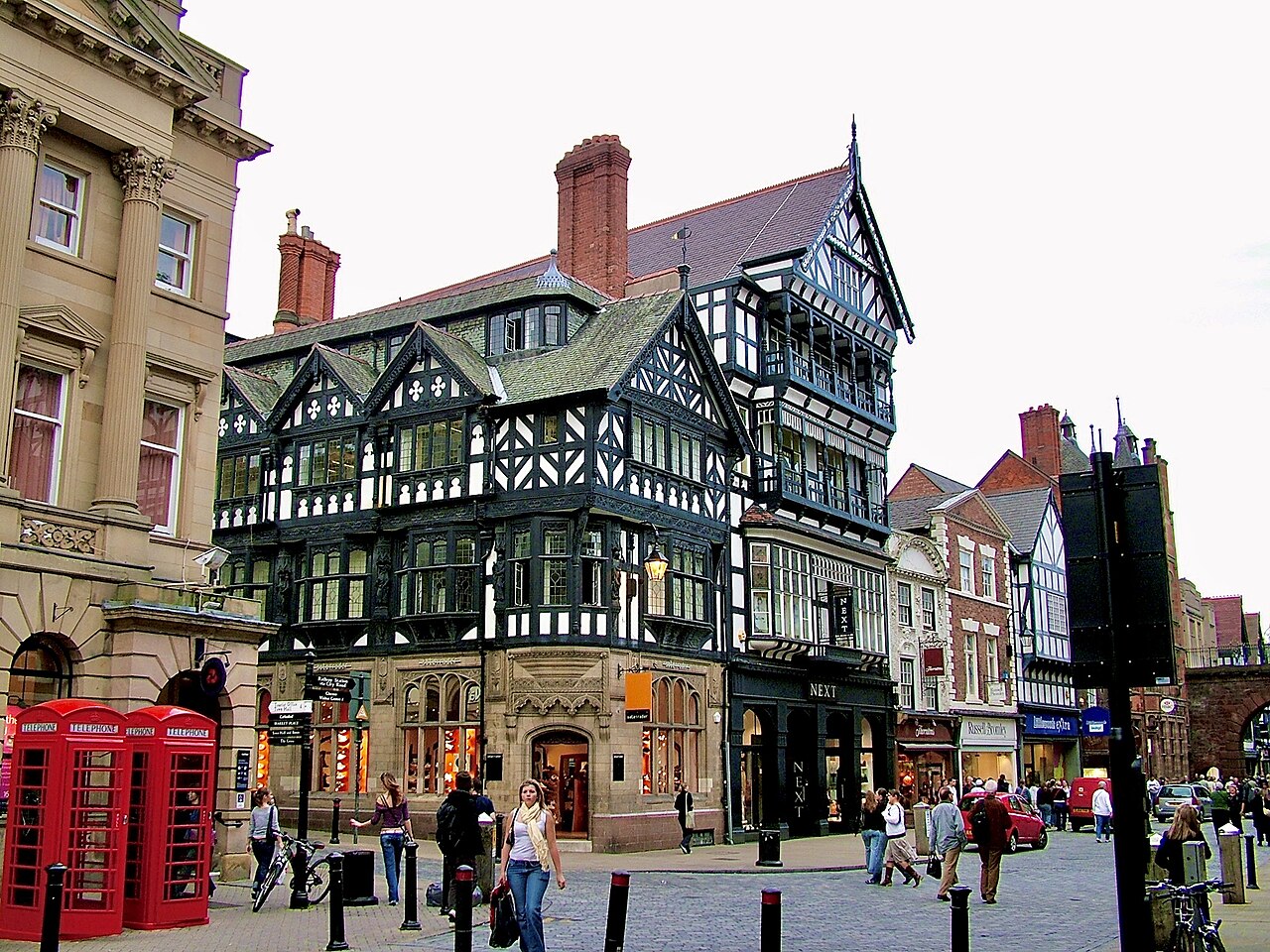
The heart of Chester is compact and walkable, dominated by its circuit of city walls, which are some of the most complete in Britain and offer promenades with views over the city. Within the walls are narrow medieval streets, timber-framed buildings and the distinctive Rows—two-level covered walkways with shops at street level and a second continuous gallery above. The castle, cathedral and a racecourse bordering the Dee contribute to the mix of civic, religious and recreational spaces. Chester’s population is often described as around one hundred and twenty thousand in the wider urban area, and the city functions as an administrative, retail and cultural centre for the surrounding county. county town Cheshire Wales
History and development
Founded as a Roman fort and legionary base, Chester grew through the medieval period into an important regional market and port. After the Norman Conquest the earldom of Chester was established and fortifications such as Chester Castle were expanded. In the later Middle Ages the Rows and other civic buildings reflected prosperity from trade and local markets. The city endured a long siege during the English Civil War, which left marks on its buildings and social fabric. Over the following centuries the Dee estuary silted, reducing the port’s maritime role even as internal trade and industry evolved. Normans English Civil War
Notable landmarks and attractions
Chester combines archaeological remains and Victorian civic architecture. The Eastgate Clock, mounted above the main entrance to the Rows, was installed in the late 19th century as a commemorative clock associated with Queen Victoria’s jubilee celebrations. The cathedral occupies a central site and blends Norman and later Gothic styles. The city also preserves a large Roman amphitheatre on its outskirts, one of the most significant Roman sites in Britain. Close by is Chester Zoo, widely regarded as one of the largest and most important zoos in the United Kingdom, drawing visitors regionally and nationally. Queen Victoria Diamond Jubilee Roman amphitheatre
Distinctive facts and cultural importance
Chester’s Rows are a rare surviving example of medieval urban architecture and remain a defining feature of the city centre. The intact city walls make the town unusual for visitors interested in military and urban archaeology. Chester Racecourse claims to be the oldest racecourse still in operation in England and sits beside the river offering a long tradition of public sporting events. Historically, the city also had episodes of popular, often rough, community games that were later regulated or banned in the early modern period. Today Chester blends tourism, local governance, cultural festivals and conservation of its layered heritage.
Quick reference
- Location: River Dee, northwest England source
- Origins: Roman fortress and legionary base Romans
- Key features: City Walls, The Rows, Chester Cathedral, Eastgate Clock, Roman amphitheatre amphitheatre
- Major attractions: Chester Zoo, historic racecourse
Related articles
Author
AlegsaOnline.com Chester: Roman origins, medieval heritage and modern city life Leandro Alegsa
URL: https://en.alegsaonline.com/art/19371
Sources
- english-heritage.org.uk : English Heritage