
Cerebral amyloid angiopathy: causes, features, diagnosis, and management
Cerebral amyloid angiopathy (CAA) is deposition of amyloid in cerebral vessel walls, often causing lobar hemorrhage, microbleeds, and cognitive decline, commonly seen in older adults and associated with Alzheimer pathology.
Overview
Cerebral amyloid angiopathy (CAA), sometimes called congophilic angiopathy, is a vascular condition in which amyloid protein deposits build up within the walls of small and medium-sized arteries, arterioles and capillaries of the cerebral cortex and leptomeninges. The deposited material is most often composed of amyloid-β (Aβ) peptides derived from amyloid precursor protein. CAA becomes more common with age and frequently coexists with Alzheimer disease, but it is a distinct pathological process that primarily affects the brain vasculature.
Image gallery
3 Images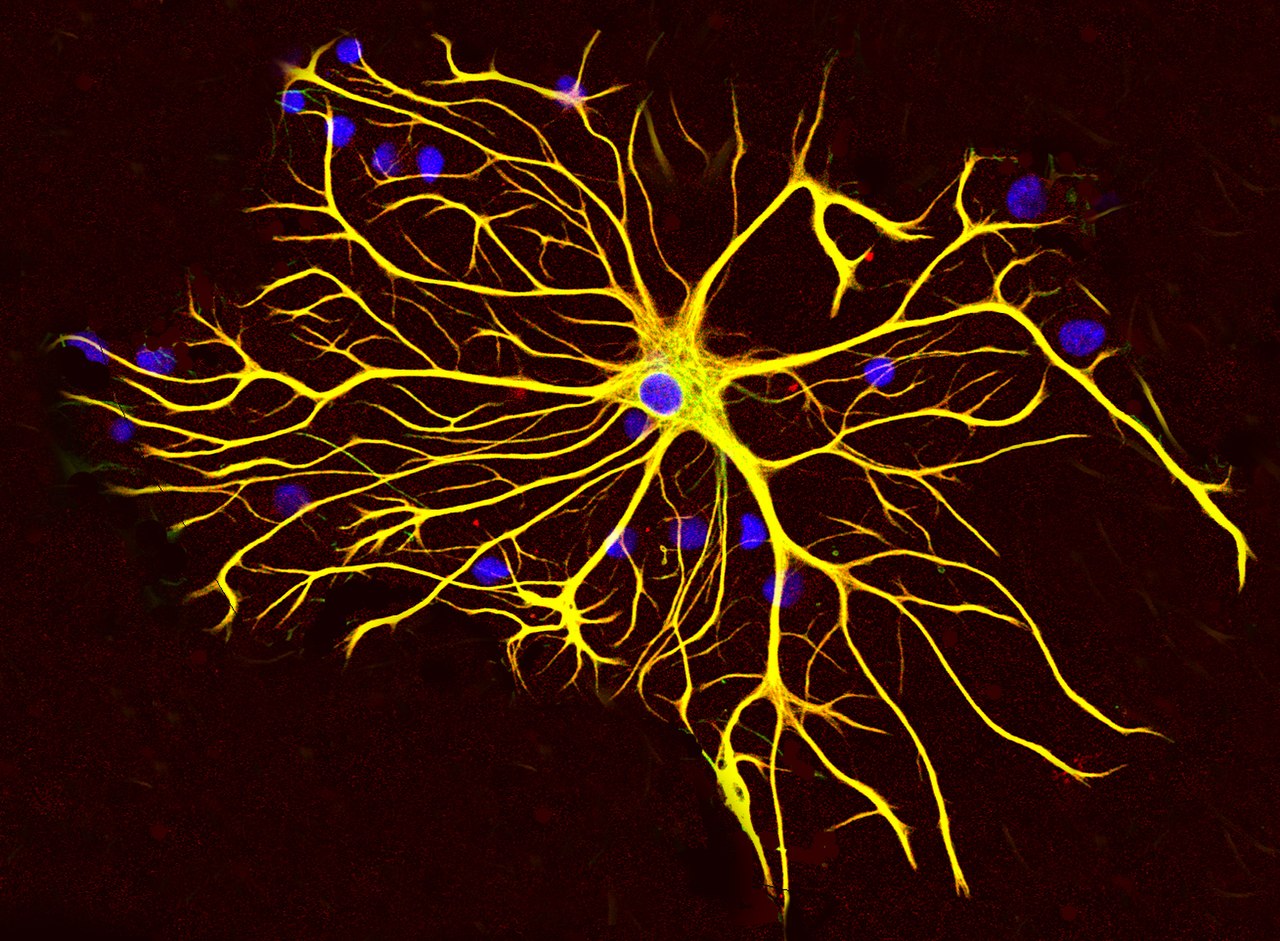


Pathology and distinguishing features
Under light microscopy the vascular amyloid binds Congo red dye and shows characteristic birefringence under polarized light, which is why the term "congophilic" is used. See a description of staining techniques at Congo red staining and general amyloidosis resources at amyloidosis overview. A typical vessel will show progressive replacement of the normal wall structure by eosinophilic, acellular material, sometimes accompanied by vessel wall weakening, microaneurysm formation, and fibrinoid necrosis.
Clinical presentation and imaging
CAA commonly presents in older adults with lobar intracerebral hemorrhages (bleeds located in the cerebral lobes rather than deep brain structures), multiple lobar microbleeds seen on susceptibility-weighted MRI or gradient-echo sequences, and cortical superficial siderosis. Patients may experience sudden focal neurological deficits from hemorrhage, recurrent transient focal neurological episodes (sometimes called "amyloid spells"), seizures, or a slowly progressive cognitive decline. CT and MRI are central to noninvasive diagnosis; definitive confirmation requires tissue sampling or specific radiopathological correlation.
Diagnosis: criteria and key findings
- Probable CAA: compatible clinical picture plus lobar hemorrhage or multiple lobar microbleeds on MRI in an older individual, and absence of an alternate cause.
- Definite CAA: histopathological demonstration of vascular amyloid.
- Important imaging signs: lobar hemorrhages, cortical superficial siderosis, and convexity subarachnoid blood are strongly suggestive.
Management and prognosis
There is no proven therapy to remove vascular amyloid. Management focuses on secondary prevention of hemorrhage and symptomatic care: strict blood pressure control, avoidance of anticoagulants when possible because of elevated bleeding risk, and careful consideration before thrombolysis. Some investigational approaches target amyloid production or clearance, but they carry risks such as amyloid-related imaging abnormalities. Prognosis varies: recurrent hemorrhage and progressive cognitive impairment are common outcomes in symptomatic individuals.
History, variants and notable facts
The name "congophilic angiopathy" comes from the Congo red dye reaction used in early neuropathology. CAA occurs in both sporadic and hereditary forms; familial variants exist that accelerate amyloid deposition. Unlike systemic amyloidosis, CAA is largely restricted to cerebral vessels and involves Aβ in most sporadic cases. For background on laboratory methods and staining, see Congo red methods and related histopathology information at amyloidosis overview.
Recognizing CAA is clinically important because it alters risk–benefit decisions for antithrombotic therapy and has implications for prognosis in elderly patients with intracerebral hemorrhage or unexplained transient neurological symptoms.
Related articles
Author
AlegsaOnline.com Cerebral amyloid angiopathy: causes, features, diagnosis, and management Leandro Alegsa
URL: https://en.alegsaonline.com/art/18169
Sources
- jnnp.bmj.com : "Severe cerebral congophilic angiopathy coincident with increased brain aluminium in a resident of Camelford, Cornwall, UK"
- doi.org : 10.1136/jnnp.2005.086553
- ncbi.nlm.nih.gov : 2117501
- pubmed.ncbi.nlm.nih.gov : 16627535
- nlm.nih.gov : "Cerebral amyloid angiopathy: MedlinePlus Medical Encyclopedia"
- books.google.com : Companion to Clinical Neurology