
Alhambra — The Red Fortress of Granada
A medieval palace and fortress complex in Granada, Spain, built by the Nasrid rulers in the 13th–14th centuries, famed for its Islamic art, gardens, water features and historical importance.
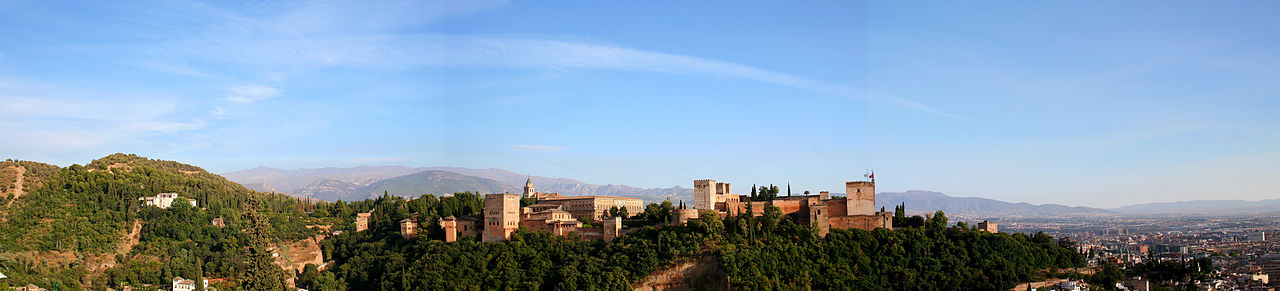
The Alhambra is a large palace and fortress complex that crowns a hill above the city of Granada in southern Spain. Its full Arabic name, al-Qal'at al-Ḥamrā' ("the red fortress"), reflects the reddish hue of its towers and walls. Constructed and elaborated by the last Muslim rulers of Iberia, it exemplifies the refined architecture and decorative arts of the Moorish courts and is inseparable from the history of Granada and medieval Spain. The site also belongs to the wider cultural context of Al-Andalus, the Muslim-ruled territories on the Iberian Peninsula.
Image gallery
10 Images




Layout and principal parts
The complex comprises several interrelated zones rather than a single building. The Alcazaba is the military citadel and oldest sector; the Nasrid Palaces contain the most celebrated ceremonial rooms and courtyards; the Generalife served as a leisure estate and garden for the rulers; and the later Renaissance Palace of Charles V reflects post-conquest additions. Water channels, pools and terraced gardens are essential elements that organize sightlines, cooling and symbolism throughout the site.
Architecture and decoration
Alhambra architecture is noted for its intricate stucco work, carved wooden ceilings, tile mosaics, slender columns and honeycomb vaulting (muqarnas). Calligraphic inscriptions, geometric patterns and vegetal arabesques cover many interior surfaces, creating a visual unity where light, shadow and running water play an active role. Courtyards such as the Court of the Myrtles and the Court of the Lions exemplify the marriage of architecture and landscape design.
Historical development
Origins of the site date back before the Nasrids, but the palace complex reached its zenith under the Nasrid dynasty in the 13th and 14th centuries. After the 1492 conquest of Granada by the Catholic Monarchs the Alhambra was repurposed, altered and partially rebuilt; later centuries saw both neglect and periods of restoration. The complex became a symbol of Spain's multicultural past and attracted intense scholarly interest and tourism from the 19th century onward. It is recognized today as a protected cultural property and a UNESCO World Heritage site.
Uses, significance and conservation
As a former royal residence and fortress, the Alhambra served political, residential and ceremonial functions. In modern times it is one of Spain's most visited monuments, a subject of art-historical study and a focus for conservation work. Preservation challenges include visitor pressure, environmental wear and the complexity of maintaining historic materials while allowing public access. The site also plays a role in cultural memory, education and international tourism.
Notable facts
- Its common name, "the Red Fortress," refers to the color of the fortress walls seen at sunset.
- Major components include the Alcazaba, the Nasrid Palaces, the Generalife and the Palace of Charles V.
- The Alhambra illustrates the high craftsmanship of Islamic decorative arts in Iberia and the interplay of architecture, water and garden design.
- Continued research and restoration aim to reconcile historic authenticity with modern conservation needs.
- Visitors can learn more about the site and its context in Andalusian history through local museums and guided tours in Granada.
For further reading and resources about artistic details, restoration projects and visiting information see specialist publications and cultural heritage sites that document the Alhambra's art, construction phases and ongoing preservation efforts. Many books and exhibitions have traced how this complex became a global emblem of medieval Iberian culture.
Questions and answers
Q: What is the Alhambra?
A: The Alhambra is a palace and fortress complex of the Moorish rulers of Granada in southern Spain.
Q: When was the fortress constructed?
A: The fortress was constructed during the mid 14th century.
Q: Where is the Alhambra located?
A: The Alhambra is located on a hilly terrace on the southeastern border of the city of Granada.
Q: What does "Alhambra" mean in Arabic?
A: In Arabic, "Alhambra" translates to "the red fort", or الْحَمْرَاء = Al-Ħamrā'.
Q: What is the full name of the Alhambra in Arabic?
A: The full name of the Alhambra in Arabic is الْقَلْعَةُ ٱلْحَمْرَاءُ = al-Qal'at al-Ħamrā', which translates to "the red fortress".
Q: Who built the Alhambra?
A: The Alhambra was built by Moorish rulers of Granada.
Q: What period did it belong to?
A: The Alhambra belonged to a period known as Al-Andalus.
Related articles
Author
AlegsaOnline.com Alhambra — The Red Fortress of Granada Leandro Alegsa
URL: https://en.alegsaonline.com/art/2557