
Alexander Palace (Tsarskoye Selo, Russia)
Late‑18th/early‑19th century imperial residence in Tsarskoye Selo, famed as the last home of Nicholas II and his family; later damaged in war and restored as a museum complex.
The Alexander Palace (Russian Александровский дворец) is an imperial residence located close to the former court town of Tsarskoye Selo, near St. Petersburg. Less ostentatious than some nearby royal residences, the palace is valued for its restrained exterior, intimate domestic scale and its long association with the Romanov family. It stands within the grounds of the surrounding Alexander Park and forms part of the larger ensemble of imperial estates in the area.
Image gallery
10 Images


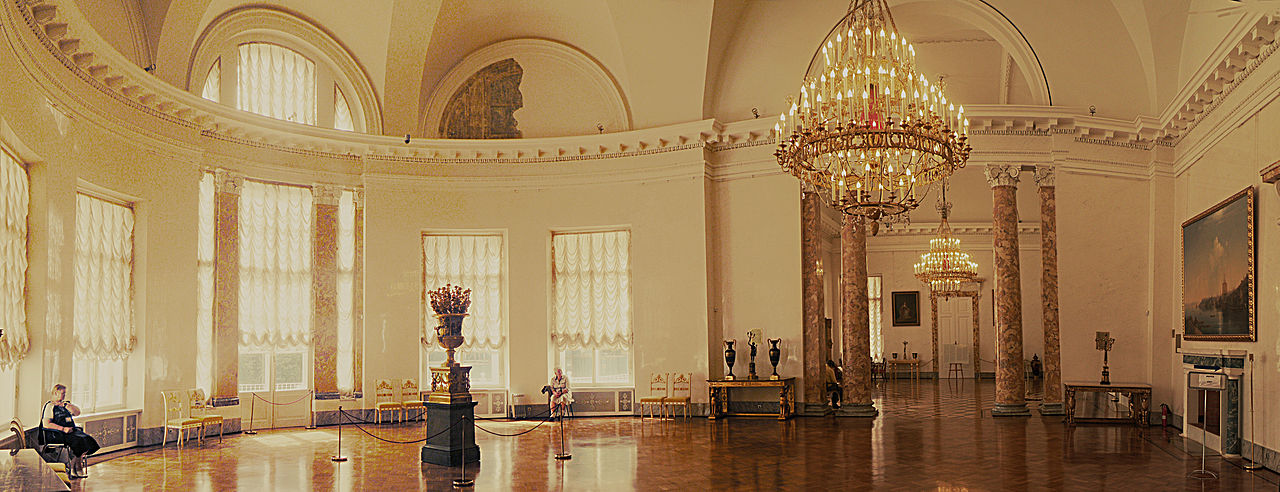


Architecture and layout
The building is noted for a low, elongated façade and a neoclassical vocabulary that emphasizes proportion and simplicity rather than grand ornament. Interiors were arranged to provide comfortable private apartments, reception rooms and smaller service areas intended for everyday court life rather than spectacular state ceremonies. The palace faces the park and was designed to blur the boundaries between house and landscape, offering views onto promenades and gardens.
History and significance
Throughout its existence the palace served as a favored private residence for members of the imperial family. It is most widely remembered as the place where Nicholas II and his immediate family lived during the final months of imperial rule, before their transfer and eventual exile after the revolution. That association has made the palace a poignant symbol of the end of the Romanov era.
Following 1917 the palace’s functions changed: it passed through different administrative uses, suffered damage and neglect during the Second World War, and later became a focus for conservation and museum restoration. Today it is presented to the public both as a preserved historic interior and as part of broader interpretation of Russia’s imperial past.
- Setting: in Alexander Park, near other imperial sites.
- Character: domestic scale, simple neoclassical design.
- Legacy: associated with the final Romanov residence and 20th‑century upheavals.
The Alexander Palace remains an important cultural and historic landmark. Visitors encounter an intimate royal household rather than the ceremonial grandeur seen elsewhere, which helps explain both its enduring public interest and its frequent inclusion in studies of late imperial Russian life. Further information and collections are available through museum resources and specialist publications about the palace and the surrounding estate complex; administrative and visitor pages provide practical details for those planning a visit to Tsarskoye Selo and the greater St. Petersburg region.

Related articles
Author
AlegsaOnline.com Alexander Palace (Tsarskoye Selo, Russia) Leandro Alegsa
URL: https://en.alegsaonline.com/art/2380