
Castor and Pollux — the Dioscuri: twins in myth, cult, and the stars
Castor and Pollux, the Dioscuri of Greek and Roman tradition, are twin brothers famed as horsemen, sailors' protectors, Argonauts and a constellation (Gemini). Their dual nature blends mortality and divinity.
Overview
Castor and Pollux, collectively known as the Dioscuri, are a pair of twin brothers prominent in ancient Greek and Roman tradition. They appear in poetry, drama, vase painting and cult practice as inseparable figures whose stories link family, war, athletic skill and the sea. Scholarly and popular accounts stress a basic contrast that shapes most myths: one brother is human by birth and the other possesses divine parentage. Their popular image combines brotherhood, shared fate and a capacity to mediate between worlds.
Image gallery
10 Images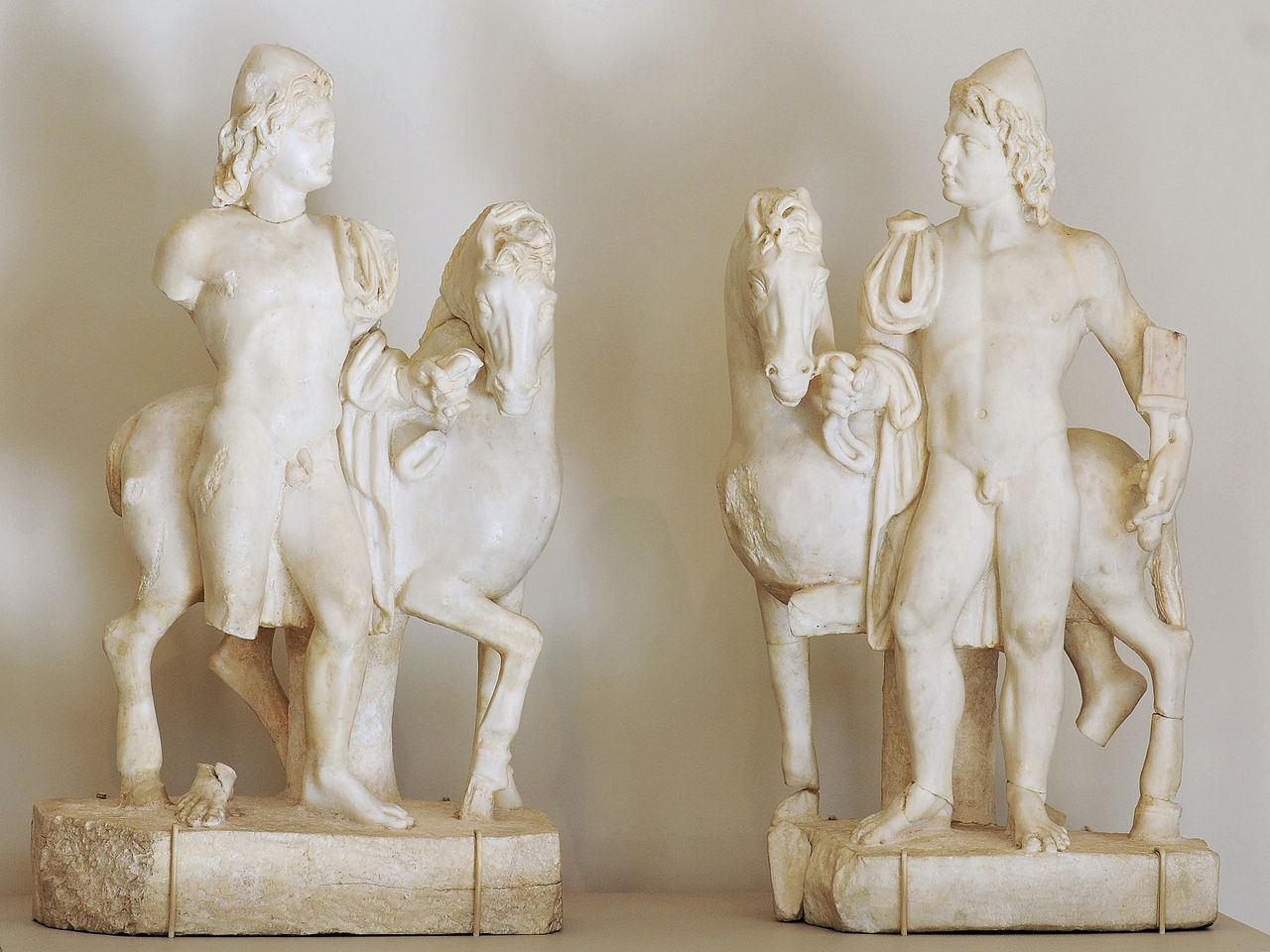


Parentage and early life
The twins are traditionally described as the children of Leda of Sparta. Different versions attribute their paternity variously to the mortal king Tyndareus and to Zeus, who in some accounts seduced Leda in the form of a swan. In these tellings one son (often Castor) is mortal while the other (often Pollux) is immortal or semi-divine. Their sisters are the famous Helen and Clytemnestra. Variants of the tale appear across a wide range of sources, and both Greek and Roman writers preserved multiple genealogical traditions and local Spartan versions of the story. Readers can consult summaries of the broader tradition in Greek myth collections and comparative accounts in Roman sources.
Major myths and adventures
Castor and Pollux feature in several well-known narrative cycles. They sail as part of the Argonauts and participate in contests of strength and skill. One famous episode casts Pollux as a champion boxer who defeats a regional king, while other tales describe the brothers rescuing shipwrecked sailors, recovering cattle, and avenging wrongs against their family. The best-known narrative climax concerns Castor's death in battle, Pollux's grief and his appeal to Zeus to share immortality so his brother might live. The subsequent transformation of the brothers into the celestial twins links mythic sacrifice to a visible astronomical sign.
Cult, functions and iconography
The Dioscuri were worshipped across Greece and throughout the Roman world for practical and protective reasons. Mariners invoked them as patrons of ships and sailors; equestrians celebrated them as exemplary horsemen. In art they are often paired with horses, armor, or boxing gloves, and later Roman dedications cast them as saviors who appear over battlefields or as helpers who guide ships safely to harbor. Temples, altars and local festivals honored them in ports and inland towns alike. For discussions of their civic cults and inscriptions see Spartan records and Roman epigraphic studies.
- Protector of sailors: invoked in storms and shipwrecks (maritime cults).
- Patrons of horsemen: connected with cavalry and horsemanship (equestrian imagery).
- Athletic champions: associated with boxing and contests (athletic representations).
Constellation, legacy and cultural influence
The brothers became associated with the constellation Gemini, a pairing still recognized in modern astronomy and astrology. Classical storytellers explain this transformation as a divine resolution to Pollux's wish to share immortality with his fallen brother; as stars they symbolize brotherly bond and alternating presence between Olympus and the underworld. Their figure persisted through antiquity into medieval and modern European art, literature and nautical lore, where they remain emblematic of fraternal solidarity and guardianship. For astronomical and cultural overviews see summaries in star lore and classical reception.
Distinctions, themes and notable facts
Important distinctions in their portrayal include the mortal/divine split, their dual roles as both warriors and rescuers, and their ubiquity in local cults beyond Spartan origins. Themes tied to the Dioscuri—sacrifice, intercession, and the safeguarding of travelers—help explain why the pair remained important figures for ancient communities. Modern references to twin guardians, nautical emblems and the zodiacal sign Gemini trace their lineage to these layered classical myths. For further reading and comparative studies consult myth compendia, literary analyses, and archaeological reports available through museum collections and scholarly portals.
Related articles
Author
AlegsaOnline.com Castor and Pollux — the Dioscuri: twins in myth, cult, and the stars Leandro Alegsa
URL: https://en.alegsaonline.com/art/17532