
Carotid artery
Paired major arteries in the neck that supply oxygenated blood to the head and brain; important in physiology, clinical diagnosis, and vascular surgery.
The carotid arteries are a pair of major blood vessels in the neck that deliver oxygenated blood from the central circulation to the head and brain. Each side begins as a major artery — the common carotid — and rises along the neck to split into the internal and external carotid branches. These vessels are central to cerebral blood flow and are commonly assessed during physical examination because their pulse, sounds and pathology carry important diagnostic information for the human body.
Image gallery
10 Images




Anatomy and components
The main divisions are the common carotid artery, which travels upward and typically bifurcates at the level of the upper neck into two principal branches:
- Internal carotid artery: continues into the skull to supply the brain and eyes.
- External carotid artery: supplies the face, scalp and neck structures.
Associated structures include the carotid sinus, a baroreceptor region that helps regulate blood pressure, and the carotid body, a small chemoreceptor sensitive to blood oxygen and carbon dioxide levels.
Function and physiology
Carotid arteries provide most of the arterial inflow to the anterior circulation of the brain. Their integrity supports consciousness, vision and many higher functions. The carotid sinus participates in short-term blood pressure control via reflexes; stimulation or pressure over this area can slow the heart rate or change vascular tone.
Clinical significance
Diseases of the carotid arteries are major contributors to stroke and transient ischemic attacks. Common clinical issues and interventions include:
- Carotid atherosclerotic stenosis and bruits heard on auscultation.
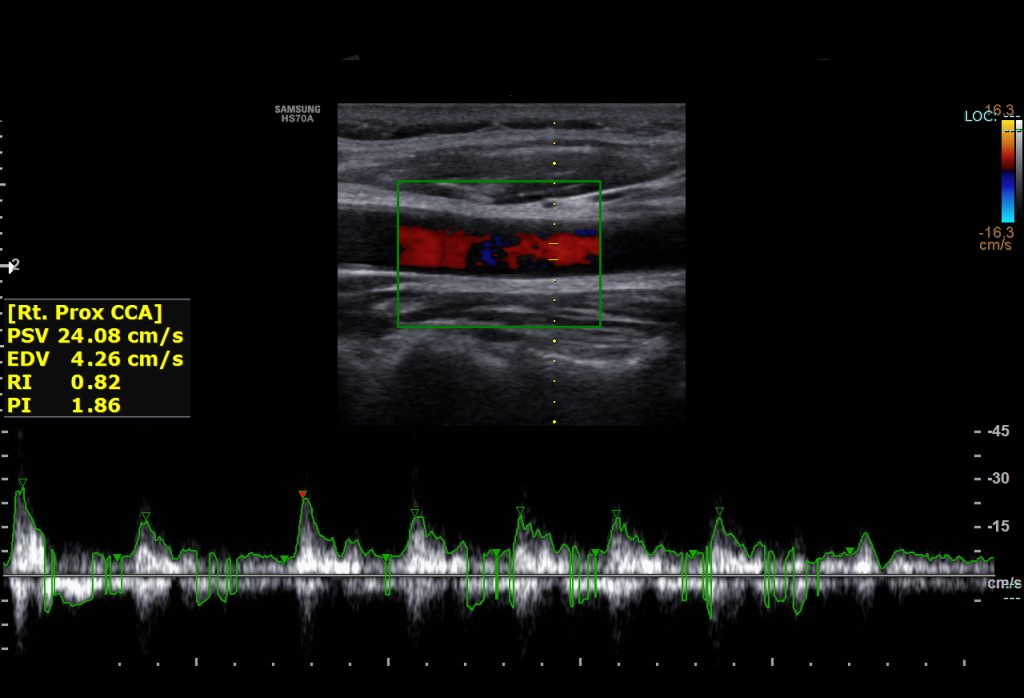
- Noninvasive assessment with ultrasound (Doppler) and angiography.
- Revascularization procedures such as carotid endarterectomy or carotid stenting for selected patients.
History and notable facts
Historically the carotids were identified early in anatomical study because of their palpable pulse and surgical importance. On the right, the common carotid usually arises from the brachiocephalic trunk; on the left it commonly comes directly from the aortic arch, a useful distinction in anatomy and surgery. Anatomical variations in the level of bifurcation and branching pattern are common and relevant to clinicians.
Because of their accessibility and critical role in cerebral circulation, carotid arteries remain central to physical diagnosis, emergency assessment and vascular medicine. For general overviews, imaging techniques and treatment guidelines see resources such as blood flow summaries and clinical references on the heart and circulation at heart resources.
Related articles
Author
AlegsaOnline.com Carotid artery Leandro Alegsa
URL: https://en.alegsaonline.com/art/17215