
Canis Major: Southern Constellation Containing Sirius and VY Canis Majoris
Canis Major, a southern constellation anchored by Sirius—the night sky's brightest star—and home to red hypergiant VY Canis Majoris. Explore its notable stars, history, deep-sky objects, and observing tips.
Canis Major is a prominent constellation visible in the southern celestial hemisphere. Its name is Latin for the "greater dog," distinguishing it from the smaller companion, Canis Minor. The label comes from classical language and lore; the word Latin supplies the formal name used in astronomy.
Image gallery
9 Images




History and official status
Ancient observers included this figure among the well-known star patterns. The Greco-Roman astronomer Ptolemy listed Canis Major in his catalogue of 48 constellations. In modern times it remains one of the 88 constellations formally recognized by the International Astronomical Union, and it is commonly depicted in star charts as a large dog accompanying Orion.
Notable stars and deep-sky objects
The brightest star in Canis Major — and in the entire night sky — is Sirius, often called the "Dog Star." Sirius has an apparent visual magnitude of about −1.46, making it easily seen from both hemispheres when above the horizon. It lies at a distance of roughly 8.6 light years from Earth and is a binary system with a faint white dwarf companion.
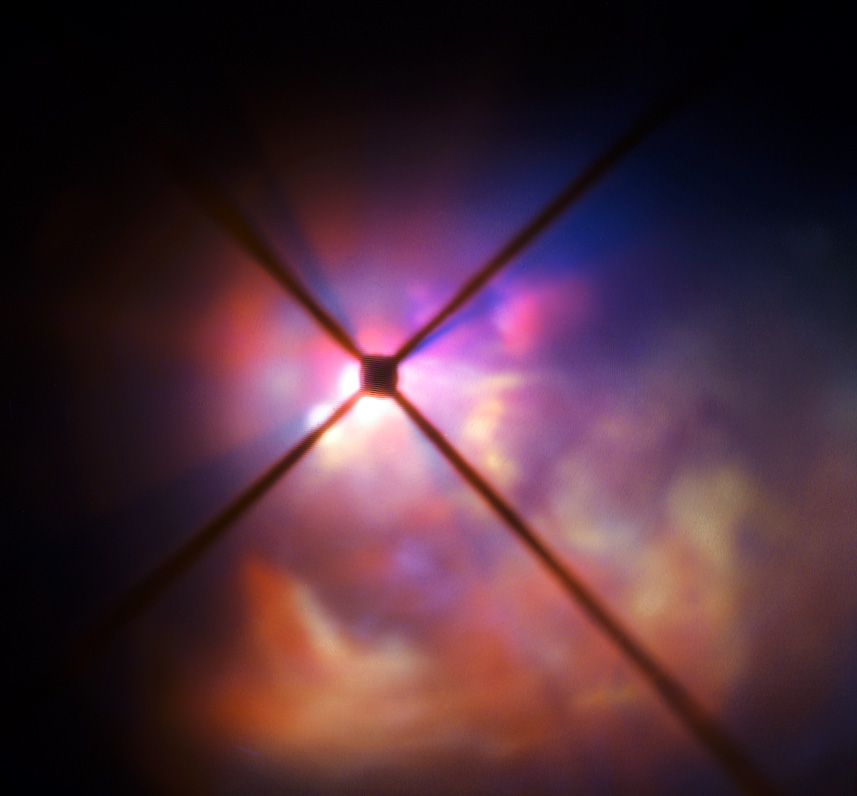
The constellation also contains the red hypergiant VY Canis Majoris, which is among the largest known stars by radius. Measurements of its size and distance have varied between studies, so estimates for its physical dimensions carry substantial uncertainty.
Observing Canis Major
- Best visible in the months around January from mid-northern to southern latitudes.
- Look for Sirius as the easiest entry point; other features include several bright stars and open clusters near the constellation's main pattern.
Tags
Related articles
Author
AlegsaOnline.com Canis Major: Southern Constellation Containing Sirius and VY Canis Majoris Leandro Alegsa
URL: https://en.alegsaonline.com/art/16561
Sources
- ianridpath.com : "Chapter One Continued"
- stars.astro.illinois.edu : "Sirius (Alpha Canis Majoris)"