
Argo Navis — the ancient ship constellation (former)
Argo Navis was a large southern constellation representing Jason’s ship. No longer recognized, it was divided into Carina, Vela and Puppis; its legacy survives in star names, mythology and modern charts.
Overview
Argo Navis was the classical representation of the ship Argo from Greek myth, the vessel that carried Jason and the Argonauts. Historically drawn across a broad swath of the southern sky, the figure represented a full ship with hull, sails and stern. Though once treated as a single large constellation on celestial maps, it is no longer used in modern astronomical catalogues.
Image gallery
3 Images
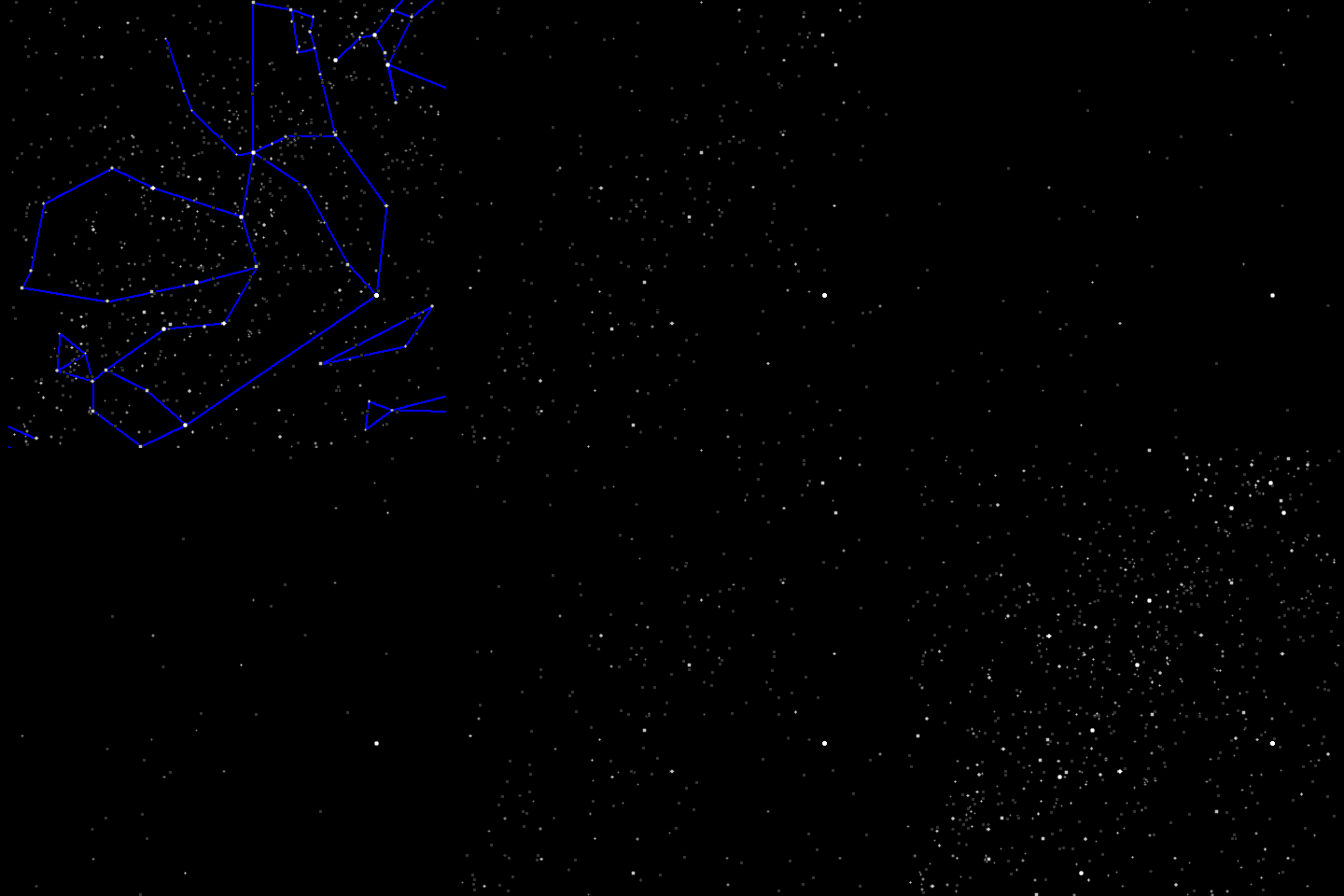

Structure and principal parts
The area once called Argo Navis is now split into three distinct constellations that retain nautical names and imagery. These three are listed and named after parts of a ship:
- Carina — the keel, containing several bright stars including the notable Canopus and regions such as the Carina Nebula.
- Vela — the sails, representing the canvas and spars of the ship.
- Puppis — the stern or poop deck, completing the ship's outline on the charts.
These divisions preserve the original nautical theme: the keel (Carina), the sails (Vela) and the stern (Puppis). The separate names emphasize different parts of the single mythic vessel.
Historical background
The constellation originates in classical antiquity where the Argo was associated with the voyage of Jason and the Argonauts in pursuit of the Golden Fleece. On star maps from the Renaissance and earlier, Argo Navis appeared as one of the largest sky figures. In the 18th century astronomers chose to subdivide the extensive area for practical charting; later international standardization of constellation boundaries formalized the three modern names and retired Argo Navis as a single recognized constellation.
Visibility and modern relevance
The three constellations that once formed Argo Navis lie primarily in the southern celestial hemisphere and are therefore most easily seen from the southern hemisphere and low northern latitudes. Mariners, star charts and cultural references continue to evoke the ship motif, and astronomers still refer to historical maps and names when discussing certain stars whose designations reflect the former unified constellation. The phrase "Argo" survives in literature and teaching as a convenient reference to this cluster of related constellations.
Notable facts and distinctions
Because Argo Navis was split rather than newly created from separate figures, some naming conventions in star catalogs show unusual patterns: brightest-star designations that once belonged to the larger ship are distributed among its three parts. The parts also host several objects of interest to observers, including bright stars and emission nebulas in Carina. For historical star maps and cultural context see broader references to the southern sky and the mythic voyage of the Argonauts.
For further reading on iconography and star-chart history, consult dedicated resources and atlas entries that track how the Argo was drawn, named and eventually partitioned into Puppis, Vela and Carina; introductory material on southern constellations is available at several general astronomy overviews (stern), catalog summaries and navigational guides (sails, legend, heroes).
Tags
Related articles
Author
AlegsaOnline.com Argo Navis — the ancient ship constellation (former) Leandro Alegsa
URL: https://en.alegsaonline.com/art/5490