
Cable ferry: guided river crossing using fixed cables or chains
A cable ferry is a vessel guided or propelled across water by one or more cables or chains anchored to the banks. Used where short, frequent crossings are needed, with several operational styles and simple infrastructure.
Overview
A cable ferry (also called a chain ferry, swing ferry, floating bridge, or punt) is a type of ferry that is constrained and often driven across a river or other narrow waterway by one or more fixed lines anchored to both shores. Rather than navigating freely under its own steering, the craft rides on or pulls itself along cables, chains or ropes secured to each bank. This arrangement makes crossings predictable and reduces the need for crewed steering under strong currents or limited visibility.
Image gallery
10 Images
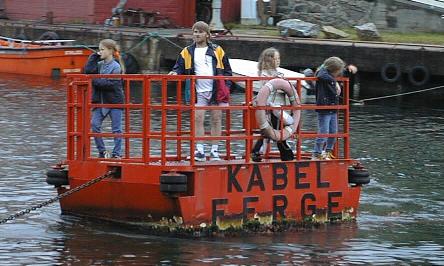


Design and operation
Cable ferries vary from simple punts pulled by hand to mechanized vessels with onboard winches. Two broad types are common: reaction ferries that use the force of a current against a hull set at an angle to the flow, and powered cable ferries that actively winch along a taut line. Early installations used natural fiber rope or heavy steel links; the term "chain ferry" reflects that history. From the 19th century, stronger and more flexible wire cable became the standard.
Typical components
- Hull or platform capable of carrying passengers and vehicles
- Cables, chains, or ropes anchored on each bank
- Winch, drum, or capstan (onboard or shore-based)
- Fairleads, pulleys, and guide towers to control cable path
Advantages include low energy use for short crossings, simple navigation control, and relatively low capital cost compared with a bridge. Limitations include fixed routes, vulnerability to debris or ice, and restricted capacity compared with free-steaming ferries or bridges.
History, uses and distinctions
Cable ferries have been used for centuries in rural and urban settings where a permanent bridge is impractical or expensive. They remain common for short river links, harbor crossings, and seasonal services. Important distinctions include the difference between a chain ferry (which carries a heavy chain on the riverbed) and a modern cable ferry that may use above-deck wire ropes or submerged taut cables. Operators balance maintenance of anchors and cables with safety procedures to manage hazards and ensure reliable service.
For further reading on similar transport types and engineering considerations, see resources on ferries and waterborne infrastructure via the related pages above.
Related articles
Author
AlegsaOnline.com Cable ferry: guided river crossing using fixed cables or chains Leandro Alegsa
URL: https://en.alegsaonline.com/art/15855