
But I'm a Cheerleader — 1999 coming-of-age comedy-drama film
1999 satirical coming-of-age comedy-drama about a teenage cheerleader sent to a conversion-therapy camp who discovers her lesbian identity; directed by Jamie Babbit, known for its stylized visuals.
Overview
But I'm a Cheerleader is a 1999 American coming-of-age comedy-drama that uses satire and bright, highly stylized visuals to tell a story about sexual identity and social conformity. The film was directed by Jamie Babbit and stars Natasha Lyonne as a high-school student who is sent to a conversion-therapy camp when her family and peers suspect she is not heterosexual. The movie mixes broad comedic elements with more serious questions about identity, belonging, and the social pressure to conform. It is often discussed in the context of LGBT cinema and films about adolescence.
Image gallery
2 Images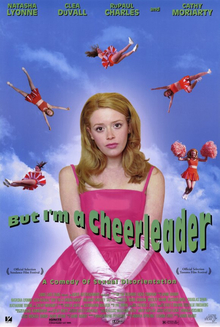

Plot and characters
The central character begins the story believing she is straight and occupying the cultural role of a typical teenage cheerleader. As the narrative progresses she encounters other young people at the camp, discovers romantic feelings for a fellow attendee, and reevaluates her sense of self. Performances by the cast emphasize both the absurdity of the camp's rules and the real emotional work of coming to terms with desire and identity. The film balances comic set pieces with quieter character moments, and it deliberately plays with genre expectations.
Production, style and themes
But I'm a Cheerleader is notable for its pop-art color palette, deliberate costuming, and exaggerated production design, all of which underline the satirical tone. The director has described the film as a satire of conservative responses to non-heteronormative lives, while also trying to give humane portraits of its characters. Themes include gender roles, the social construction of sexuality, and resistance to coercive institutions. Critics and scholars have examined the film for how it represents queer adolescence and for its use of humor as critique. See discussions of casting and direction in broader commentary about the film's approach to representation and satire.
Release, rating and reception
At the time of its initial submission to the Motion Picture Association, the film received an NC-17 rating that the filmmakers later appealed and edited to obtain an R rating for wider commercial release. This sequence of events generated debate about how rating systems treat films with same-sex content; the director publicly criticized the ratings process in later years as biased against films with gay and lesbian themes. Critical response on release ranged from praise for performances and visual design to criticism of uneven tone, producing a mixed reception that has been reassessed over time.
Legacy and significance
Though it did not achieve blockbuster status, the film has acquired a devoted audience and is frequently cited in conversations about queer representation in late-20th-century independent cinema. It is often screened at festivals, discussed in academic writing on LGBTQ film, and remembered for its distinctive look and direct engagement with conversion therapies. The movie is also referenced in broader debates about media ratings and censorship.
Further reading and resources
- Film overview and credits
- Director's interviews and statements
- Cast profiles and performances
- Analysis of themes and style
- Discussion of MPAA rating history
- Queer cinema context
- Critical reception at release
- Later critical reassessments
- Cultural legacy and screenings
For a concise introduction to the film's subject matter and its place in late-1990s independent cinema, readers can follow the links above or consult film festival programs and academic surveys that cover queer representation in contemporary film history.
Related articles
Author
AlegsaOnline.com But I'm a Cheerleader — 1999 coming-of-age comedy-drama film Leandro Alegsa
URL: https://en.alegsaonline.com/art/15636