
Burning of Parliament (Palace of Westminster fire, 1834)
Major fire on 16 October 1834 that destroyed much of the medieval Palace of Westminster in London after discarded tally sticks ignited hidden flues; prompted loss of chambers, archives and a Victorian rebuilding.
Overview
The Burning of Parliament was a devastating fire in London that began on 16 October 1834 and consumed large parts of the medieval Palace of Westminster, the historic home of the British Parliament. The blaze destroyed the meeting chambers and extensive offices and collections, and it marked the most serious fire in the city between the Great Fire of 1666 and the aerial bombings of the Second World War.
Image gallery
10 Images
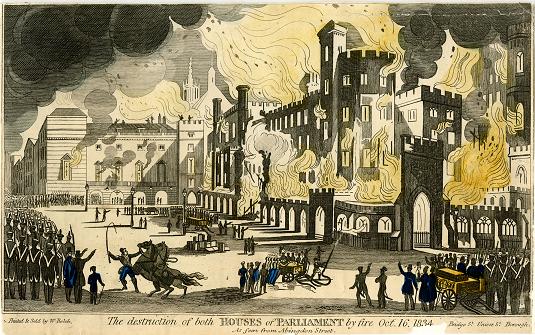


Cause and early spread
The conflagration originated when old wooden tally sticks, used for centuries by the Exchequer as a form of accounting, were cleared out and burned. Contemporary accounts link the disposal of these sticks to furnaces beneath the building; smouldering embers and a subsequent chimney fire in the interconnected flues allowed the heat to travel beneath floorboards and ignite structural timbers. Modern summaries attribute the disaster to the combination of combustible waste, concealed flues and inadequate oversight by building staff and contractors. See more about the Palace of Westminster and parliamentary arrangements: Palace of Westminster, Parliament.
Damage and immediate consequences
The fire spread rapidly through intimate and interlinked chambers. Both the House of Lords and the House of Commons suffered severe destruction along with many libraries, administrative records and works of art. Eyewitness and official reports described the scene in graphic detail; crowds and onlookers gathered as the blaze developed into a nights-long emergency. The loss of records and archives was particularly problematic for national administration: the tally sticks themselves had been part of the Exchequer's bookkeeping system, and their disposal had been intended to clear redundant material (Exchequer, tally sticks).
Response, rescue and contemporary reaction
Efforts to put out the fire involved local brigades, volunteers and military personnel. Contemporary political reaction was severe: senior officials criticized the apparent negligence of staff responsible for the furnaces and maintenance, and the Prime Minister at the time is recorded as calling the episode "one of the greatest instances of stupidity upon record". The event attracted artists and chroniclers who left pictorial records and descriptions that survive in prints and paintings (artists, art collections).
Rebuilding and historical significance
The destruction allowed for a comprehensive Victorian rebuilding of the site. After debates over style and function, the damaged medieval complex was replaced by the present Gothic Revival Palace designed under the direction of Sir Charles Barry with detailing by Augustus Pugin. The new layout incorporated purpose-built chambers, improved records storage and technical measures intended to reduce the risk of similar disasters. The fire also prompted changes to how public records and waste were handled, and it remains an oft-cited example of how administrative practices and building maintenance can combine to produce a major disaster (House of Lords, House of Commons).
Notable facts and comparisons
- The blaze is commonly compared with other major London conflagrations, notably the Great Fire of 1666 and later wartime damage during the Blitz.
- The fire destroyed collections and archives that would have been difficult or impossible to replace, drawing attention to preservation and cataloguing practices (buildings, London).
- Surviving primary descriptions and engraved views from the night are preserved in museum and parliamentary collections for study (Prime Minister, 16 October 1834).
For introductions and more detailed accounts of the causes, damage and rebuilding, consult collections and guides held by parliamentary archives and major historical repositories (historic palace, tally sticks details, art records).
Related articles
Author
AlegsaOnline.com Burning of Parliament (Palace of Westminster fire, 1834) Leandro Alegsa
URL: https://en.alegsaonline.com/art/15500
Sources
- historyofparliamentonline.org : "The Fire of 1834"
- victorianweb.org : "The Burning of the Old Houses of Parliament on 16 October 1834 -- a late Victorian account"