
Bulbuls: an overview of the songbird family Pycnonotidae
Bulbuls (family Pycnonotidae) are medium-sized passerine songbirds of Africa, the Middle East and southern Asia, common in forests, gardens and scrub. They vary in plumage, voice, behaviour and conservation status.
Overview
Bulbuls are a widespread family of passerine songbirds placed in the family Pycnonotidae. The group contains about 130 species in roughly two dozen genera and is native to parts of Africa, the Middle East and southern Asia. They are familiar components of tropical and subtropical bird communities and are notable for their varied voices and their ecological roles as seed dispersers and insect predators.
Image gallery
3 Images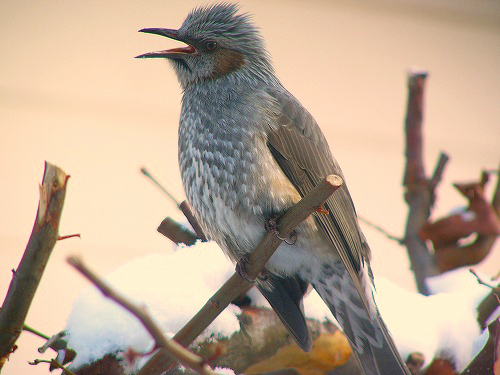


Characteristics
Bulbuls are generally small to medium-sized songbirds. Typical attributes include:
- Size and shape: compact bodies with relatively long tails; many species are 15–25 cm in length.
- Plumage: often plain browns, greys or greens that provide camouflage, though some species bear bright patches, crests or contrasting cheek or vent colours.
- Voice: most are passerine songbirds with varied calls — whistles, chattering notes and songs used in courtship and territorial defence.
- Feeding: omnivorous diets combining fruit and berries with insects and other small invertebrates.
Distribution and habitat
Bulbuls occupy a wide range of habitats across their distribution. Many African species are associated with humid rainforest zones and dense secondary growth, while numerous Asian species inhabit more open woodlands, scrub, plantations and gardens. Some groups (for example greenbuls and bristlebills) show a strong affinity for forest understory, whereas other species thrive in edge habitats and human-modified landscapes.
Behavior and diet
Foraging behaviour ranges from gleaning among foliage to sallying for flying insects. Fruit forms an important part of the diet for many species; in doing so bulbuls perform a significant role in seed dispersal and thus in the dynamics of tropical vegetation. Social organisation varies: several species are often seen singly or in pairs, while others join small flocks or mixed-species foraging parties outside the breeding season.
Breeding and life cycle
Nesting typically involves a small cup of grass, twigs and roots placed in a shrub or branch. Pairs are usually territorial during the breeding season; courtship can include song and display flights. Clutch sizes are modest — commonly a few eggs — and both parents may contribute to incubation and feeding of the young, although specific details vary among species.
Taxonomy and notable species
The family is taxonomically diverse and field guides often refer to informal groups such as greenbuls, brownbuls, bristlebills and crested bulbuls. Well-known, widespread species include the red-vented bulbul and the red-whiskered bulbul, which are often encountered in gardens and parks. For a compiled listing by species and further taxonomic context see a general species list.
Relationship with people and conservation
Many bulbuls adapt well to human-altered environments and are common in cultivated landscapes and urban gardens, where their vocal presence is familiar to people. Others, especially range-restricted or forest-dependent species, are vulnerable to habitat loss and fragmentation. Conservation attention varies by region and species: protecting native forests and controlling habitat degradation are important measures for the more threatened bulbuls.
Overall, bulbuls are an ecologically important and diverse family of songbirds whose presence across a range of habitats makes them significant both for natural ecosystems and for people who encounter them in gardens and rural landscapes.
Related articles
Author
AlegsaOnline.com Bulbuls: an overview of the songbird family Pycnonotidae Leandro Alegsa
URL: https://en.alegsaonline.com/art/15216