
Bullfinch (Genus Pyrrhula): overview, appearance, distribution and conservation
Bullfinches (genus Pyrrhula) are compact finches of the Palearctic region noted for their stout bills, distinctive plumage, and varied conservation status, including a critically endangered island species.
Overview
Bullfinches are small, stocky passerine birds placed in the genus Pyrrhula within the finch family Fringillidae. As passerines, they share the general perching-bird anatomy but are distinguished by a short, deep bill specialized for crushing buds and seeds. Several species are familiar in gardens and woodland edges across their range; others are more secretive and montane in habit.
Image gallery
10 Images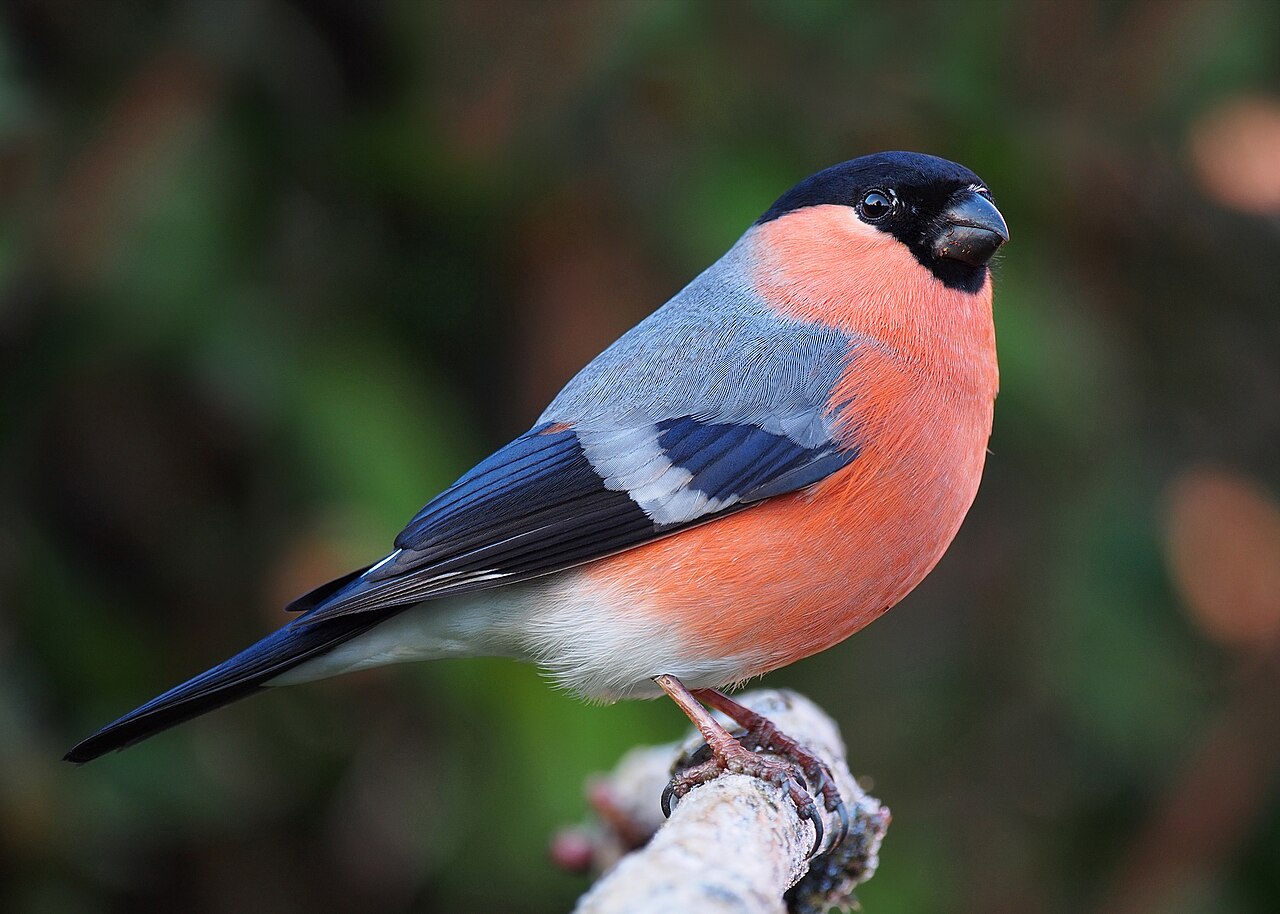


Description and identification
Bullfinches are recognized by their compact bodies, glossy black wings and tail, and a noticeable white rump. Legs and feet tend to be fleshy brown and the bill is short and swollen, a clear adaptation to feed on buds, seeds and soft fruits. Male plumage usually includes orange to red tones on the breast, whereas females are generally duller. Some species display a dark or black crown. One taxonomic note: Pyrrhula nipalensis is among the few with a pale or yellowish bill rather than the more typical black.
Distribution and habitat
Bullfinches have a predominantly Palearctic distribution, with species occurring across temperate Eurasia. Most live in Asia, and a number are restricted to montane zones in the Himalayas. The familiar Eurasian bullfinch (Pyrrhula pyrrhula) reaches parts of Europe as well as temperate Asia. One island endemic, the Azores bullfinch (Pyrrhula murina), is restricted to the eastern part of São Miguel (São Miguel) in the Azores archipelago. That island population is of particular conservation concern and is listed as critically endangered.
Evolution and relationships
Molecular studies using mitochondrial markers, especially cytochrome b sequences, indicate that bullfinches are closely related to the holarctic pine grosbeak and that these lineages share a common ancestor. The divergence that gave rise to modern bullfinches likely began after the pine-grosbeak lineage split off; this radiation probably started near the Himalayas. Estimates place the initial diversification toward the end of the middle Miocene, on the order of about a dozen million years ago, although the exact timing remains subject to refinement. Mountain finches and several other high-altitude representatives appear to be part of the same broader clade, reflecting a history tied to cooler, montane habitats.
Behavior, movement and breeding
Many bullfinch populations are at least partially migratory, with movements that are often short to medium in distance rather than long-haul. Northern populations tend to disperse farther in winter than more temperate residents, and annual numbers moving can show wide variation. Breeding takes place in trees and shrubs; pairs build a compact cup nest and raise a single or sometimes multiple broods depending on species and conditions. Studies have tracked nesting outcomes and found that some populations experienced notable changes in productivity: for example, recorded nest (nest) failure at a chick stage has varied over recent decades in certain regions, although patterns differ geographically.
Conservation and human interactions
Bullfinches are valued by birdwatchers and are often associated with hedgerows, orchards and mixed woodlands. Threats include habitat loss, alteration of woodland structure, and in some cases island-specific pressures such as introduced predators or competition. The Azores bullfinch illustrates how a restricted range can elevate extinction risk: it survives only on one island and has been the focus of habitat-restoration and monitoring efforts. In parts of Europe, populations such as the Eurasian bullfinch have experienced long-term declines in some countries since the 1970s, prompting research into causes and remedial habitat management. Conservation actions that help include preserving native understory, protecting breeding territories, and maintaining mixed-age woodland to supply buds and seeds across seasons.
Notable facts
- Bullfinches show strong bill adaptations for a diet that often includes buds and young shoots, influencing their interactions with fruit trees and gardeners.
- Their subdued flight and tendency to occupy dense cover mean they can be overlooked despite conspicuous plumage in males.
- Phylogenetic work based on mitochondrial DNA and cytochrome b has been important in clarifying relationships within Fringillidae and identifying close relatives such as the pine grosbeak, a broadly holarctic species.
For further general reading and taxonomy resources see the pages linked here: genus, passerine, finch family, Palearctic region, Himalayan birds, conservation status, São Miguel, Azores, archipelago, mitochondrial DNA, cytochrome b, holarctic, evolution, Miocene, age estimates, migration, nests.
Questions and answers
Q: What is the scientific name of bullfinches?
A: Bullfinches belong to the genus Pyrrhula.
Q: Where are bullfinches found?
A: Bullfinches have a palearctic distribution, meaning they can be found in Asia and Europe. The Azores bullfinch (P. murina) is critically endangered and only occurs in the east of the island of São Miguel in the Azores archipelago.
Q: What species is closely related to bullfinches?
A: Analysis of mitochondrial DNA cytochrome b sequence indicates that the holarctic pine grosbeak (Pinicola enucleator) is closely related to bullfinches.
Q: When did the evolution of bullfinch species start?
A: The evolution of bullfinich species started soon after their ancestor diverged from pine grosbeaks at the end of middle Miocene, about a dozen million years ago (mya).
Q: Where did this clade originate from?
A: It is fairly certain that this clade originated from somewhere around Himalayas.
Q: How do you tell male and female apart?
A: Male bullfinches have an orange or red breast while females do not; some species also have a black cap on their heads which can help distinguish them as well.
Q: Do most populations migrate partially or fully?
A: Most populations are partially migratory, with birds moving short or medium distances during autumn migration (October-November) and spring migration (February-April).
Related articles
Author
AlegsaOnline.com Bullfinch (Genus Pyrrhula): overview, appearance, distribution and conservation Leandro Alegsa
URL: https://en.alegsaonline.com/art/15259
Sources
- springerlink.com : Phylogeography of crossbills, bullfinches, grosbeaks, and rosefinches
- elibrary.unm.edu : PDF fulltext