
Buddhas of Bamiyan
Two monumental 6th-century standing Buddha statues carved into a cliff in Afghanistan's Bamyan valley, notable for their art-historical importance, destruction in 2001, and ongoing debates over restoration.
Overview
The Buddhas of Bamiyan were two colossal rock-cut statues of standing Buddhas carved into a sandstone cliff in the Bamyan valley of central Afghanistan. Created around the 6th century CE, they stood as some of the largest examples of early Buddhist monumental sculpture and as an emblem of the region's role as a crossroads on the Silk Road. Locally they have long been known by names recorded in historical sources; for a Persian form see بتهای باميان. The figures are commonly described as the two standing Buddhas of Bamiyan.
Image gallery
10 Images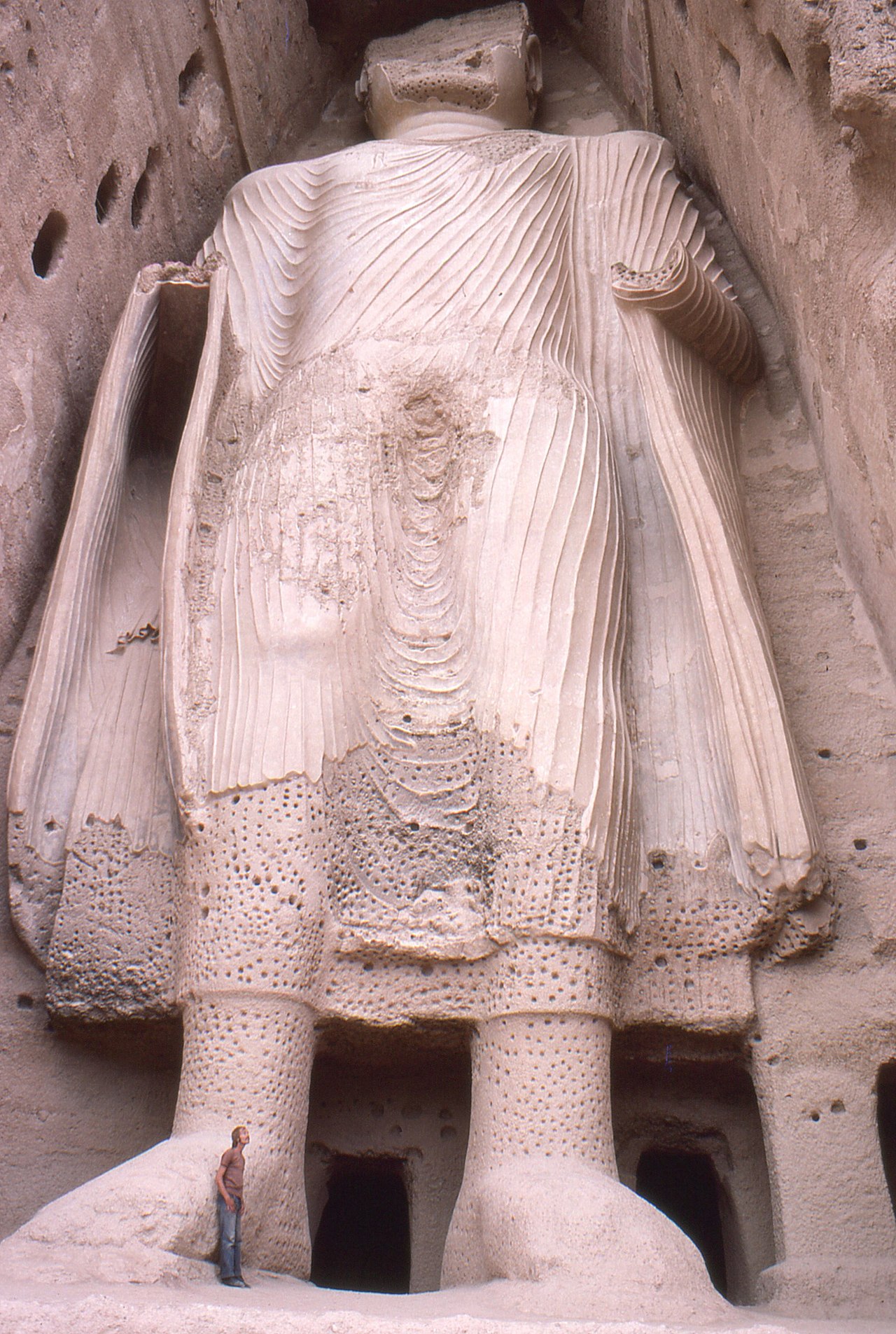





Appearance and archaeological context
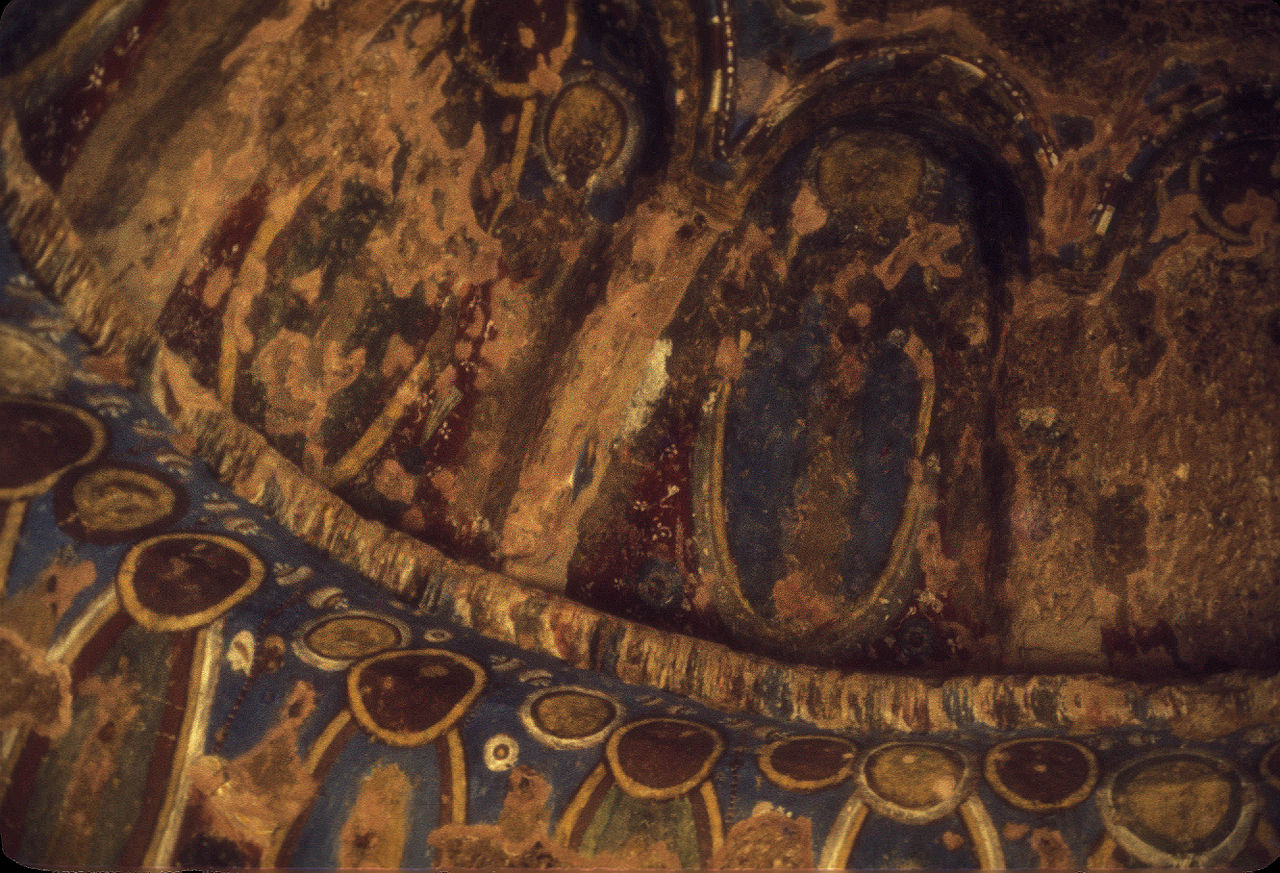
Carved directly into the cliff face, the two statues differed in scale: the larger measured roughly 55 metres in height and the smaller roughly 38 metres. Each statue occupied a high niche and was finished with modeled stucco and painted surfaces; traces of polychrome paint and gilding survived into the 20th century. Surrounding caves, monasteries and carved reliefs indicate a thriving monastic complex and pilgrimage site. The valley itself, in the Hazarajat region, is identified with the historic Bamyan valley and contains numerous archaeological remains from Buddhist, Islamic and later periods.
Historical significance
The Buddhas symbolized the fusion of Greco-Buddhist and Central Asian artistic traditions and the religious landscape shaped by trade and cultural exchange. For centuries they were visited by travelers, pilgrims and later by scholars and colonial-era explorers who documented their monumental scale and ornamentation. Their artistic techniques—rock carving combined with applied stucco and paint—illustrate the interplay of local workmanship and long-distance influences.
Destruction and international reaction
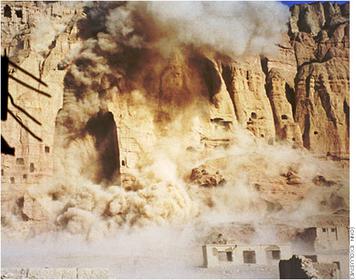
In March 2001 the statues were deliberately demolished by the Taliban regime using explosives and heavy weapons. The intentional destruction provoked international condemnation and intensified discussion about cultural heritage protection in conflict zones. Reports and photographic records collected before the event helped document the original appearance and condition. The demolition is often referred to by sources that describe how the statues were dynamited by government forces associated with the Taliban.
Aftermath, conservation and debate
After their destruction, the Bamyan niches and surrounding caves remained important archaeological sites and a symbol for cultural loss. International agencies catalogued surviving fragments and produced detailed records, including photogrammetry and 3D models, to preserve knowledge of the originals. Proposals for reconstruction have ranged from partial reassembly using original fragments to full reconstruction with modern materials, and the option of leaving the scars as a memorial has also been advocated. Offers of technical and financial assistance have come from several countries, including initiatives from Japan and Switzerland, alongside UNESCO and other organizations.
Legacy and importance today
- The Buddhas remain a potent symbol of Afghanistan's multicultural past and of the vulnerability of cultural heritage during conflict.
- Scholars and conservationists continue to study the site to learn about regional art history and to develop methods for preserving damaged monumental sculpture.
- Public discussion about reconstruction at Bamyan raises broader questions about authenticity, memory and the responsibilities of the international community toward endangered heritage.
Today the Bamyan valley is recognized internationally for its cultural landscape and archaeological significance; efforts continue to stabilize the site, document what remains, and engage local and global communities in decisions about memory, restoration and education.
Related articles
Author
AlegsaOnline.com Buddhas of Bamiyan Leandro Alegsa
URL: https://en.alegsaonline.com/art/15073
Sources
- iht.com : "Afghans consider rebuilding Bamiyan Buddhas"
- sacredland.org : Bamiyan Valley
- nationmultimedia.com : "Afghans destroy Buddhas, but cry foul over cartoons"
- commons.wikimedia.org : Buddhas of Bamiyan