
Bud, Not Buddy — children's novel by Christopher Paul Curtis
Overview of the children's novel Bud, Not Buddy (1999) by Christopher Paul Curtis: setting, plot outline, themes, characters, awards, publication history and its place in children's literature.
Bud, Not Buddy is a children's novel by Christopher Paul Curtis. First published in 1999, the story is set in Michigan during the Great Depression and follows a resourceful African American boy on a personal quest. The book has been widely taught and discussed for its vivid voice and historical setting.
Image gallery
2 Images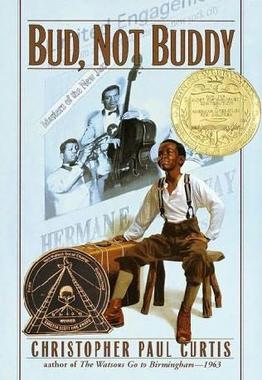

Overview
The novel centers on a ten-year-old protagonist who calls himself Bud. After leaving several foster homes and an orphanage, Bud journeys across Michigan in search of family and identity. Curtis blends adventure and historical detail to create a story of resilience and self-discovery aimed at middle-grade readers.
Plot and characters
Bud narrates his own tale with a mix of humor and determination. Along the way he carries a small suitcase of keepsakes and follows clues that lead him toward a man he believes may be his father. Key figures include people Bud meets in Flint and Grand Rapids, and a traveling band that becomes central to the later action.
Themes and style
The book explores themes such as family, belonging, dignity, and the experience of African American children during the 1930s. Curtis’s prose is direct and character-driven, balancing historical context with scenes of friendship and moral growth. Readers often notice the novel’s use of first-person narration to create intimacy and immediacy.
Publication and reception
Published in 1999, the novel received critical acclaim and won the Newbery Medal in 2000 for excellence in American children’s literature. For more on the novel and its author see the book page: Bud, Not Buddy, the author profile: Christopher Paul Curtis, and the regional setting: Michigan, 1936.
Legacy and uses
Educators and librarians frequently include the novel in curricula for its historical perspective and accessible voice. It is discussed in contexts ranging from reading groups to studies of race and history in children’s media. Further information about the book’s release and reviews can be found at: publication details, award notes: Newbery Medal, and broader categorization in American and children’s literature.
Related articles
Author
AlegsaOnline.com Bud, Not Buddy — children's novel by Christopher Paul Curtis Leandro Alegsa
URL: https://en.alegsaonline.com/art/15059
Sources
- carolhurst.com : "Bud, Not Buddy Review"
- ala.org : "2000 Newbery Medal and Honor Books; Medal Winner"