
Bronchus: anatomy, function, development, and clinical significance
Comprehensive overview of the bronchus: anatomy, microstructure, development, physiology, blood supply, clinical conditions, diagnosis and common treatments. Highlights differences between right and left bronchi.
The bronchus (plural: bronchi) is one of the principal airways that conduct air from the trachea into the paired lungs. Each main bronchus is the first large branch emerging after the windpipe and subdivides repeatedly into smaller bronchi and then into bronchioles, which terminate in clusters of alveoli where gas exchange occurs. By providing a low-resistance pathway and contributing to warming, humidifying and filtering inspired air, the bronchi are essential to normal respiration and host defence.
Image gallery
6 Images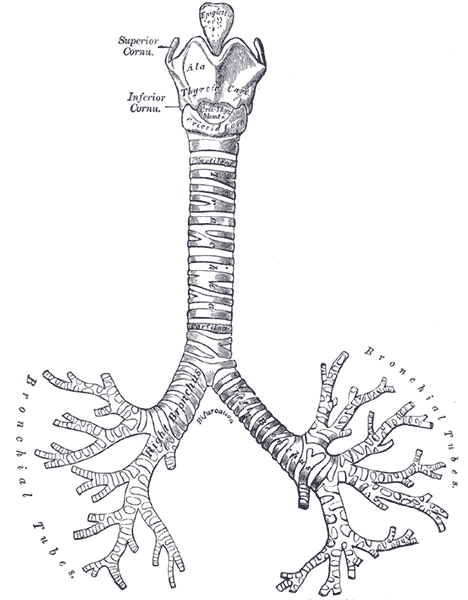


Gross anatomy and branching
The trachea divides into the right and left main bronchi at the carina. Each main bronchus enters a lung and branches into lobar (secondary) bronchi and then into segmental (tertiary) bronchi that correspond to lung lobes and bronchopulmonary segments. The branching pattern varies among individuals but follows a hierarchical tree-like arrangement that directs airflow to all lung regions.
Microanatomy and wall composition
Bronchial walls contain several layers: a mucosal lining with ciliated pseudostratified epithelium and mucus-secreting cells that support mucociliary clearance; a submucosa with glands and connective tissue; smooth muscle that alters airway caliber; and supporting cartilage. Larger bronchi feature C-shaped rings or irregular plates of cartilage that help keep the airway open, while cartilage progressively decreases in smaller airways as smooth muscle becomes more prominent.
Development and naming
Embryologically the bronchial tree arises from a ventral outpouching of the foregut and develops by repeated branching morphogenesis. During fetal development the airways form before the alveoli mature; the sequence and pattern of branching set the structural framework of the adult lung. Anatomical terms such as "main", "lobar" and "segmental" indicate levels of branching and are commonly used in clinical descriptions.
Function and physiology
In addition to transporting air, bronchi condition inspired gas by warming and humidifying it and by removing particulates and pathogens via mucus and ciliary motion. The caliber of bronchi is regulated by autonomic innervation and local mediators: bronchoconstriction narrows airways and increases resistance, while bronchodilation widens them. These mechanisms play central roles in everyday breathing and in diseases that affect airflow.
Blood supply, innervation and lymphatics
Bronchial arteries supply the walls of the bronchi with oxygenated blood; venous drainage and lymphatic channels return fluid and immune cells toward regional nodes. Autonomic nerves modulate smooth muscle tone and secretions. Lymphatic drainage contributes to immune surveillance and may be involved in the spread of infection or malignancy.
Clinical relevance and notable differences
The right main bronchus is typically shorter, wider and more vertical than the left, a difference that influences the tendency for aspirated material to enter the right lung more frequently. Disorders of the bronchi include acute and chronic bronchitis (inflammation), bronchiectasis (permanent dilation and loss of normal clearance), obstruction by foreign bodies or tumors, and reactive narrowing as seen in asthma. Chronic obstructive pulmonary disease (COPD) commonly involves bronchial pathology as well as alveolar damage.
Common presentations, diagnosis and procedures
Symptoms of bronchial disease include cough, sputum production, wheeze, breathlessness and recurrent infections. Clinicians use history, physical examination, imaging (such as chest radiography or computed tomography), lung function tests and direct visualization with bronchoscopy to assess bronchial structure and function. Bronchoscopy allows sampling, removal of obstructions, and delivery of therapies directly into the airway.
Treatment and management
Management depends on the cause: infections are treated with appropriate antimicrobials and supportive care; inflammatory airway disease may respond to inhaled bronchodilators and corticosteroids; physiotherapy techniques can aid clearance in bronchiectasis; and surgical or endoscopic interventions may be indicated for localized disease or persistent obstruction. Preventive measures include vaccination, smoking cessation and air quality control to reduce irritant exposure and infection risk.
Related topics and further reading
- Overview of the trachea and its relation to major airways.
- Detailed lung anatomy and lobar structure: lungs.
- Small airway structure and function: bronchioles.
- Gas exchange at the terminal units: alveoli.
- Physiology of oxygen transport and the role of oxygen in cellular metabolism and delivery to the blood.
- Structural support of airways and the role of cartilage in keeping bronchi patent.
The bronchus is therefore both a structural conduit and an active participant in respiratory defence and regulation. Understanding its anatomy, development and pathophysiology is essential for diagnosing and managing a wide range of respiratory conditions.
Related articles
Author
AlegsaOnline.com Bronchus: anatomy, function, development, and clinical significance Leandro Alegsa
URL: https://en.alegsaonline.com/art/14674