
Bulbourethral gland (Cowper's gland)
Small paired glands in the male pelvic floor that secrete a lubricating fluid into the urethra prior to ejaculation; also known as Cowper's glands and analogous to Bartholin's glands.
Overview
The bulbourethral glands, commonly called Cowper's glands, are a pair of small exocrine glands in the male reproductive system. Each gland produces a clear, viscous secretion that is released into the penile (spongy) urethra shortly before ejaculation. Their secretions have roles in lubrication and in modifying the chemical environment of the urethra.
Image gallery
7 Images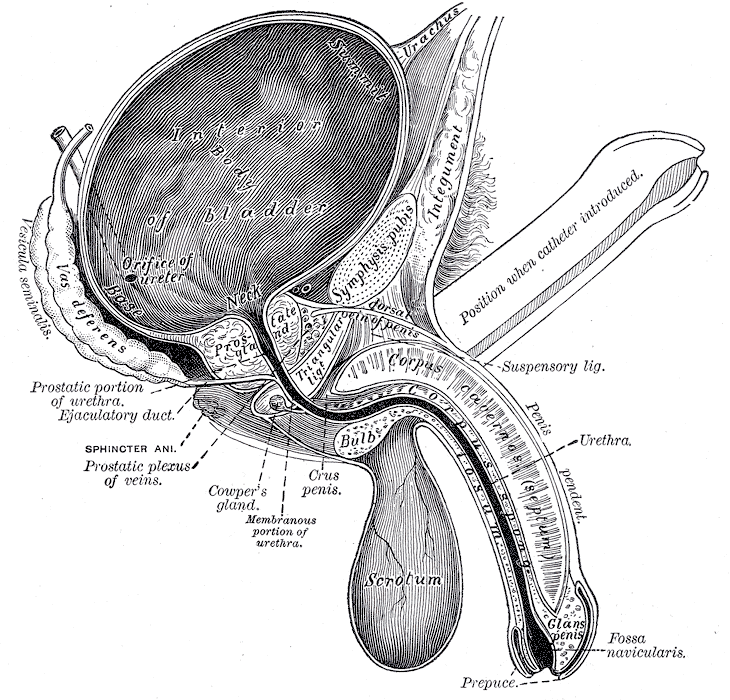


Anatomy and structure
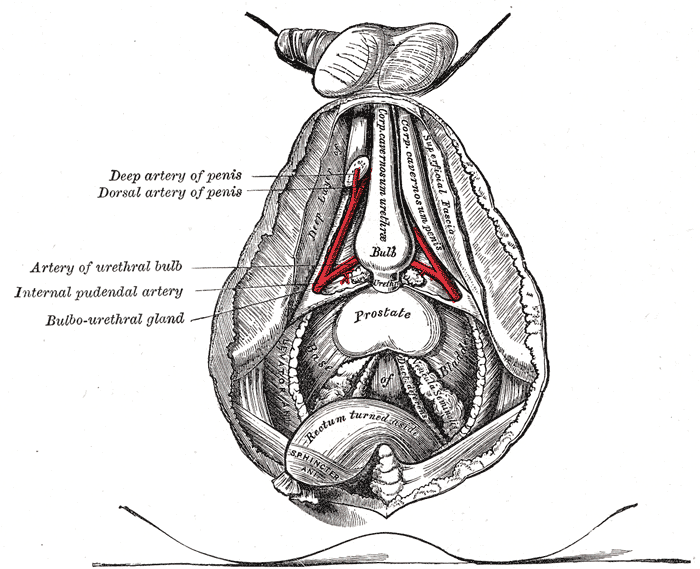
Bulbourethral glands are embedded in the deep perineal pouch at the level of the pelvic floor, near the bulb of the penis and the membranous urethra. They are typically pea-sized in adult humans and have a duct that opens into the proximal portion of the penile urethra. For diagrams and anatomical detail see anatomical illustration and text description.
Function
The main functions attributed to these glands include lubrication of the urethra and neutralization of small amounts of acidic urine that may remain in the urethral lumen, creating a more favorable pathway for sperm during ejaculation. Their secretion is sometimes called pre-ejaculate; while it is typically small in volume, it can affect fertility and disease transmission under some circumstances.
History and comparative anatomy
Named after the English anatomist William Cowper, who described the glands in the 17th century, bulbourethral glands have analogues in females known as Bartholin's glands. Many mammals possess similar glands with comparable roles; specific size, number and function vary by species. For comparative references see comparative anatomy sources.
Clinical significance
While often clinically silent, bulbourethral glands can be involved in several conditions. These include cysts or retention of secretions, infection, or rarely, calculi or tumors. Symptoms may include perineal pain, swelling, or unusual discharge. Simple cysts may be managed conservatively or drained; persistent or recurrent problems may require surgical treatment. Because pre-ejaculate can sometimes contain pathogens or sperm, its role is considered in studies of contraception and sexually transmitted infection transmission.
Notable points and resources
- Analogy: The glands are functionally and developmentally analogous to female Bartholin's glands.
- Secretion: Often described as lubricating and pH-buffering, but volumes and composition vary among individuals.
- Further reading: Basic anatomy references and clinical texts provide more detail; see further resource.
Related articles
Author
AlegsaOnline.com Bulbourethral gland (Cowper's gland) Leandro Alegsa
URL: https://en.alegsaonline.com/art/15215