
Bronchiole: small airways of the lung
Bronchioles are the smallest air-conducting passages in the lungs that lack supportive cartilage; they lead to alveoli and play a central role in airflow regulation and gas exchange.
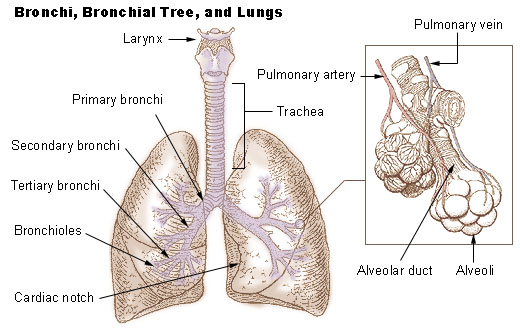
The bronchioles are the small-diameter airways within the lungs that branch from the larger bronchi. Unlike bronchi, bronchioles do not contain supportive cartilage, and their walls are dominated by smooth muscle and mucosal lining. These tubes provide the final conduction pathway for inspired air before it reaches the gas-exchanging units of the lung, the alveoli.
Image gallery
5 Images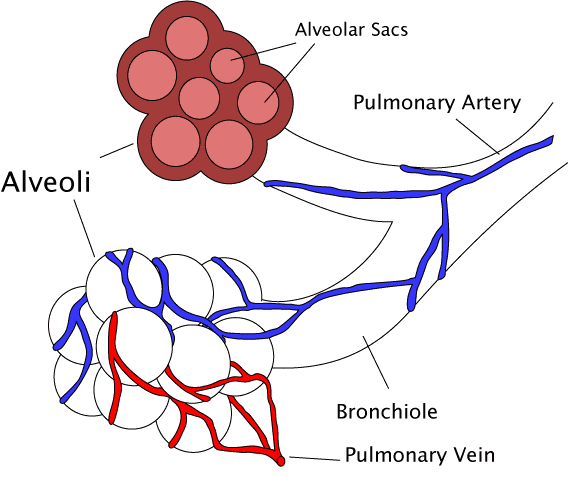

Structure and types
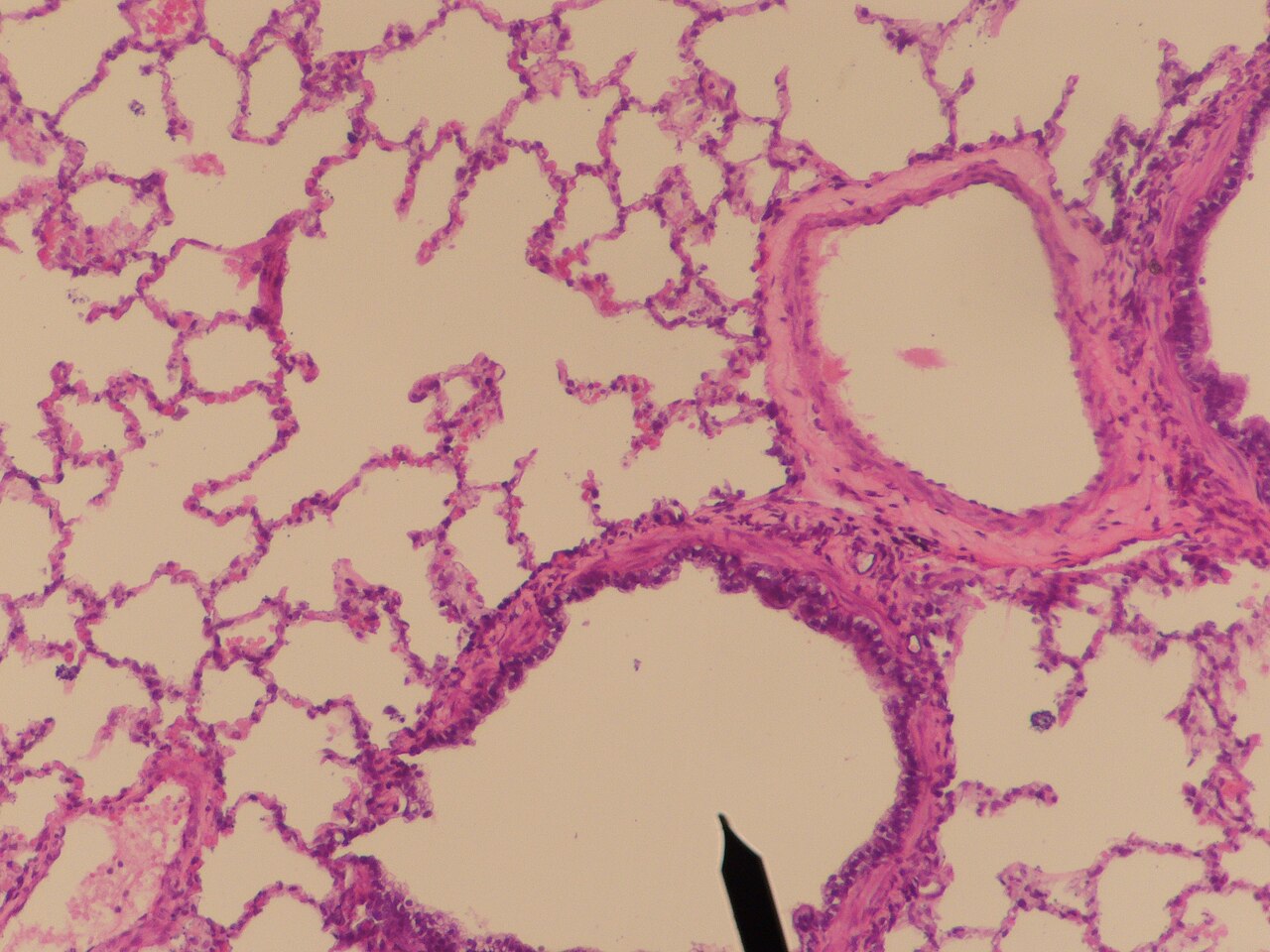
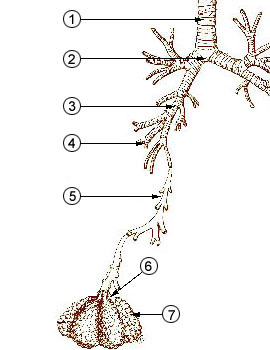
Bronchioles are classified by size and function. Terminal bronchioles are the smallest purely conducting airways; distal to them are respiratory bronchioles that have occasional alveolar outpocketings and participate in gas exchange. Histologically, bronchioles have a lining of ciliated epithelium, goblet or club cells, and a variable layer of smooth muscle and connective tissue.
Function and physiology
Bronchioles regulate airflow distribution through smooth muscle contraction and dilation, which affects airway resistance and ventilation. Their epithelium helps clear inhaled particles with cilia and secretes substances that protect airway surfaces. The transition from respiratory bronchioles to alveolar ducts marks the shift to efficient gas exchange.
Development and adaptation
Bronchioles form during lung branching morphogenesis in the embryo as distal extensions of the bronchial tree. They continue to mature after birth as alveoli increase in number and surface area. Bronchioles can change caliber in response to autonomic signals, inflammation, or injury.
Clinical importance
Disease of the bronchioles contributes to common respiratory conditions. In asthma, bronchoconstriction of bronchioles increases resistance and causes wheeze. Viral bronchiolitis mainly affects infants and inflames terminal airways. Chronic bronchiolitis and bronchiolitis obliterans involve persistent inflammation and narrowing that impair ventilation.
Notable distinctions
- Bronchi vs bronchioles: bronchi have cartilage and larger calibre; bronchioles do not.
- Terminal bronchioles are conducting; respiratory bronchioles participate in gas exchange.
- Small changes in bronchiole diameter can have a large effect on airflow and symptoms.
For general background on lung anatomy and airway disease, see resources linked to the terms above (lungs, cartilage, alveoli).
Related articles
Author
AlegsaOnline.com Bronchiole: small airways of the lung Leandro Alegsa
URL: https://en.alegsaonline.com/art/14667