
British Rail Derby Lightweight diesel multiple units
Mid-1950s lightweight diesel multiple units built at Derby Works for British Railways to replace steam on secondary routes. Various formations, early large-scale DMU production; several preserved examples survive.
Overview
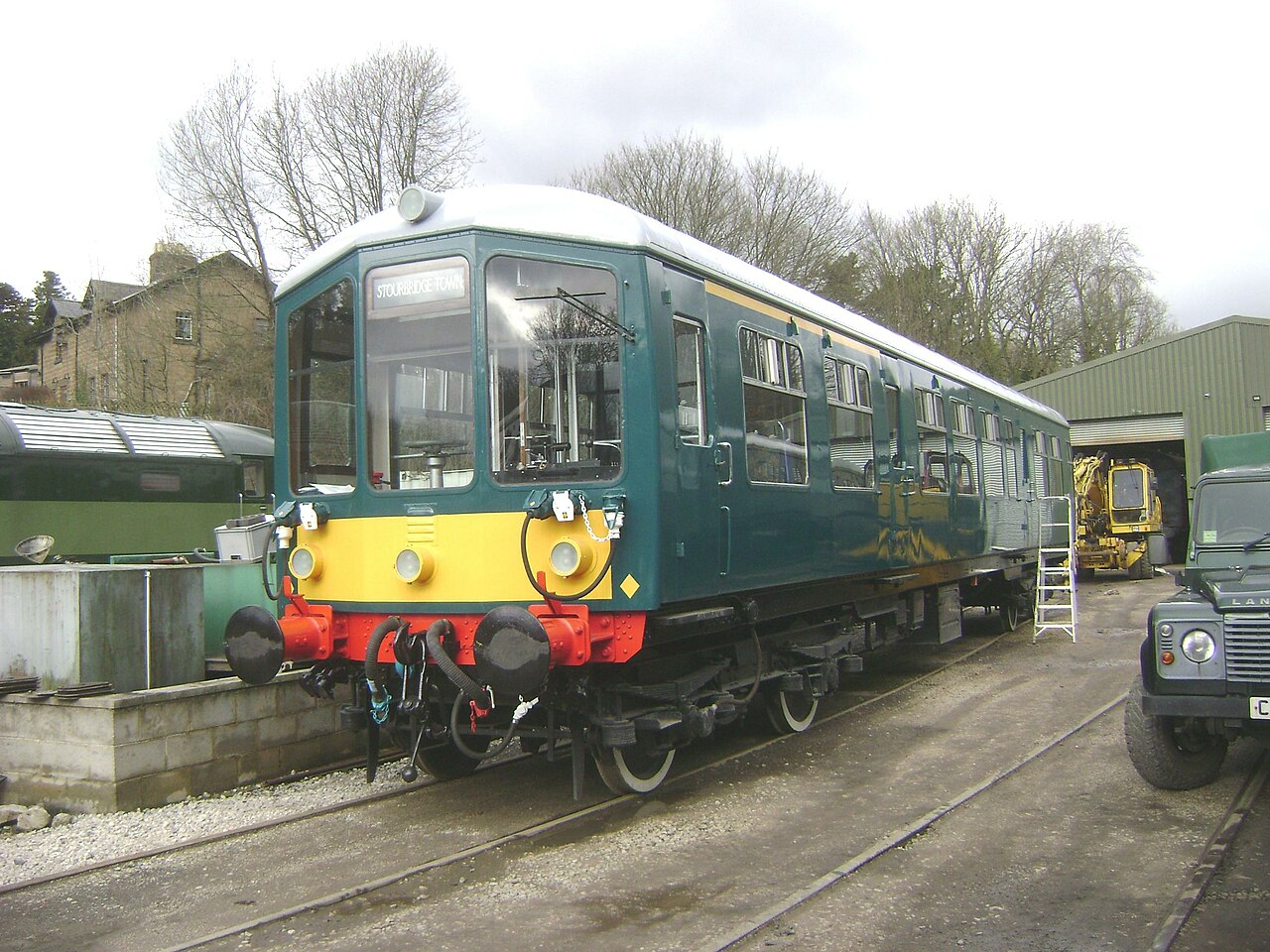
The Derby Lightweight was a family of diesel multiple units introduced by British Railways in the mid-1950s. Built at BR's Derby Works between 1954 and 1955, these trains were the first to be produced in significant numbers as self-propelled multiple-unit sets for BR. Their main purpose was to provide economical, flexible passenger services on branch lines and secondary routes as an alternative to steam-hauled trains.
Image gallery
5 Images



Design and formations
The name reflects the emphasis on lighter construction and modular design. Derby Lightweights were manufactured in several configurations to suit different traffic needs and operational patterns:
- two single-car units
- 12 power-twin two-car units
- 84 power–trailer two-car units
- four four-car units
These formations allowed operators to couple or separate sets easily to match passenger demand. The cars combined driving cabs, passenger accommodation, and underfloor diesel powerplants, eliminating the need for a separate locomotive.
Historical context and development
The Derby Lightweight emerged during a period of transition for British railways. After nationalization, British Railways sought to modernize and cut operating costs on lightly used services. The Derby-built DMUs represented an early, practical implementation of that strategy and influenced later, larger DMU programmes. The work was carried out at Derby Works, one of BR's principal workshops.
Operational use and legacy
Deployed widely on local and regional services, these units provided quicker acceleration and lower crew and fueling costs compared with steam operations. They demonstrated the viability of multiple-unit operation for secondary routes, paving the way for subsequent generations of DMUs. A number of Derby Lightweights survived into preservation and can be seen on heritage railways, where they illustrate mid-20th-century diesel traction and branch-line practice.
Notable facts and related types
The Derby Lightweight series is often cited as the first large-scale production of DMUs for British Railways and is frequently discussed alongside contemporary experiments such as the unique Battery Electric Multiple Unit. For general background on the class and on diesel multiple units in Britain see diesel multiple units and materials referring to the Derby Lightweight programme.
Further information
Technical details, revised diagrams, and preservation lists are available in specialist publications and heritage group records. Enthusiasts and researchers often consult workshop archives and preserved examples to study construction methods, interior layouts and operational adaptations made during their service careers.
Tags
Related articles
Author
AlegsaOnline.com British Rail Derby Lightweight diesel multiple units Leandro Alegsa
URL: https://en.alegsaonline.com/art/14542