
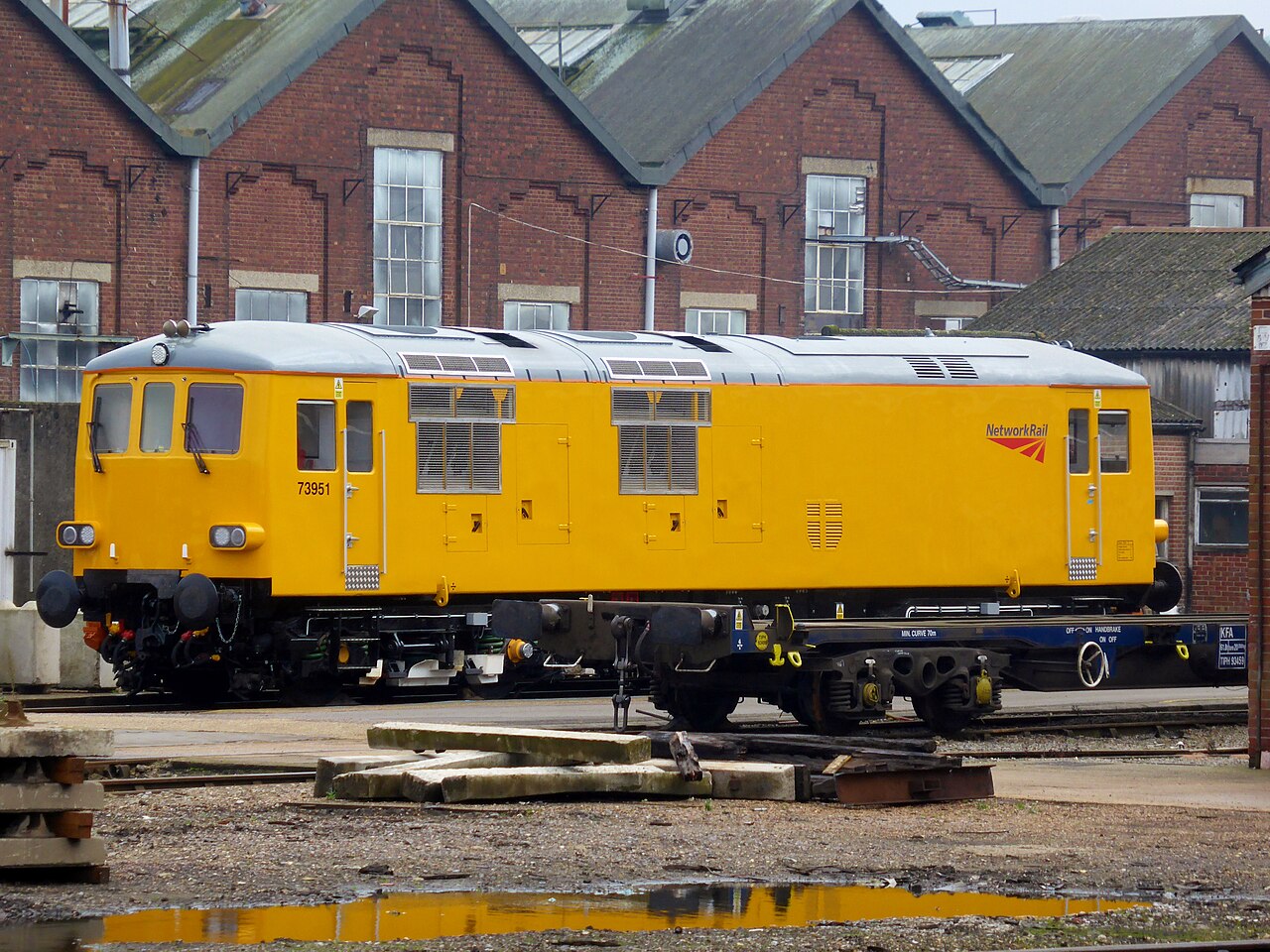
British Rail Class 73 electro-diesel locomotive
Electro-diesel locomotives that draw 750 V DC from a third rail or run on an onboard diesel engine, used mainly on Southern Region routes for passenger, freight and rescue duties.
Overview
The British Rail network Class 73 is a family of electro-diesel locomotives designed to operate either from a 750 V DC third-rail electrification system or from an onboard diesel engine. This dual-mode capability gives the locomotives flexibility to work both electrified mainlines and short non-electrified branches without changing motive power. The type became closely associated with the former Southern Region, where third-rail electrification is widespread.
Image gallery
10 Images




Design and technical characteristics
Class 73 locomotives are fitted with current collection equipment for a 750 V DC third-rail system and with diesel propulsion for independent running. In practice the electric mode delivers considerably more power than the diesel generator, so diesel use is commonly limited to light movements, shunting, or short unelectrified sections. They are fitted with shoe gears to pick up current from the conductor rail and have equipment to switch smoothly between supply modes.
- Dual-mode operation: third-rail electric supply and onboard diesel.
- Role flexibility: passenger trains, freight workings, rescue and maintenance trains.
- Limitations: diesel power is lower than electric mode, restricting long-range diesel-only duties.
History and deployment
Introduced to provide greater operational flexibility within an electrified region that also contained many non-electrified branches, the Class 73s were deployed primarily where changing between electric and diesel traction would be operationally inconvenient. After the withdrawal of some other experimental electro-diesel types such as the Class 74, the Class 73s remained a notable surviving example of this concept on British rails. They spent much of their working lives in the south of England and on duties that exploited their ability to move between electrified and unelectrified sections.
Operations, uses and examples
In service the class has been used for a wide variety of roles: hauling regional passenger services, transferring coaching stock, rescuing failed trains on electrified routes, and performing depot or engineering duties where third-rail supply is not continuous. Their occasional use on freight and departmental trains demonstrates the operational advantages of retaining both power options in one locomotive.
Notable facts and preservation
Because of their unusual dual-power layout the Class 73s attract interest from enthusiasts and many have survived beyond typical mainline service lives. Some examples have been retained or restored for heritage and charter work, where their ability to work into electrified stations without moving locomotives is particularly useful. For more technical detail and fleet histories, see fleet pages and preservation group resources via Class 73 references and infrastructure notes at third-rail technical guides. Additional information and contemporary reports can be located through specialised rail history sources and operator records (diesel details, network archives).
Overall, the Class 73 represents a pragmatic engineering solution: combining the efficiency of electric traction where available with the independence of diesel power for last-mile flexibility. Its strengths and limits illustrate the trade-offs inherent in dual-mode locomotive design.
Related articles
Author
AlegsaOnline.com British Rail Class 73 electro-diesel locomotive Leandro Alegsa
URL: https://en.alegsaonline.com/art/14496