
British Rail Class 350 (Siemens Desiro)
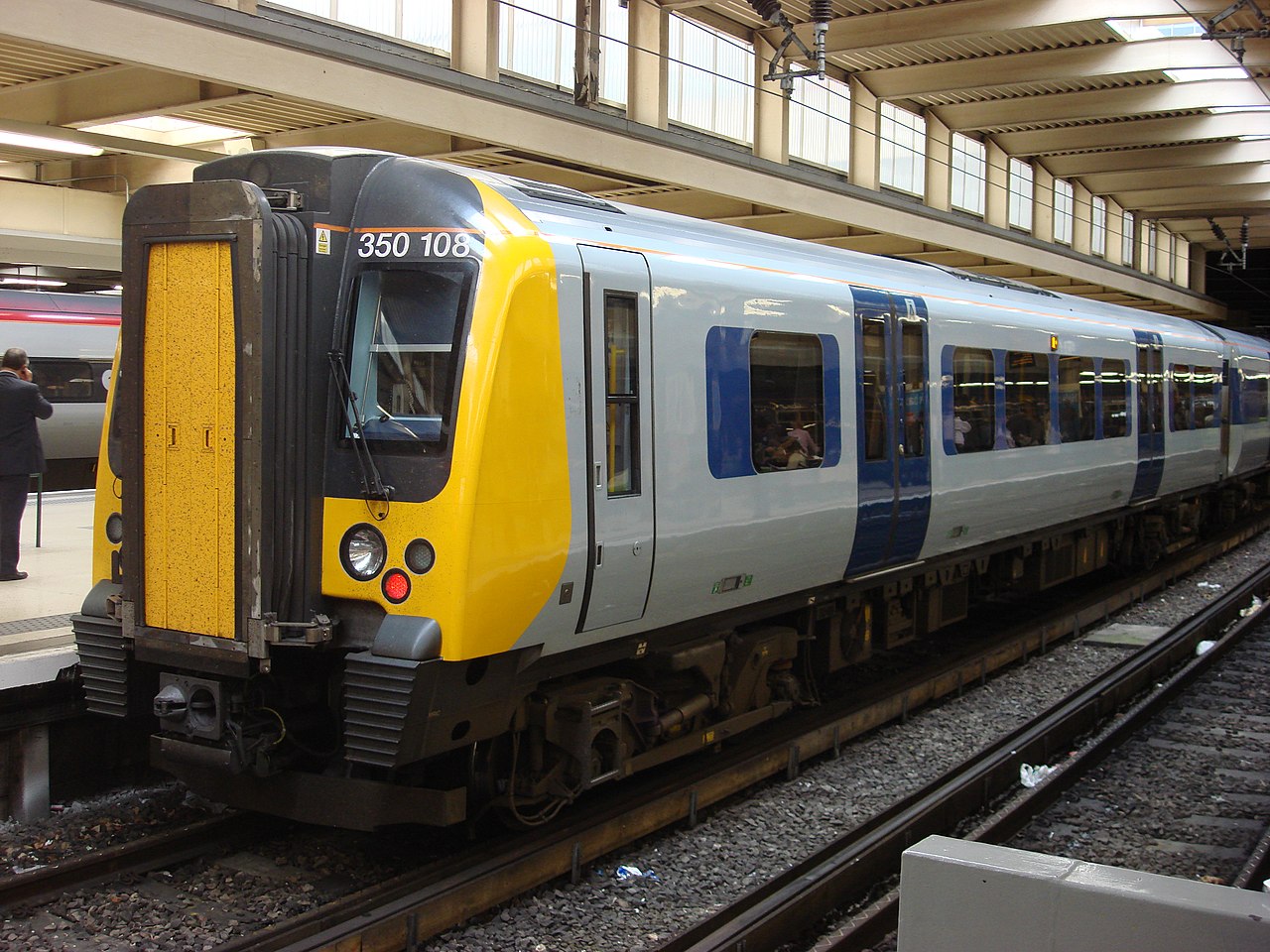
Electric four-car multiple units built by Siemens (Desiro family) from 2004, used on regional and commuter services on the West Coast Main Line and other UK electrified routes.
Overview
The British Rail Class 350 is a family of electric multiple units (EMUs) built by Siemens Mobility and marketed under the Desiro brand. Introduced from 2004, these units were procured to provide modern, reliable regional and commuter services on electrified lines, notably on the southern section of the West Coast Main Line and on other inter-urban routes.
Image gallery
9 Images



Design and characteristics
Class 350 units are commonly formed as four-car sets with pantograph collection from 25 kV AC overhead lines. They share a common bodyshell and modular design with other Desiro types, which simplifies maintenance and component interchange. Interiors are arranged for mixed-distance commuting and regional travel, typically offering high-capacity seating, passenger information displays, air conditioning and accessibility provisions.
Variants and family relations
The initial batch, classified as 350/1, comprised thirty units introduced for operators including Central Trains and Silverlink. A later batch, 350/2, added further units for operators such as London Midland. The Class 350 belongs to the wider Desiro family that also includes diesel and electric types such as the Class 185, Class 360, Class 444 and Class 450. The 350 and 450 are closely related externally but differ in electrical equipment and interior layout to suit different services.
Operation and deployment
Operators have used Class 350s on a range of duties where rapid acceleration and mainline speeds are useful, from suburban commuter patterns to longer regional workings. Sets are frequently coupled to form longer trains during peak periods. Over time units have been transferred between operators under franchise changes, and some have been refurbished or repainted to reflect new operator branding.
Technical and maintenance aspects
The Desiro design emphasises modular components and ease of servicing, which has been an advantage in intensive commuter service. Electrical and traction equipment is tailored to overhead supply operation; units are fitted with standard safety and train control equipment required for mainline operation. Planned maintenance regimes and periodic overhauls have been used to update interiors and systems during their service life.
Notable service history
Since their introduction the Class 350s have played a role in modernising fleets on electrified corridors and replacing older rolling stock. They remain a common type on lines where the balance of speed, capacity and reliability matches the requirements of regional and commuter timetables. For historical and technical detail consult operator fleet pages and rail industry publications; for corporate and historical context see links on British Rail and manufacturer materials.
- Typical formation: 4 cars, often coupled into longer rakes
- Power supply: overhead 25 kV AC (pantograph)
- Role: regional, commuter, inter-urban services
- Family: Siemens Desiro (related to Classes 185, 360, 444, 450)
Readers seeking detailed technical diagrams, exact fleet numbers, modifications or current operator allocations should consult official operator fleet documents and recognised rail reference works, or the manufacturer's technical summaries.
Related articles
Author
AlegsaOnline.com British Rail Class 350 (Siemens Desiro) Leandro Alegsa
URL: https://en.alegsaonline.com/art/14417