
N.C. Wyeth: American Painter and Book Illustrator
Overview of Newell Convers Wyeth (1882–1945), his career as a painter and illustrator, major book projects, training, family of artists, studio at Chadds Ford, and his place in American illustration.
Newell Convers "N.C." Wyeth (October 22, 1882 – October 19, 1945) was an influential American painter and book illustrator whose vigorous images helped define the popular look of adventure and historical fiction in the early 20th century. He is commonly counted among the leading figures of the Golden Age of American Illustration; his life and work are the subject of monographs and exhibition catalogues that collect both his commercial commissions and his independent paintings (further reading).
Image gallery
10 Images


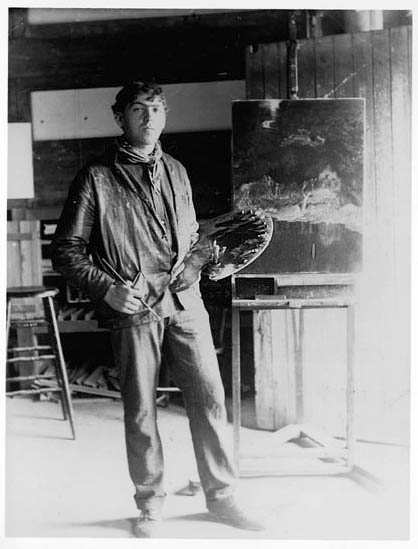
Early life and training
Wyeth was born in Needham, Massachusetts and showed artistic promise from a young age. He trained with the noted illustrator Howard Pyle, whose approach to narrative composition and dramatic lighting shaped Wyeth's methods. Wyeth later established his studio and family life at Chadds Ford, Pennsylvania, where he executed many of his best-known book paintings.
Major works and commissions
Wyeth produced illustrations for a wide range of popular books, magazines and calendars. His narrative illustrations brought new visual life to classic tales and adventure stories. Notable book projects commonly associated with his name include:
In addition to these, Wyeth illustrated other popular narratives of the period and produced stand-alone oil paintings intended for exhibition. His illustrations were created with attention to reproducibility for black-and-white printing as well as for full-color plates where publishers allowed.
Technique and style
Wyeth's approach combined theatrical composition, strong silhouettes, and careful attention to gesture and facial expression so that scenes read clearly to a magazine or book reader. He often began with sketches and watercolor studies before producing finished oils and pen-and-ink drawings for reproduction. Critics and historians emphasize his ability to fuse the demands of commercial reproduction with an artist's concern for color, light and texture.
Family and legacy
Wyeth founded a multi-generational artistic family. His daughters Henriette and Carolyn painted professionally, and his son Andrew Wyeth became a nationally known realist painter. A grandson, Jamie Wyeth, also continued the family tradition. Another son, Nathaniel, became known for inventive pursuits outside the studio. The family's combined output has ensured continued public and scholarly interest in N.C. Wyeth's work.
Later life and recognition
Wyeth continued to work productively from his studio at Chadds Ford until his death in 1945, when he was killed in an accident at a railway crossing near his home. Many of his paintings and illustrative works survive in museum collections and private holdings, and his studio and house in Chadds Ford are interpreted for visitors and scholars. For more information on collections, exhibitions and biographies, see general resources and catalogues of his work (bibliography).
Wyeth's career illustrates the commercial and artistic possibilities available to early 20th‑century American illustrators: he balanced book and magazine commissions with easel painting, trained a generation of assistants in his studio, and left a visual legacy that influenced how readers imagined historical and adventure narratives. He remains a central figure in accounts of American illustration and a key ancestor in a distinguished artistic family that includes figures linked to his early life in Needham.
Readers interested in detailed studies of his technique, commissions, and the Wyeth family may consult monographs and museum catalogues as starting points for research (reference).
Additional context on his life and work, including exhibition histories and reproductions of major plates, can be found through specialist resources and institutional collections that document American illustration of the period (see reference).
For contemporary discussions of Wyeth's place in 20th-century art and illustration, and for directions to view original works or visit sites associated with his studio, consult museum guides and authoritative surveys of American illustration history (resource).
Author
AlegsaOnline.com N.C. Wyeth: American Painter and Book Illustrator Leandro Alegsa
URL: https://en.alegsaonline.com/art/143109