
Pandit Jasraj
Renowned Indian classical vocalist of the Mewati gharana, teacher and founder of international music schools; prominent performer and pedagogue whose career spanned about 75 years (1930–2020).

Pandit Jasraj (28 January 1930 – 17 August 2020) was a celebrated Indian classical vocalist associated with the Mewati gharana. Born in present-day Fatehabad, Haryana, he maintained a professional career that extended across roughly seventy-five years and reached audiences around the world.
Image gallery
6 Images

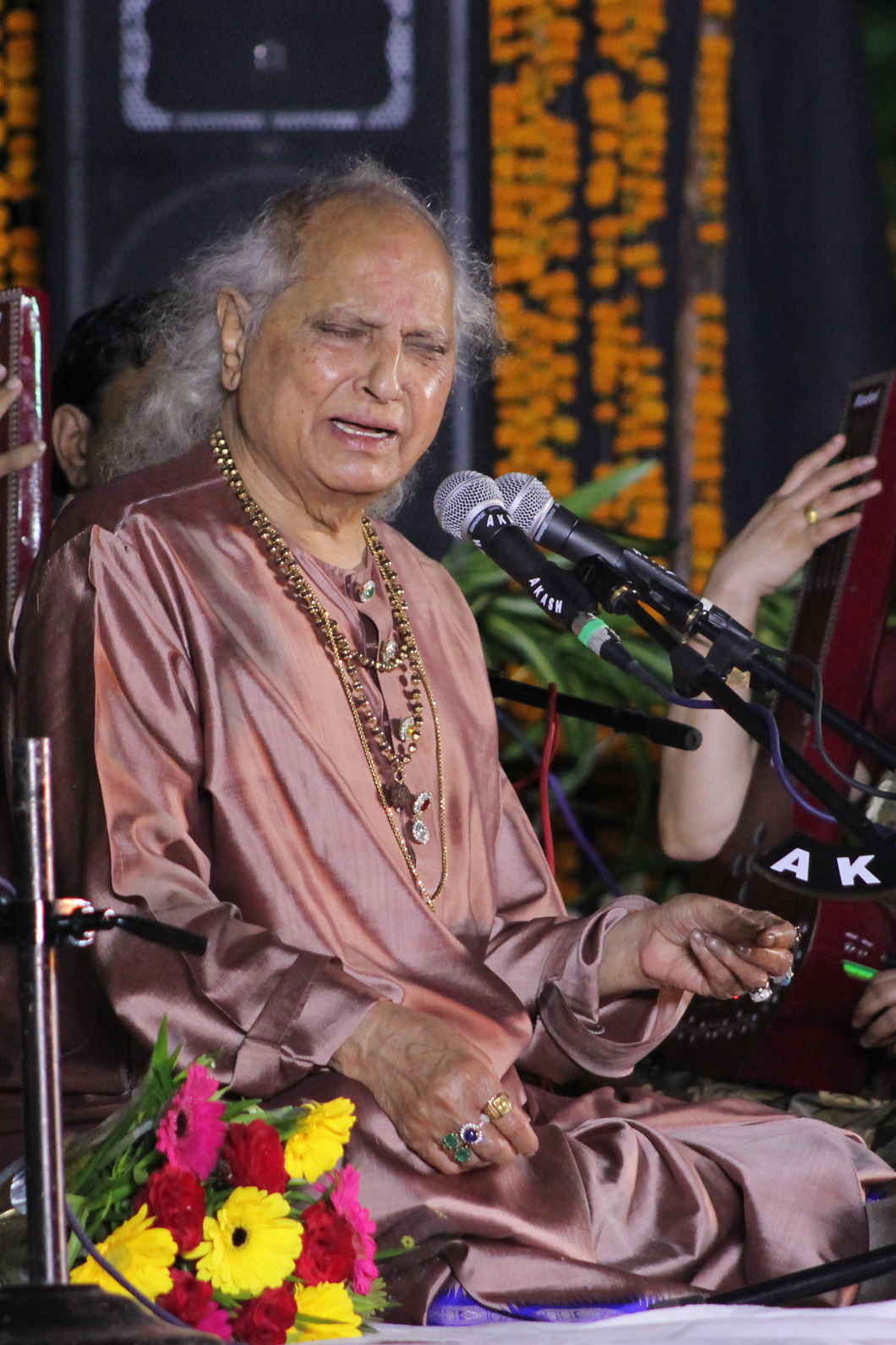


Musical style and repertoire
Jasraj was known for a warm, resonant voice and an emotional approach to improvisation. His concerts typically combined the khayal tradition with devotional forms such as bhajans; he emphasised clear melodic development, lyrical expressiveness and the communicative power of slow, contemplative passages. Critics and listeners praised his ability to bridge rigorous classical technique with compositions that appealed to wider publics.
Teaching and institutions
Beyond performance, Pandit Jasraj was an influential teacher and organiser. He established schools and institutes to teach Indian classical music in several cities internationally. These included branches and affiliated centres in Atlanta, Tampa, Vancouver, Toronto, and New York. Other centres and activities were maintained in New Jersey, Pittsburgh, as well as locations in India such as Mumbai and Kerala. Even in his later years he continued teaching students internationally, using technologies such as Skype to give lessons.
Recognition and legacy
Over decades of work he received widespread recognition in India and abroad, including major civilian honours and awards. His contribution is measured both by recordings and by a large body of disciples who continue to perform and teach. Pandit Jasraj is often cited in discussions of 20th‑ and early 21st‑century North Indian vocal traditions for helping to popularise classical and devotional singing among diverse audiences.
Death and remembrance
Pandit Jasraj died on 17 August 2020 of cardiac arrest while visiting family in the United States. He was 90. Tributes after his death noted both the depth of his musicianship and his role as an energetic teacher who built institutions that keep the Mewati gharana and related repertoires alive for new generations.
Author
AlegsaOnline.com Pandit Jasraj Leandro Alegsa
URL: https://en.alegsaonline.com/art/140312