
Agnes Grey
Agnes Grey (1847) is Anne Brontë’s first novel, a restrained first‑person account of a governess that explores class, gender and moral restraint in Victorian England.
Agnes Grey is the first novel by Anne Brontë, published in 1847. Written in a plain, retrospective first‑person voice, it tells the story of a young woman who becomes a governess and records the hardships, humiliations and moral tests she encounters in wealthy households. The narrative is widely regarded as drawing on Anne Brontë’s own early experience in similar employments and emphasizes quiet integrity over melodrama.
The novel follows Agnes’s progress from a modest family background into service as a governess for several families. Confronted by indifference, spoiled children and class prejudice, she learns the limits of her influence within households that treat her as neither servant nor equal. The plot moves toward domestic stability: after leaving these positions and recovering health and confidence, Agnes finds a respectful, loving marriage and an ordinary contentment that contrasts with the more sensational outcomes found in contemporary fiction.
Image gallery
1 Image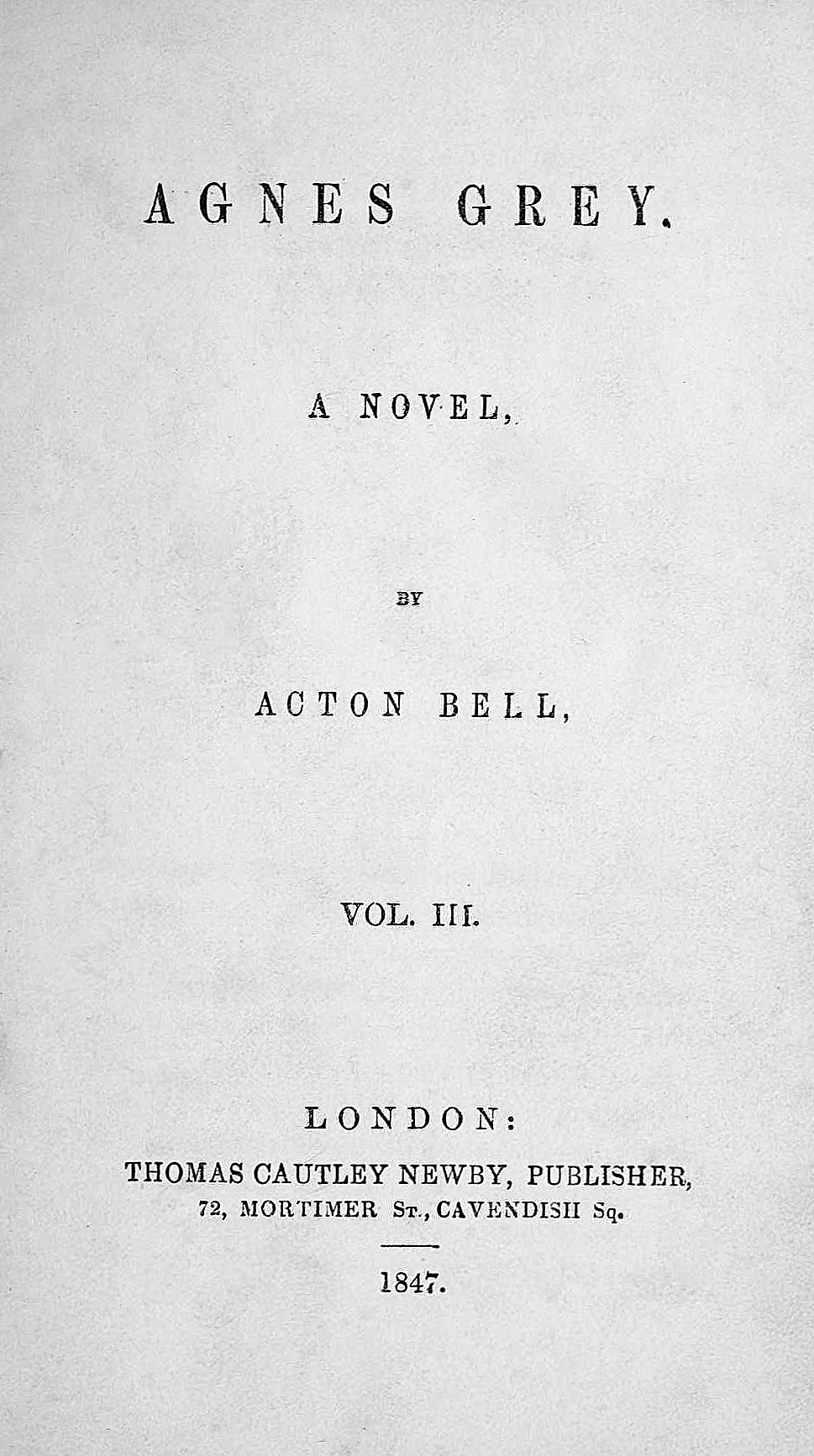
Major themes and style
Agnes Grey focuses on social boundaries, the precarity of women’s work and the moral duties of the individual. Its tone is sober and reflective rather than romantic; Brontë’s prose privileges realistic detail and ethical observation. Religion, conscience, stoicism and the economics of employment repeatedly shape Agnes’s choices. The book’s measured realism and moral seriousness mark it as distinct from Gothic or sensational Victorian novels.
As a social document, the novel illuminates the ambiguous position of the governess in nineteenth‑century England: educated yet unpaid, visible yet socially marginal, responsible for children but excluded from family intimacy. Brontë’s account helped later readers and scholars understand why governesses became a recurring figure in Victorian fiction and discussions of women’s limited professional options.
Agnes Grey is often compared with Charlotte Brontë’s Jane Eyre because both center on governess narrators, but they differ in temperament and resolution. Anne published under the pen name Acton Bell and her sisters used similar pseudonyms; the restrained realism of Agnes Grey anticipates themes Anne would treat more forcefully in her later work. Today the novel is valued for its clear moral perspective, psychological reliability and historical insight into domestic life.
Further reading
Related articles
Author
AlegsaOnline.com Agnes Grey Leandro Alegsa
URL: https://en.alegsaonline.com/art/1403