
Braniff International Airways
American airline founded in 1928 that grew from regional service to an international carrier, became an early all‑jet airline, and ceased operations after financial difficulties in 1982.
Overview
Braniff International Airways was a U.S. commercial airline that began as a small regional carrier in 1928 and expanded over five decades into a prominent international operator. Founded as Paul R. Braniff, Inc., the company launched its first scheduled service on 20 June 1928 between Oklahoma City and Tulsa, Oklahoma. Over time Braniff built a network across the United States and into South America before financial pressures led to bankruptcy and the end of its original operations in 1982.
Image gallery
10 Images


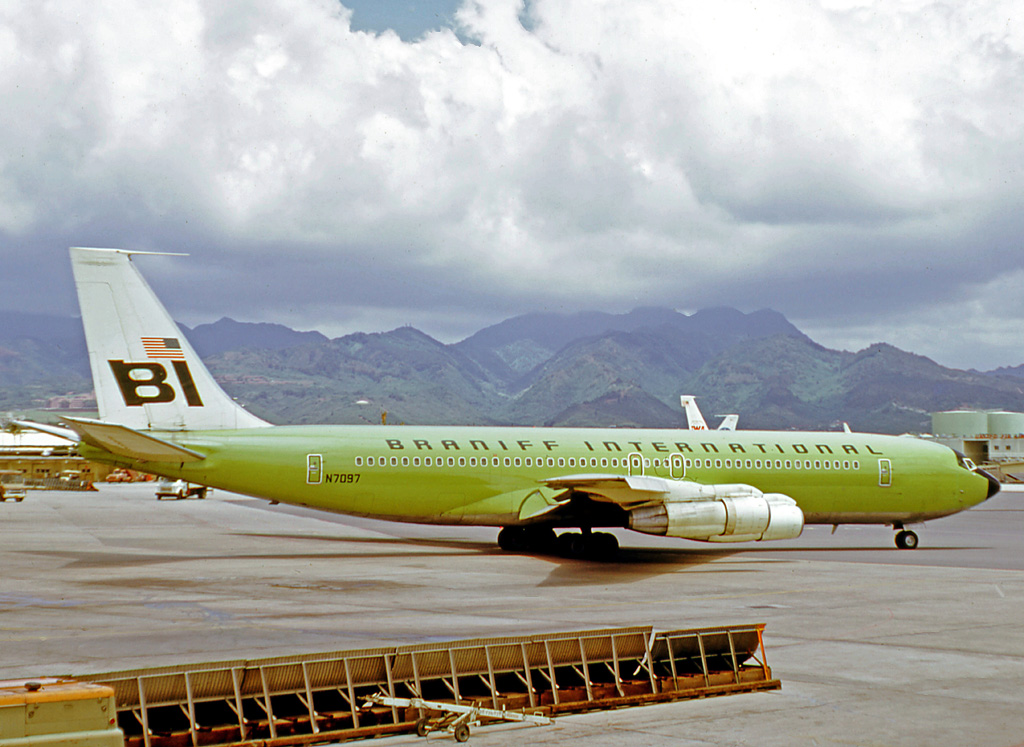

Operations and characteristics
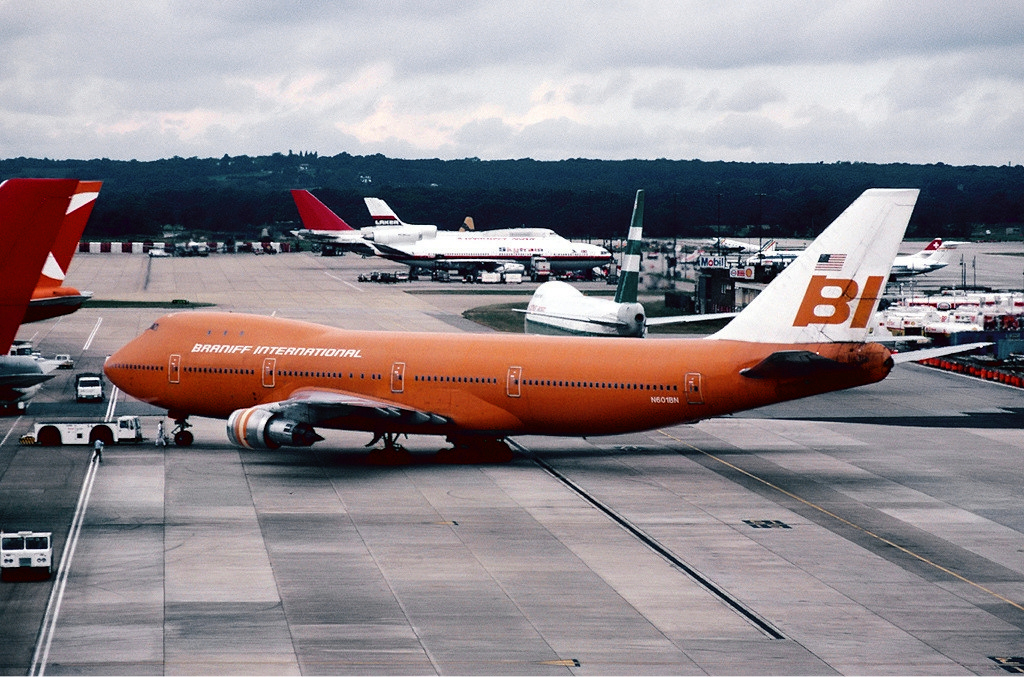
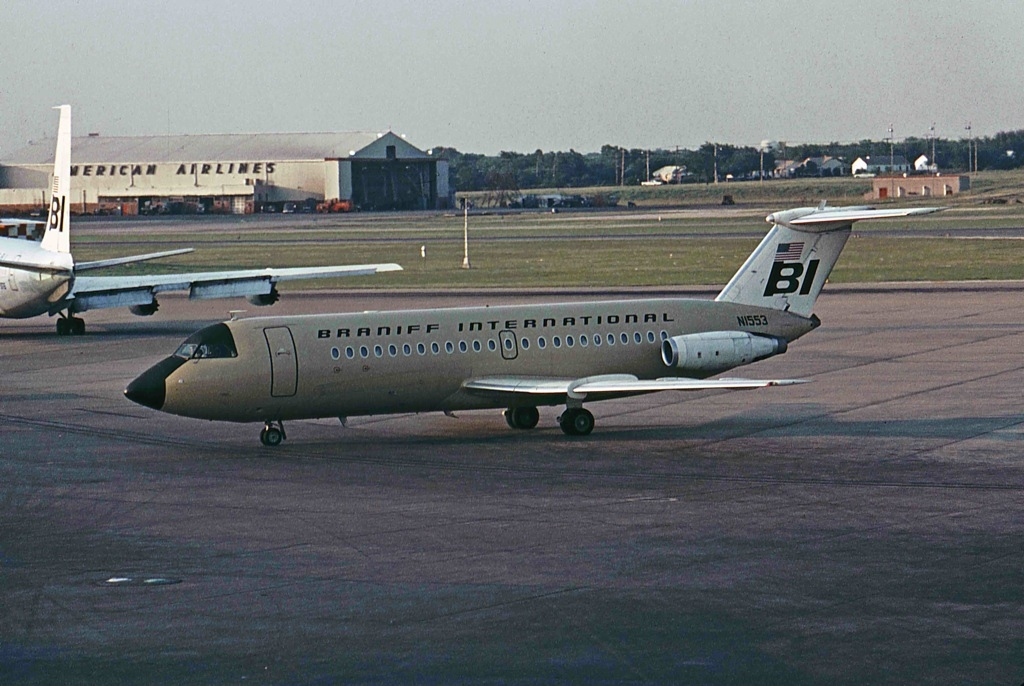
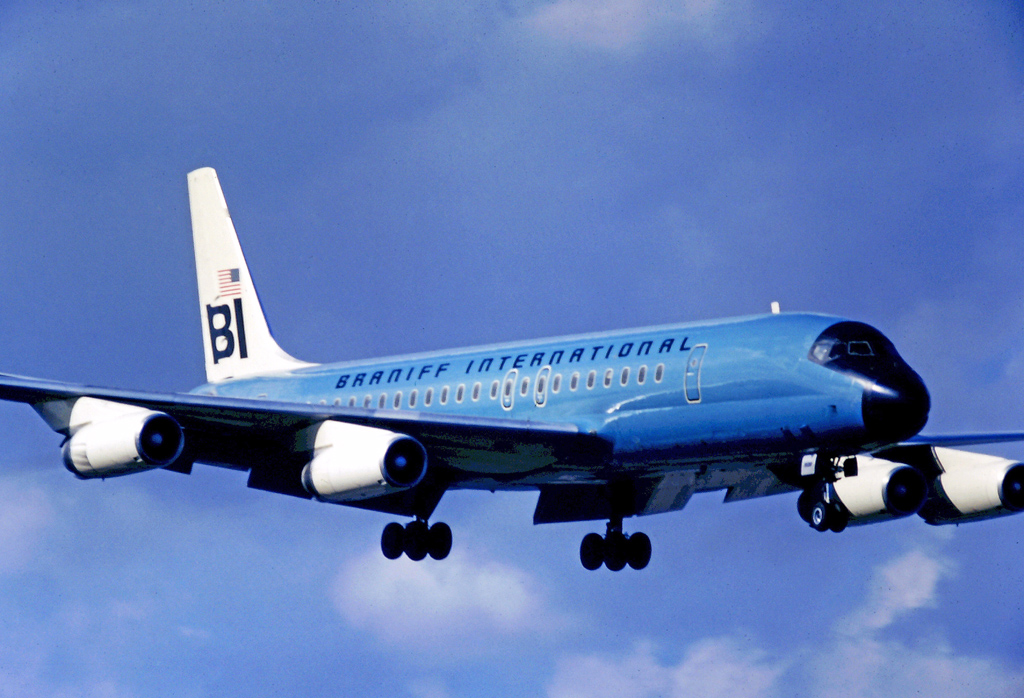
The airline operated a mix of short‑haul and long‑haul services and was known for adopting modern equipment and promotional flair. In 1960 Braniff became one of the first U.S. carriers to operate an all‑jet fleet for its mainline services, a move that shortened schedules and positioned the airline as technologically forward. Its fleet during the jet era included popular narrow‑ and wide‑body jets used for domestic and international routes.
Marketing, design and corporate identity
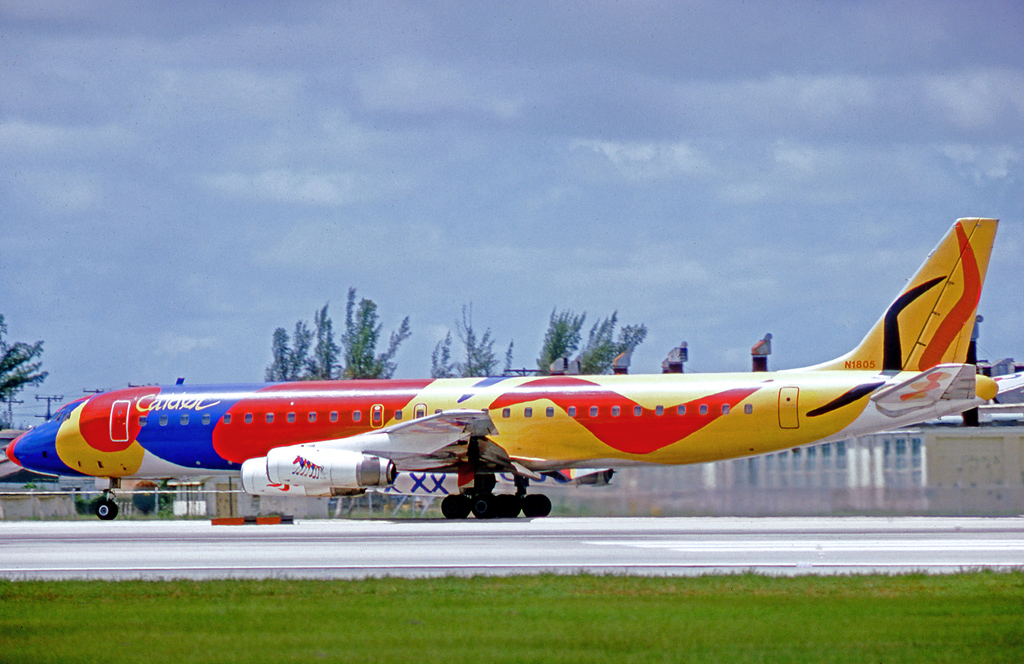
Under leadership in the 1960s and 1970s Braniff pursued bold branding and cabin design programs to distinguish itself from competitors. Campaigns and aesthetic partnerships introduced vibrant liveries, coordinated uniforms and distinctive airport presentations intended to create a memorable passenger experience. These initiatives received wide attention in the industry and remain examples of mid‑20th century airline marketing.
International expansion and routes
After World War II, Braniff expanded beyond U.S. borders into South America, serving countries such as Brazil, Argentina, Colombia and Peru. The airline connected major U.S. cities with Latin American destinations and operated routes that supported both passenger and cargo traffic between continents. Braniff’s international network reflected growing economic and cultural ties across the Americas in the postwar decades.
Decline and bankruptcy
Several factors contributed to Braniff’s decline. The airline industry’s deregulation in 1978 increased competitive pressure on fares and route structures. Economic downturns and rising interest rates reduced travel demand and raised operating costs. Higher fuel prices and a heavy debt load further strained finances. Unable to sustain profitable operations, Braniff declared bankruptcy and ceased its original scheduled services; the last flight of this era occurred on May 12, 1982.
Legacy and later uses of the name
The Braniff name left a notable legacy in aviation history for early jet adoption, distinctive marketing, and international route development. In subsequent years several separate ventures attempted to revive the Braniff brand on a smaller scale, but none restored the original carrier’s earlier scale. Braniff’s story is frequently cited in discussions about rapid growth, branding, and the industry effects of deregulation and economic cycles.
Notable facts
- Founded as Paul R. Braniff, Inc.; first scheduled flight on 20 June 1928 between Oklahoma City and Tulsa.
- Lost aircraft and resources to government wartime requirements during World War II, then resumed postwar expansion.
- Early adopter of an all‑jet mainline fleet around 1960.
- Impacts from deregulation, recession, fuel costs and debt led to bankruptcy in 1982.
Further information
- Company history overview
- Early operations and routes
- Founding documents and corporate records
- Oklahoma City service details
- Tulsa route information
- World War II impacts
- Government requisition of aircraft
- South America network
- Service to Brazil
- Service to Argentina
- Service to Colombia
- Service to Peru
- All‑jet fleet transition
- Airline deregulation context
- Competition after deregulation
- Profitability challenges
- Recession effects on travel
- Interest rate impacts
- Fuel price pressures
- Corporate debt issues
- Bankruptcy and final flights
Tags
Related articles
Author
AlegsaOnline.com Braniff International Airways Leandro Alegsa
URL: https://en.alegsaonline.com/art/13722
Sources
- braniffpages.com : "The Paul R. Braniff Years - Braniffpages.com"
- okhistory.org : "Braniff International Airways"
- flyawaysimulation.com : "Braniff International Airways: The History of an Amazing Airline"