
Bowie knife: design, history, and cultural significance
A large fixed-blade knife named for Jim Bowie, known for its distinctive shape, 19th-century origins after the Sandbar Fight, and enduring role in hunting, combat, and popular culture.
The Bowie knife is a large fixed-blade knife associated with 19th-century American frontier life and the famous frontiersman Jim Bowie. Although commonly described as a hunting or fighting knife, the term covers a family of designs rather than a single standardized pattern. The weapon first entered popular awareness after the 1827 "Sandbar Fight" on the Mississippi, an event that made both Jim Bowie and the long, heavy blade he carried household names. Early accounts described the implement as a "big butcher knife," and multiple craftsmen later claimed to have produced the original weapon.
Image gallery
10 Images
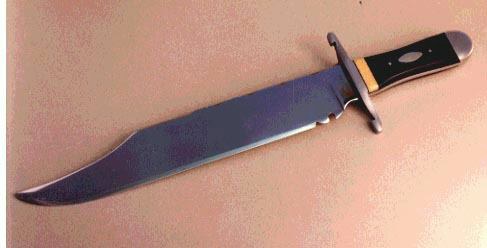

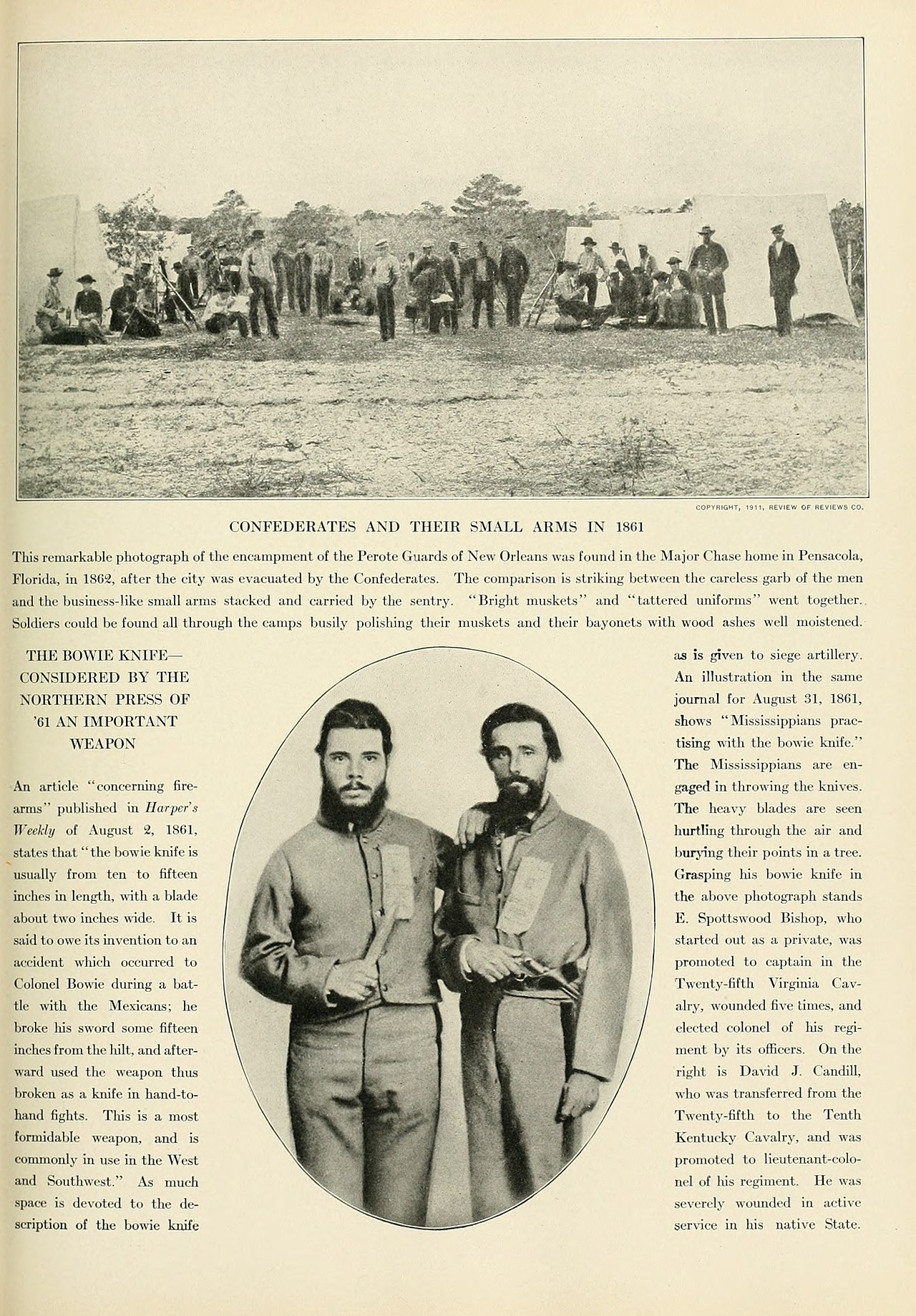
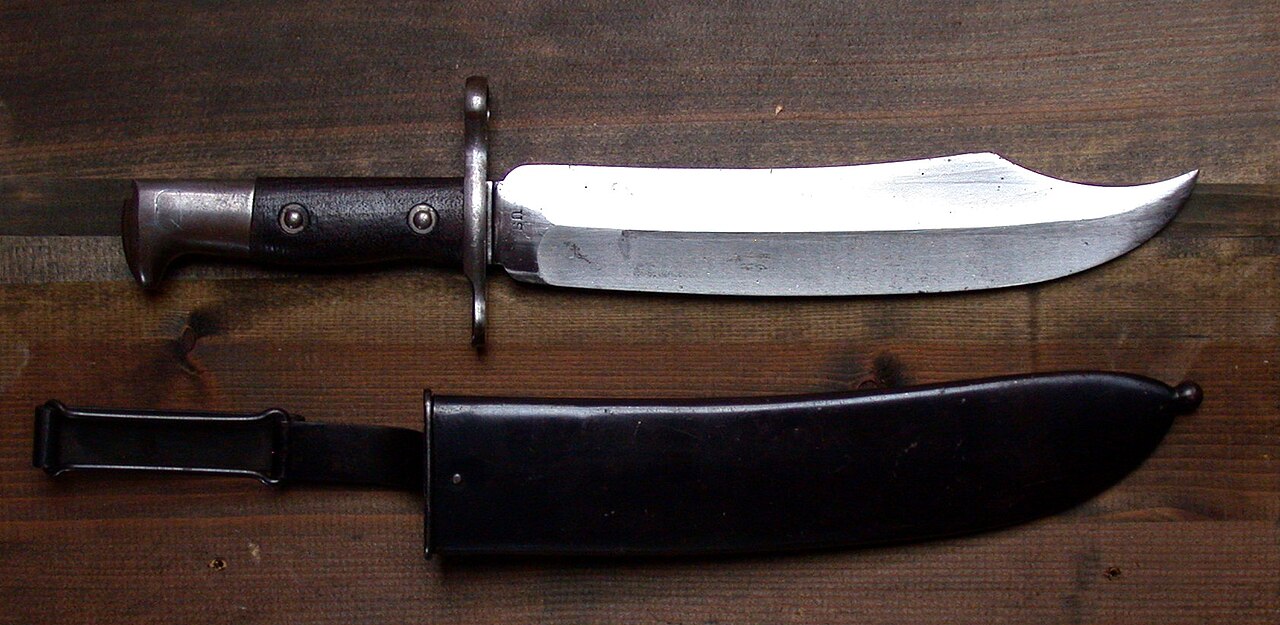

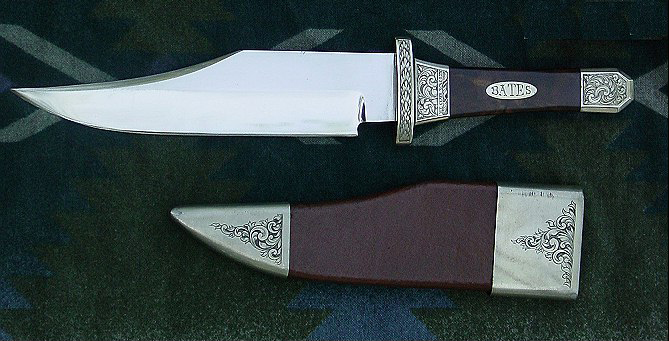

Characteristics and construction
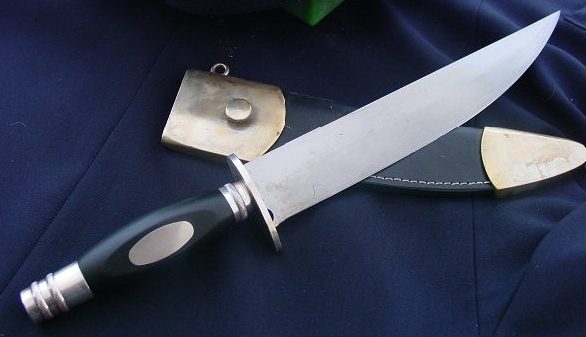
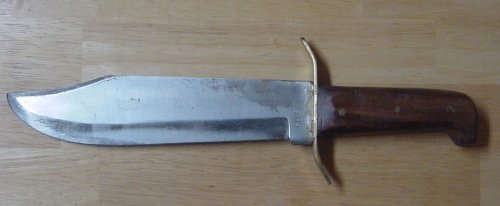
Bowie knives typically feature a long, wide blade and a clipped point that concentrates force toward the tip. Historical examples are single-edged with a pronounced bow or curve near the tip; many have a crossguard or quillons to protect the user's hand. Blade length varied, but surviving 19th-century specimens commonly fall in the longer range for personal knives. Handles were made from wood, bone, or horn and fastened to a full or partial tang; modern variants use stainless steels and synthetic handles for durability and corrosion resistance.
Origins and early history
The knife takes its name from Colonel Jim Bowie, though several accounts credit his brother Rezin P. Bowie with commissioning or modifying the blade. The knife's fame grew after the 1827 confrontation on a sandbar in the Mississippi River, often called the Sandbar Fight, in which Jim Bowie survived multiple wounds and reportedly used a large knife to defend himself. Contemporary witnesses variously described the blade and later knife-makers asserted they had produced the original. Scholarly consensus accepts that the exact maker and first form cannot be conclusively identified, and that the design evolved through use and regional variations.
Uses, variations, and examples
Bowie knives were prized for their versatility: useful for skinning game, camp chores, and as a personal defense weapon. Regional variants, sometimes termed Texas Bowies or trench Bowies, emphasize different balances of blade length, thickness, and point shape. Modern interpretations include decorative collector pieces, practical hunting knives, and tactical models for survival and military use. For more on knife types see hunting knife comparisons and historical references such as period accounts and biographical material on Jim Bowie.
Legal and cultural notes
- Legal status: Many jurisdictions regulate blade length, carry, and use; legislation and enforcement vary widely.
- Cultural impact: The Bowie knife became an American icon in literature, film, and collectible markets, symbolizing frontier self-reliance and ruggedness.
- Collecting and reproduction: Nineteenth-century originals are sought by collectors, while modern reproductions and custom makers continue the tradition; several knifemakers historically claimed authorship of the first Bowie blade.
For summaries and museum-style discussions see primary source compilations and surviving narratives of the era, and modern treatments on knife design and metallurgy at resources such as historical essays, event chronicles, and technical guides to bladesmithing materials and construction.
Author
AlegsaOnline.com Bowie knife: design, history, and cultural significance Leandro Alegsa
URL: https://en.alegsaonline.com/art/13457
Sources
- tshaonline.org : "Bowie Knife"
- tamu.edu : "A Knife Like Bowie's"
- southernmemoriesandupdates.com : "Knife fighter Jim Bowie survives deadly brawl"
- fieldandstream.com : "The History of the Bowie Knife"
- commons.wikimedia.org : Bowie knife