
Bovinae: the subfamily of cattle, buffaloes, bison and their relatives
Bovinae is a subfamily of the ruminant family Bovidae that includes cattle, bison, yaks, buffaloes and several wild species; important ecologically, economically and culturally worldwide.
The Bovinae are a subfamily within the even-toed ungulate family Bovidae. This group comprises roughly 26 living species that together form the familiar assemblage of cattle, bison, yaks, buffaloes and several large wild bovines (species list). Members of the subfamily occur across Africa, Eurasia and the Americas and occupy habitats from lowland grasslands to montane forests.
Image gallery
7 Images




Key characteristics
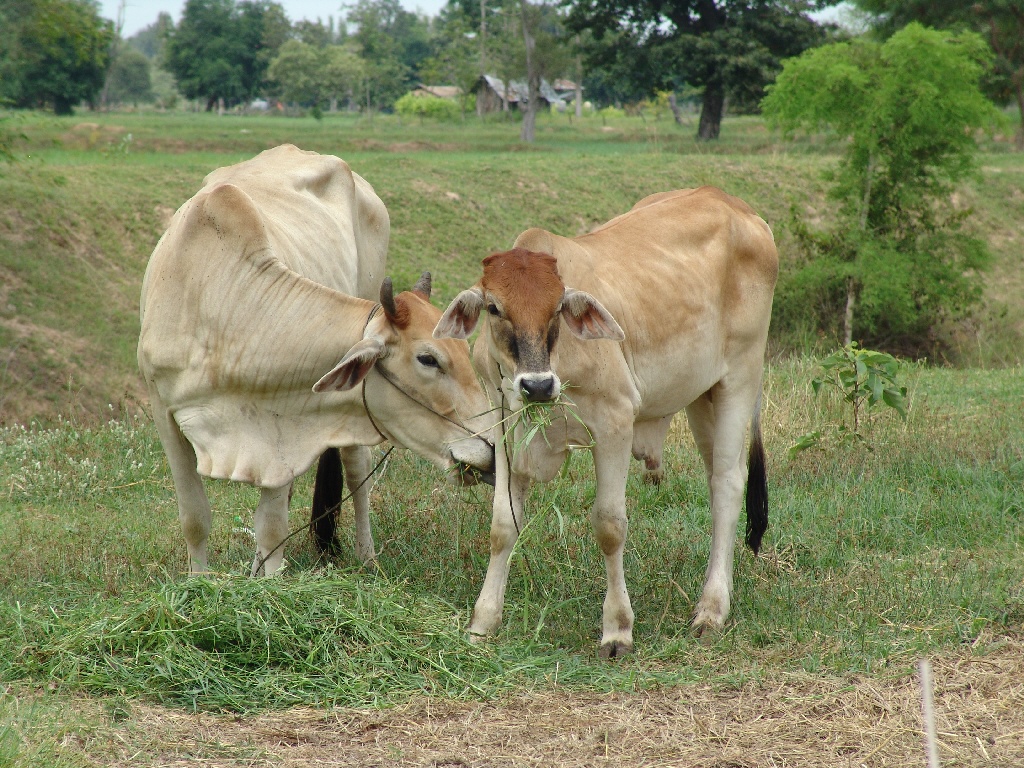
Bovines are ruminant herbivores with a multi-chambered stomach adapted for fermenting coarse plant material; they are specialized grazers and browsers and most species largely consume grasses. They are even-toed ungulates with cloven hooves and typically possess horns that have a permanent bony core covered by a keratin sheath — unlike antlers, bovine horns are not shed seasonally. Many species show sexual dimorphism, social herd behavior, and complex vocal and visual communication.
Taxonomy and common examples
The subfamily includes several familiar genera: Bos (domestic cattle, yak, gaur, banteng), Bison (American and European bison), Bubalus (water buffalo), and Syncerus (African buffalo), among others. Domestic forms such as Bos taurus and Bos indicus have been shaped by selective breeding for milk, meat, draft power and other traits, while their wild relatives remain important components of natural ecosystems.
History and human use
Bovines evolved from Miocene ancestors into a range of large-bodied grazers. Humans domesticated certain bovine species several thousand years ago, establishing them as central to agriculture and pastoralism worldwide. Today bovines supply milk, meat, leather, and labour, and they carry deep cultural and symbolic significance in many societies. Their grazing also influences plant communities and nutrient cycles in many landscapes (grazing impact).
Conservation and notable facts
Wild bovines face threats from habitat loss, hunting, disease and hybridization with domestic stock. Conservation successes, such as the recovery efforts for the American bison, coexist with continuing endangerment in species like some wild Asian bovines. Distinctive traits—permanent horns, complex rumen digestion and social herd dynamics—help separate bovines from other ungulates and underline their ecological and economic importance.
- Overview: large-bodied ruminants in Bovidae
- Examples: cattle, bison, buffaloes, yak, gaur, banteng
- Roles: agriculture, ecosystem engineering, cultural value
Related articles
Author
AlegsaOnline.com Bovinae: the subfamily of cattle, buffaloes, bison and their relatives Leandro Alegsa
URL: https://en.alegsaonline.com/art/13440