
Bowerbirds (Ptilonorhynchidae): elaborate courtship, ecology, and behaviour
Bowerbirds are an Australasian family of passerines noted for males building decorated structures to attract mates; they vary in size, diet and habitat, and play distinctive roles in forest ecosystems.
Overview
Bowerbirds are a family of passerine birds known scientifically as the Ptilonorhynchidae. The family contains about twenty species placed in eight genera, a grouping summarized in recent field guides and taxonomic reviews (genera list). These birds are best known for male courtship behaviour that involves constructing and ornamenting display sites—"bowers"—with a wide variety of collected items (courtship behaviour). One widely cited example of this habit is the Vogelkop bowerbird (Vogelkop bowerbird), whose displays helped shape early scientific interest in the group.
Image gallery
8 Images




Key characteristics
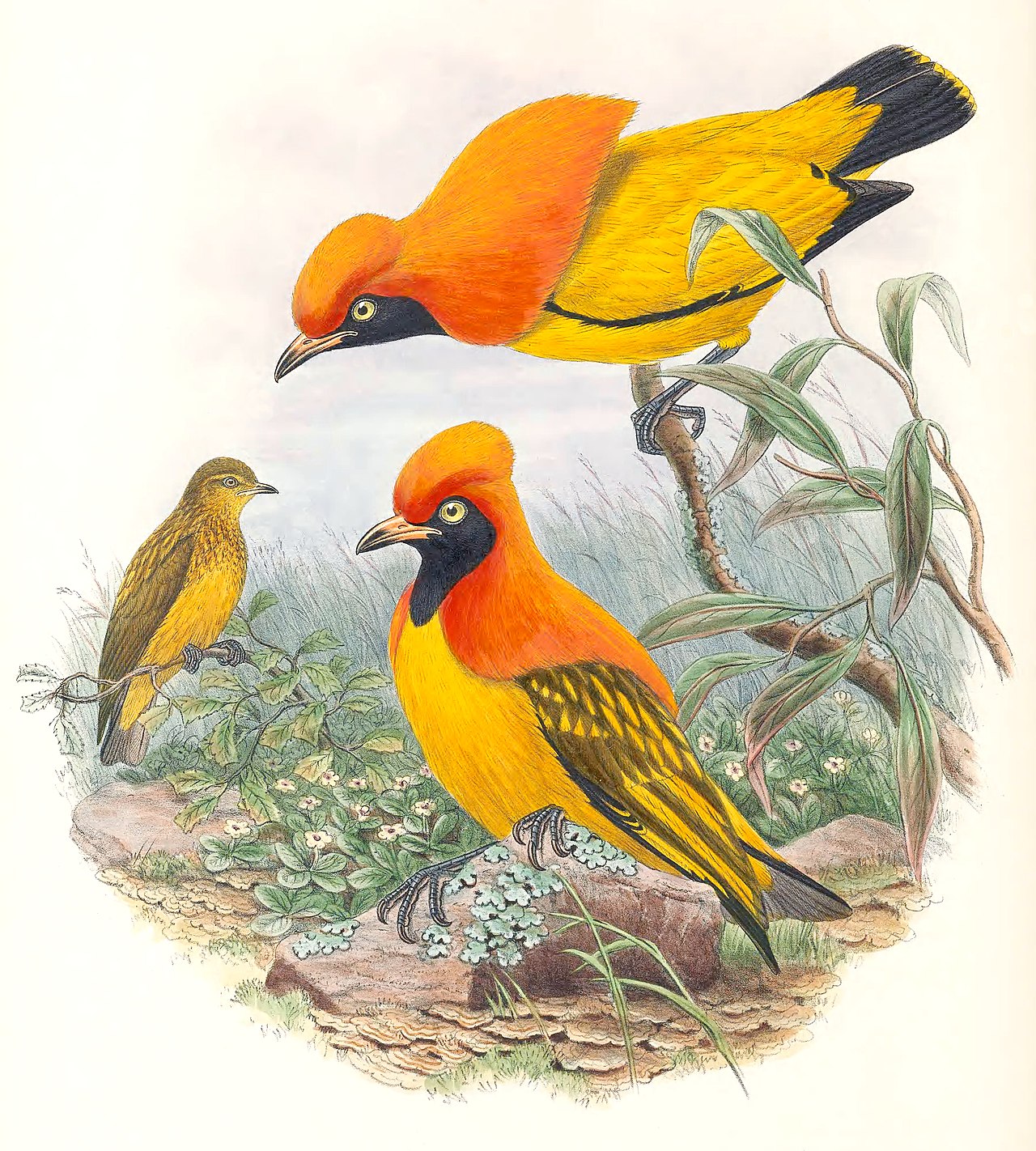
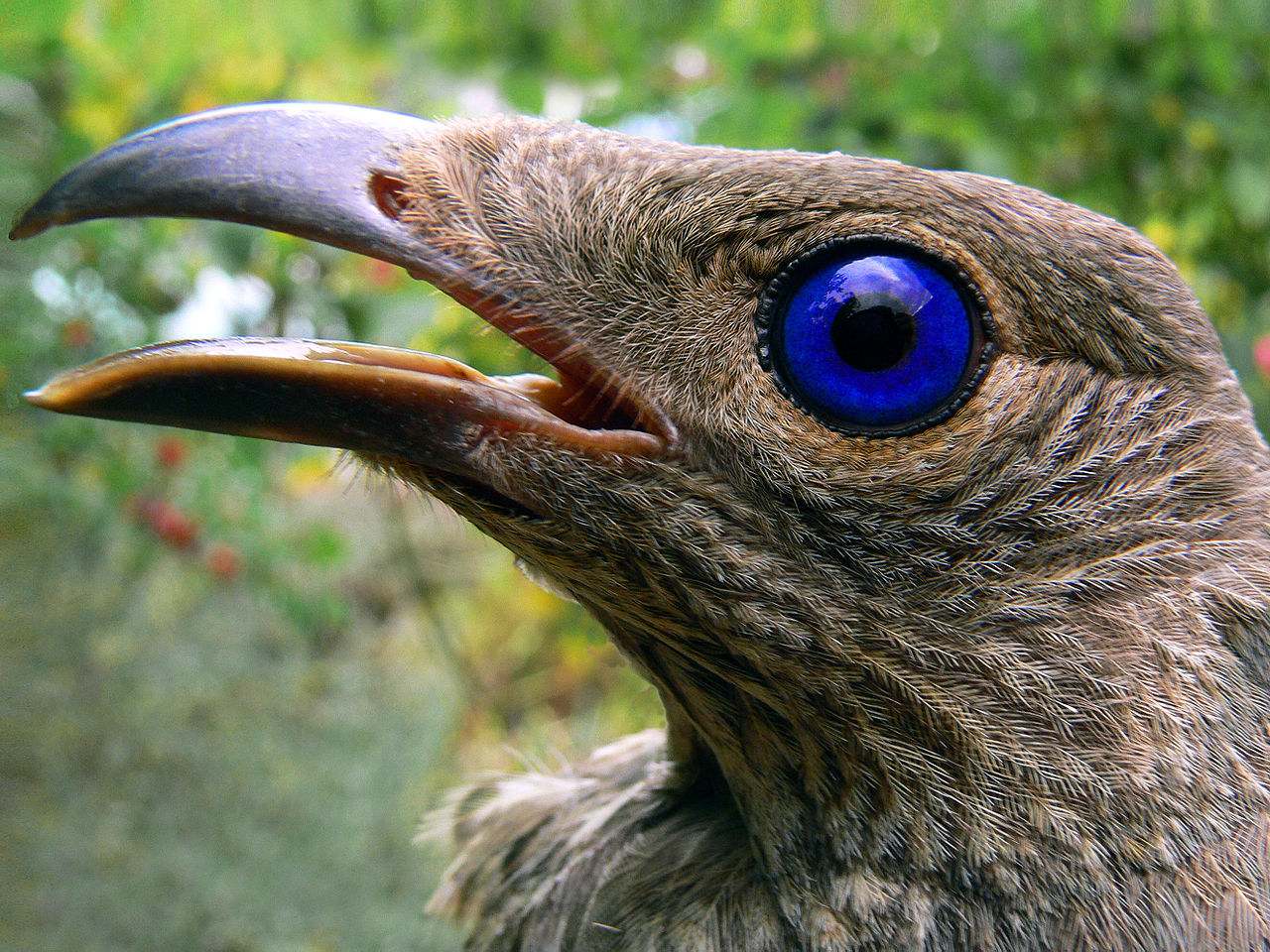
Bowerbirds are medium to large passerines with lengths roughly between 22 and 40 centimetres. The smallest commonly measured species is the golden bowerbird (example species), while the great bowerbird reaches larger body mass. Plumage ranges from cryptic browns and streaks to glossy blacks and iridescent hues depending on species. Their bill and feet are adapted for fruit handling, manipulation of objects and occasional insect foraging. Diets are primarily frugivorous but often supplemented by insects, nectar, flowers and leaves; nestlings are frequently fed insects for protein.
Distribution and habitat
Bowerbirds have an Austro-Papuan distribution (distribution). Ten species are endemic to New Guinea (New Guinea endemics), eight are endemic to Australia (Australian endemics) and two species occur on both large islands (shared species). They occupy a wide range of habitats, including lowland and montane rainforest (rainforest habitats), open eucalypt (eucalyptus) and acacia woodlands (acacia), plus sclerophyll and shrubland environments (shrublands), reflecting both ecological flexibility and species-specific preferences.
Courtship, bowers and mating
The defining behaviour of the family is male construction and decoration of bowers. These structures are not nests; they are display arenas where males perform visual and acoustic displays to attract and persuade females. Different species build characteristically different bowers—simple cleared platforms, avenue-like structures of sticks, or more elaborate constructions—and decorate them with brightly coloured objects, shells, flowers, berries and man-made items. The function of this ritual is to influence female choice (function of courtship) in a mating system typically described as female choice, where females evaluate male skill, taste and vigour before mating.
Behavioural diversity and ecology
Beyond bower-building, bowerbirds exhibit diverse behaviors: some species engage in complex vocal mimicry, others show cooperative territorial defence, and many have seasonal movements linked to fruit availability. They are generally solitary or live in loose social groups outside the breeding season. As medium-sized passerines (passerine context), they play roles as seed dispersers and occasional insect predators, influencing forest regeneration and invertebrate communities.
Human interactions, conservation and notable facts
Bowerbirds are popular subjects in natural history and conservation education because of their dramatic displays. Some species, such as the satin and spotted bowerbirds, sometimes feed on introduced fruit and vegetable crops and may be perceived as pests by farmers; conflicts have led to localized persecution. Conservation status varies by species: habitat loss, invasive species and hunting pressure can threaten local populations, while other species remain widespread. Historical naturalists and modern researchers alike have used bowerbirds to study sexual selection, cognition and aesthetics in animals, making them notable beyond their immediate ecosystems.
Further reading and resources
- Taxonomy and species lists: genera and species overview
- Field identification and range maps: distribution resource
- Behavioural studies and courtship analyses: behavioural research, mating function studies
- Regional species accounts: New Guinea, Australia, and endemism notes
For visual examples and species-specific pages see Vogelkop bowerbird and golden bowerbird, and for habitat descriptions consult resources on rainforest, eucalyptus, acacia and shrubland ecosystems. Academic reviews and field guides often place bowerbirds within broader passerine studies (passerine context).
Questions and answers
Q: What family do bowerbirds belong to?
A: Bowerbirds belong to the bird family Ptilonorhynchidae.
Q: What is the most well-known behaviour of bowerbirds?
A: The most well-known behaviour of bowerbirds is their unique courtship ritual, where males build a structure and decorate it with sticks and brightly coloured objects.
Q: What is the purpose of this courtship ritual?
A: The purpose of this courtship ritual is to attract a mate.
Q: How many species are in the bowerbird family?
A: There are 20 species in eight genera in the bowerbird family.
Q: Where can bowerbirds be found?
A: Bowerbirds have an Austro-Papuan distribution, with ten species endemic in New Guinea, eight endemic to Australia and two found in both large islands. Their distribution is mainly in the tropical parts of New Guinea and northern Australia, though some species extend into central, western and southeastern Australia. They occupy a range of different habitats, including rainforest, eucalyptus and acacia forest, and shrublands.
Q: What does a typical diet for a bowerbird consist of?
A: A typical diet for a bowerbird consists mainly of fruit but may also include insects (especially for nestlings), flowers, nectar and leaves in some species.
Q: Are there any negative impacts that come from having these birds around humans?
A: The satin and spotted bowerbirds are sometimes regarded as pests because they feed on introduced fruit and vegetable crops. They have occasionally been killed by affected farmers.
Related articles
Author
AlegsaOnline.com Bowerbirds (Ptilonorhynchidae): elaborate courtship, ecology, and behaviour Leandro Alegsa
URL: https://en.alegsaonline.com/art/13453
Sources
- dse.vic.gov.au : Problem Wildlife
- dse.vic.gov.au : spotted bowerbird