
Aachen Cathedral (Aachener Dom): Charlemagne's Palatine Chapel and World Heritage
Aachen Cathedral, founded by Charlemagne around 796, is a layered medieval church in Aachen, Germany—famed for its octagonal Palatine Chapel, relics, coronation role and UNESCO World Heritage status.
Overview
Aachen Cathedral, known in German as the Aachener Dom, stands in the city of Aachen in Germany. Founded in the late eighth century under the patronage of Charlemagne, the building is one of the oldest surviving major churches in Europe. It combines a central imperial chapel with later medieval additions and has been recognised as a UNESCO World Heritage Site since 1978 for its outstanding historical and architectural significance.
Image gallery
10 Images




History and imperial role
The nucleus of the complex is the Palatine Chapel, erected within the Carolingian palace complex as an expression of imperial authority and liturgical prestige. The chapel became a mausoleum and pilgrimage focus when Charlemagne was laid to rest there; its association with royal ritual helped make Aachen a centre for coronation ceremonies and imperial identity in the medieval German lands. For centuries the site was intertwined with the rites and memory of rulership, and successive rulers and communities adapted the fabric to changing needs.
Architecture and design
The cathedral displays a layered architectural history. The octagonal core reflects Carolingian and early Romanesque principles in its centralized plan and mosaic decoration. Later medieval builders added a high, luminous Gothic choir to the east, producing a juxtaposition of horizontal imperial space and a vertical Gothic termination. Small Ottonian elements remain, notably around the historic throne area, and the overall complex is often studied as a key example of continuity and change in early medieval church architecture and palace-chapel design; see comparative work on the chapel type for context.
Relics, art and liturgy
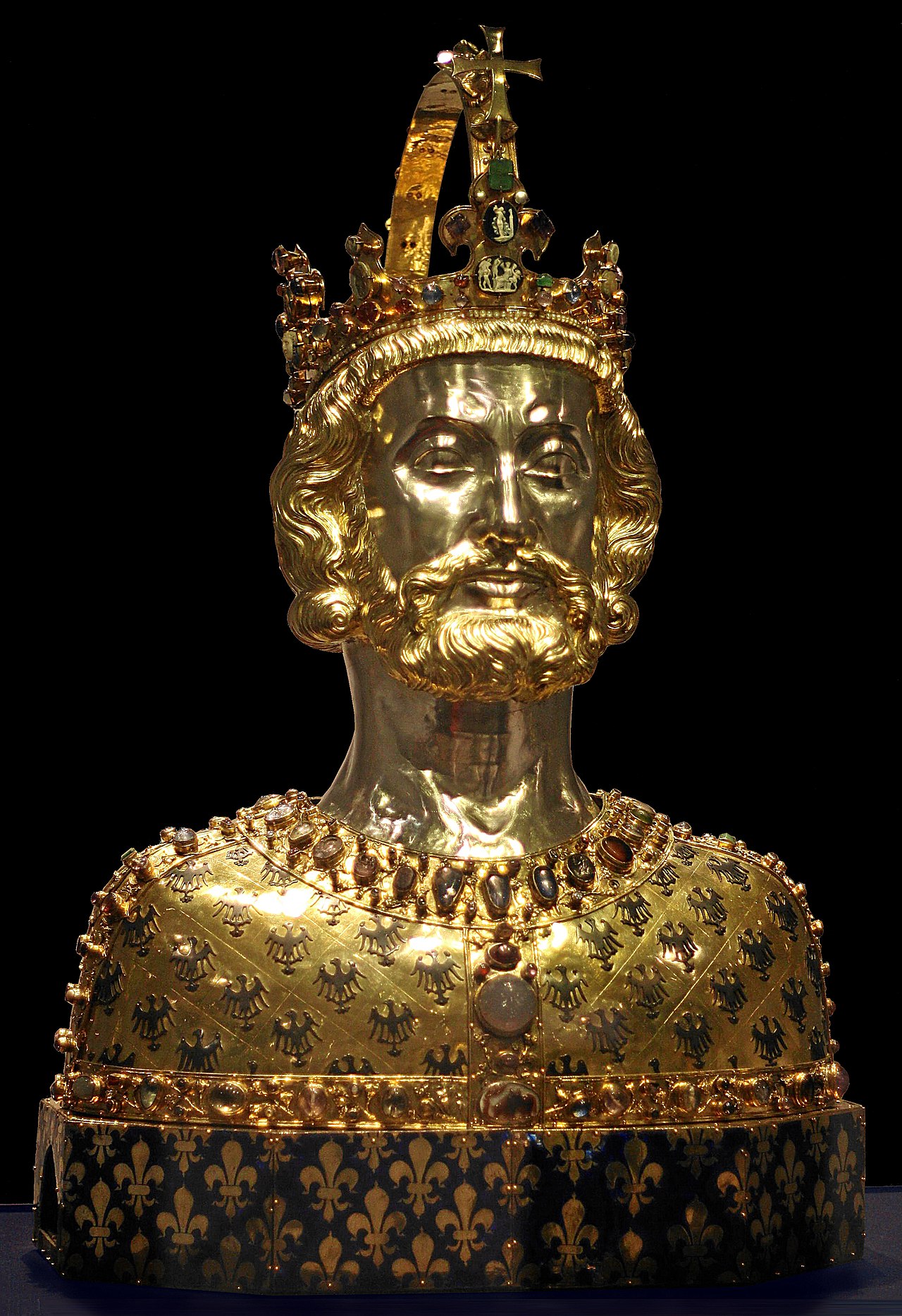
The cathedral preserves important relics and liturgical treasures that have long drawn pilgrims. Among its notable holdings is the Shrine of the Three Kings, a celebrated medieval reliquary associated in local tradition with the Magi, and a varied collection of mosaics, marble revetments and medieval metalwork. Periodic public displays of relics continue to be a feature of devotional life at the church, echoing older pilgrimage practices and local festivals.
Conservation and visiting
Because of its age and historical layers, Aachen Cathedral has been the subject of continuous conservation and research. Restoration has focused on preserving mosaics, stonework and fragile furnishings while accommodating a living parish and many visitors. Practical visitor guidance and scholarly studies offer different perspectives; general overviews treat the site among Europe’s early cathedrals and medieval monuments, and specialised literature discusses its role in imperial history and liturgical practice (see material on imperial institutions and biographical studies of Charlemagne's burial).
Further reading and resources
- Historical surveys of early medieval architecture and empire institutions at architectural studies.
- Local and regional context in works on Aachen and the Rhineland.
- Comparative analyses of early churches in European history.
- Specialist studies of the Palatine chapel form and Carolingian art.
The cathedral remains both a functioning Roman Catholic church and a major monument of European cultural history. Visitors and researchers approach it as an architectural palimpsest that records political, devotional and artistic developments from the Carolingian era through the later Middle Ages and into modern conservation practice. For official visitor information and current events consult municipal and heritage sources and recognised guides to world heritage sites.
Questions and answers
Q: What is Aachen Cathedral?
A: Aachen Cathedral is a Roman Catholic church in Aachen, Germany.
Q: How old is Aachen Cathedral?
A: Aachen Cathedral is one of the oldest cathedrals in Europe. It was ordered to be built in 796 by Emperor Charlemagne.
Q: Who was buried at Aachen Cathedral?
A: Emperor Charlemagne was buried at Aachen Cathedral when he died.
Q: When was Aachen Cathedral made a UNESCO World Heritage Site?
A: Aachen Cathedral was made a UNESCO World Heritage Site in 1978.
Q: What types of architecture were used to build Aachen Cathedral?
A: Aachen Cathedral uses several types of architecture. The choir is built in a Gothic style. The core of the building is a chapel built in a Carolingian-Romanesque style. There are small parts that also use an Ottonian style, including an area around the throne.
Q: Is Aachen Cathedral is important?
A: Yes, Aachen Cathedral is important as it is one of the oldest cathedrals in Europe and was ordered to be built by Emperor Charlemagne. It was also one of the first UNESCO World Heritage Sites listed.
Q: Where is Aachen Cathedral located?
A: Aachen Cathedral is located in Aachen, Germany.
Author
AlegsaOnline.com Aachen Cathedral (Aachener Dom): Charlemagne's Palatine Chapel and World Heritage Leandro Alegsa
URL: https://en.alegsaonline.com/art/134032