
William Clark (1770–1838) — American explorer, soldier and administrator
Co-leader of the Lewis and Clark Expedition, territorial governor and long-serving Superintendent of Indian Affairs; remembered for exploration, mapping and a contested legacy involving slavery and Native policy.
William Clark (August 1, 1770 – September 1, 1838) was an American explorer, soldier, Indian agent, and territorial administrator. Born in Virginia and raised in frontier Kentucky, he settled in the region that became the state of Missouri. Clark combined practical wilderness skills, surveying ability and administrative talent: he was also a planter and, like many leading men of his era, a slaveholder. His life is best known for its central role in the early expansion of the United States.
Image gallery
6 Images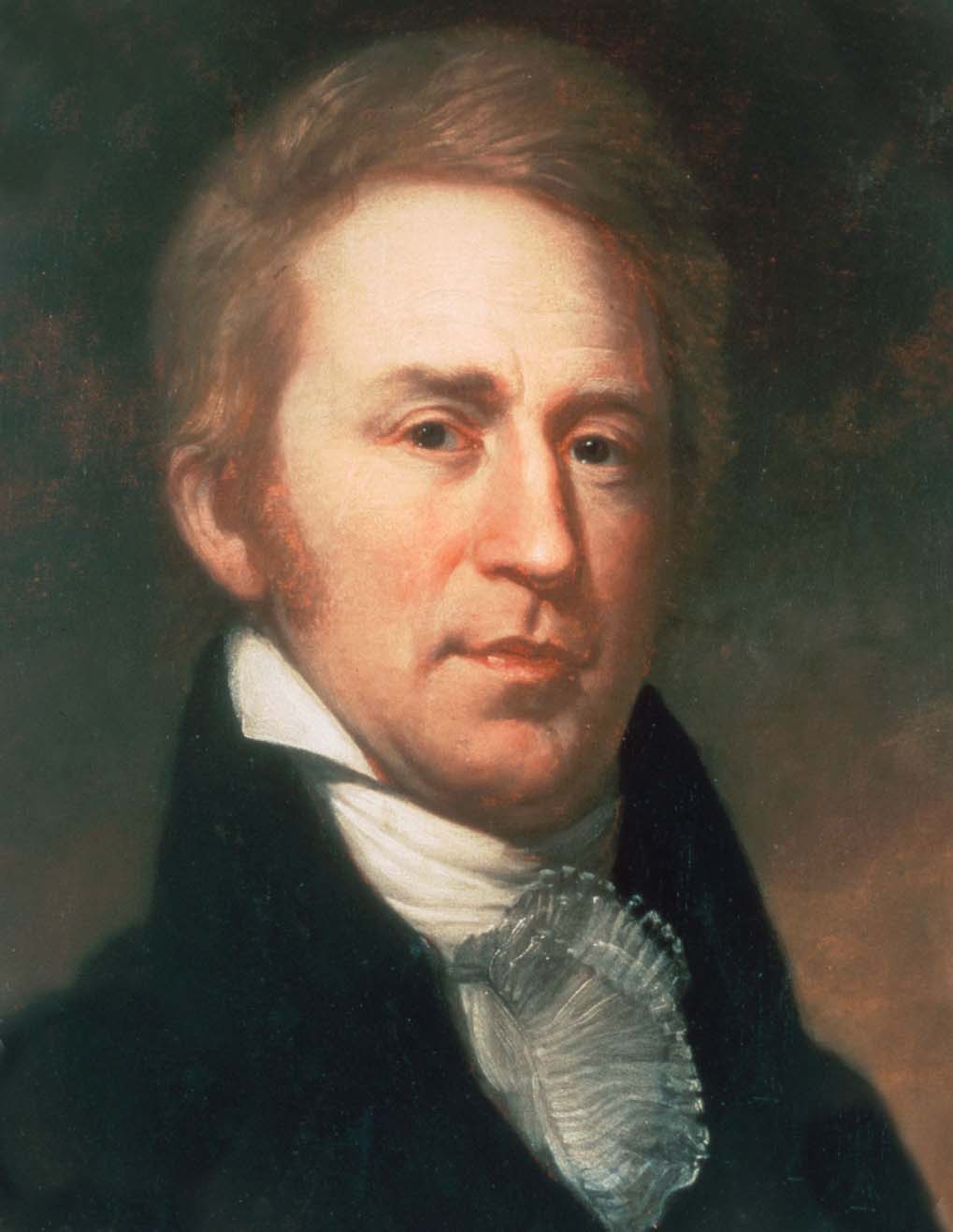


Early life and military service
Clark served in local militias and later in the United States Army, gaining experience that prepared him for long overland travel and logistical planning. His familiarity with frontier communities, waterways and Native nations made him a natural partner for the expedition commissioned by President Thomas Jefferson. He had practical training in surveying and mapmaking and kept systematic journals and sketches that became important documentary resources.
Lewis and Clark Expedition
From 1803 to 1806, Clark co-led the Corps of Discovery with Meriwether Lewis. The journey, commonly called the Lewis and Clark Expedition, set out after the United States acquired the Louisiana Purchase. The corps traveled to the edge of the Pacific Ocean, documenting geography, plants, animals, and Native societies encountered along the route. The mission combined scientific observation, diplomacy with Indigenous nations, and an effort to assert an American presence on the continent’s western margin.
Public career after the expedition
Following the expedition Clark returned to civil and military service. He served in local militias and later was appointed governor of the Missouri Territory, where he administered land and settlement policy. In 1822 he became the federal Superintendent of Indian Affairs, a post he held until his death. In these roles he negotiated treaties, oversaw trade and tried to manage relationships between U.S. officials and many Native nations; historians note both practical accomplishments and policies that often disadvantaged Indigenous communities.
Legacy and notable points
- Clark’s journals, maps and specimen lists contributed to American geographic knowledge and later scientific study.
- The expedition included diverse participants—trappers, soldiers, interpreters and enslaved people—whose roles are subjects of ongoing study and reassessment.
- Clark’s governance and long tenure in Indian Affairs made him influential in early federal Indian policy, a legacy that includes both diplomatic contacts and controversial treaty practices.
- Commemoration of Clark—place names, monuments and schools—has generated debate because of his involvement in slavery and policies toward Native Americans.
William Clark remains a central figure in early United States history: an experienced frontier leader whose achievements in exploration and administration are inseparable from the complicated moral and political realities of his time. For further reading, see contemporary editions of the expedition journals and modern histories that place Clark’s career in the broader contexts of American expansion, slavery and Indigenous dispossession.
References and starting points: explorer biographies, early 19th-century military records and archival editions of the Lewis and Clark Expedition journals provide primary documentation; regional histories of Missouri and the Missouri Territory illuminate his administrative years. See also archival material on interactions with Native nations and administrative records from the Superintendent of Indian Affairs.
Additional resources: military service summaries (United States Army records), personal networks including contemporaries such as Meriwether Lewis, and broader geopolitical context like the Louisiana Purchase and the drive to the Pacific Ocean. Regional origins and migration patterns are documented in sources about Virginia and frontier Kentucky, while local histories of Missouri discuss Clark’s life as a planter and territorial official.
Author
AlegsaOnline.com William Clark (1770–1838) — American explorer, soldier and administrator Leandro Alegsa
URL: https://en.alegsaonline.com/art/132898