
Meriwether Lewis (1774–1809): leader of the Lewis and Clark Expedition
American explorer, soldier, and administrator best known for co-leading the Lewis and Clark Expedition (1804–1806). Governor of Upper Louisiana; death by gunshot remains controversial.
Meriwether Lewis (August 18, 1774 – October 11, 1809) was an American explorer, soldier, and public official who rose to prominence as the commander of the Lewis and Clark Expedition. Trained in military skills and fieldcraft, Lewis combined practical leadership with an interest in natural history, cartography, and diplomacy. He later served as Governor of Upper Louisiana after his return, an appointment made by President Thomas Jefferson.
Image gallery
8 Images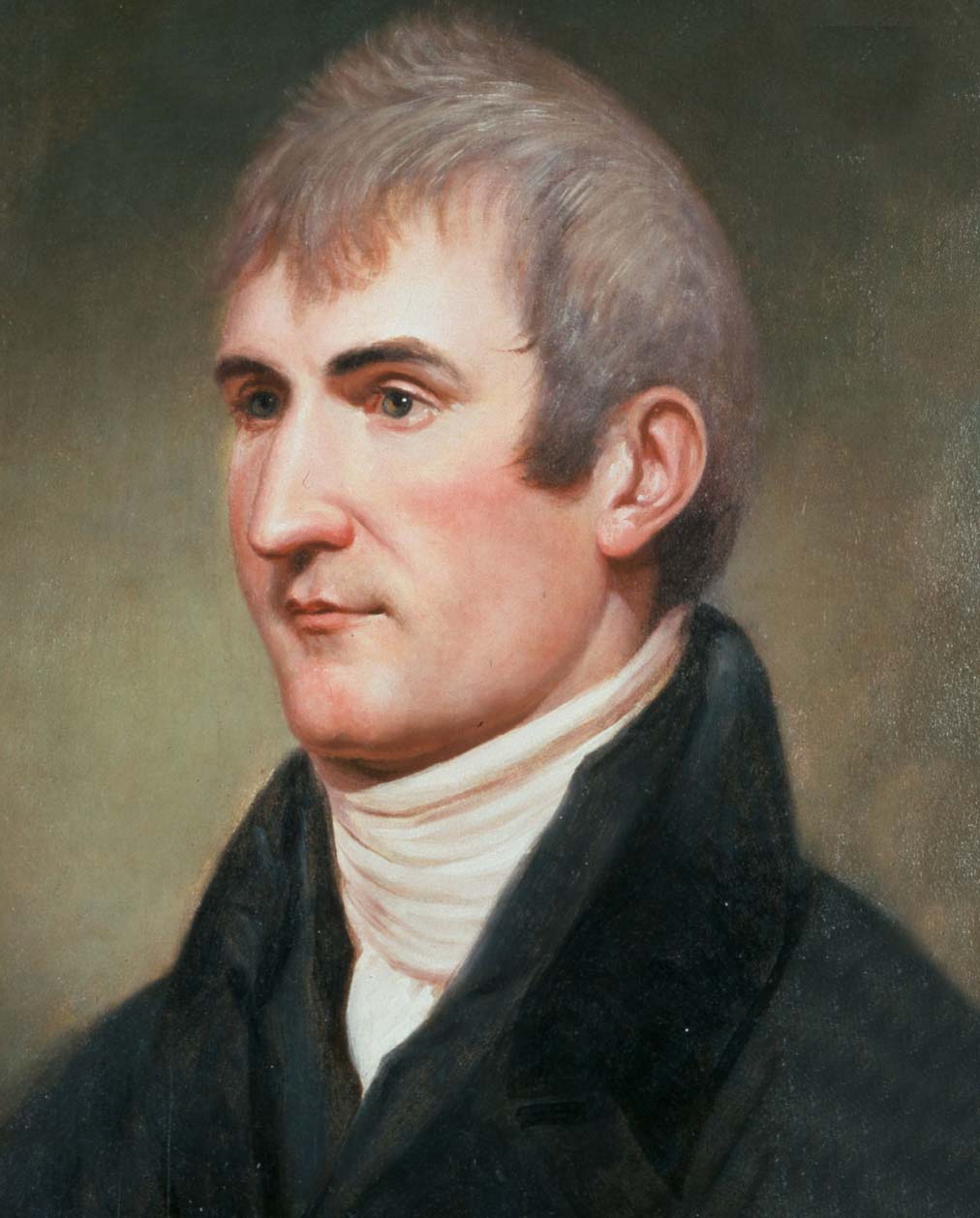


Early life and preparation
Born in colonial Virginia, Lewis served in the militia and then in the regular army, where he gained experience in logistics, surveying, and command. In 1801 he became private secretary to President Jefferson, who encouraged his study of botany, geography, and native languages in preparation for a transcontinental exploration. Jefferson’s goal—prompted by the recent Louisiana Purchase—was to obtain accurate information about the new territory, its resources, and the indigenous peoples who lived there; Lewis spent months receiving practical instruction and assembling instruments, books, and supplies.
The expedition (1804–1806)
From 1804 to 1806 Lewis led the Corps of Discovery with his co-leader William Clark. Their mission combined exploration, scientific collecting, and political objectives: to map a route to the Pacific, open trade, and assert sovereignty for the United States in the newly acquired lands. The party followed the Missouri River across the interior, crossed the Rockies, and reached the Pacific Northwest. Along the way they recorded detailed observations in journals, made maps, negotiated relations with dozens of Indigenous nations, and collected numerous scientific specimens and ethnographic notes.
Notable achievements
- Produced extensive journals and maps that improved knowledge of western geography and resources.
- Established diplomatic contacts and trade relations with Native American groups, often through intermediaries such as interpreters and guides.
- Documented hundreds of plant and animal species and gathered material for further study.
- Demonstrated the viability of an overland route to the Pacific, encouraging later migration and commerce.
Later life, death, and debate
After the expedition Lewis received a federal appointment as Governor of Upper Louisiana in 1806. His later years were marked by administrative challenges, financial strain, and personal difficulties. On October 11, 1809, Lewis died of gunshot wounds at an inn on the Natchez Trace. Contemporary authorities recorded his death as a suicide, but historians have debated the circumstances and whether foul play may have been involved; the event remains a subject of scholarly discussion.
Legacy and historical perspective
Meriwether Lewis is remembered for his leadership of one of the most consequential American exploratory ventures. The expedition’s records remain primary sources for early Western history, natural science, and contact-era ethnography. His life and death are often discussed together: celebrated for expanding geographic and scientific knowledge, and scrutinized for the expedition’s long-term consequences for Indigenous peoples and the contested nature of western claims. For further introductory material, consult general works on the Lewis and Clark Expedition and biographies that examine both achievements and controversies.
Author
AlegsaOnline.com Meriwether Lewis (1774–1809): leader of the Lewis and Clark Expedition Leandro Alegsa
URL: https://en.alegsaonline.com/art/126657