
Boston Massacre (March 5, 1770)
A concise, neutral account of the Boston Massacre: the confrontation on March 5, 1770 between British soldiers and colonists in Boston, its background, victims, trial, and lasting significance.
Overview
The Boston Massacre was a deadly confrontation that occurred on March 5, 1770, in the port city of Boston, Massachusetts, then a British colony. Late that winter evening a squad of British soldiers and additional troops exchanged violence with a crowd of local residents outside the Custom House on King Street (near today’s State Street). In the confusion several soldiers fired into the crowd, and five civilians were killed and others wounded. The incident became a pivotal episode in the escalating disputes between Britain and its North American colonies.
Image gallery
10 Images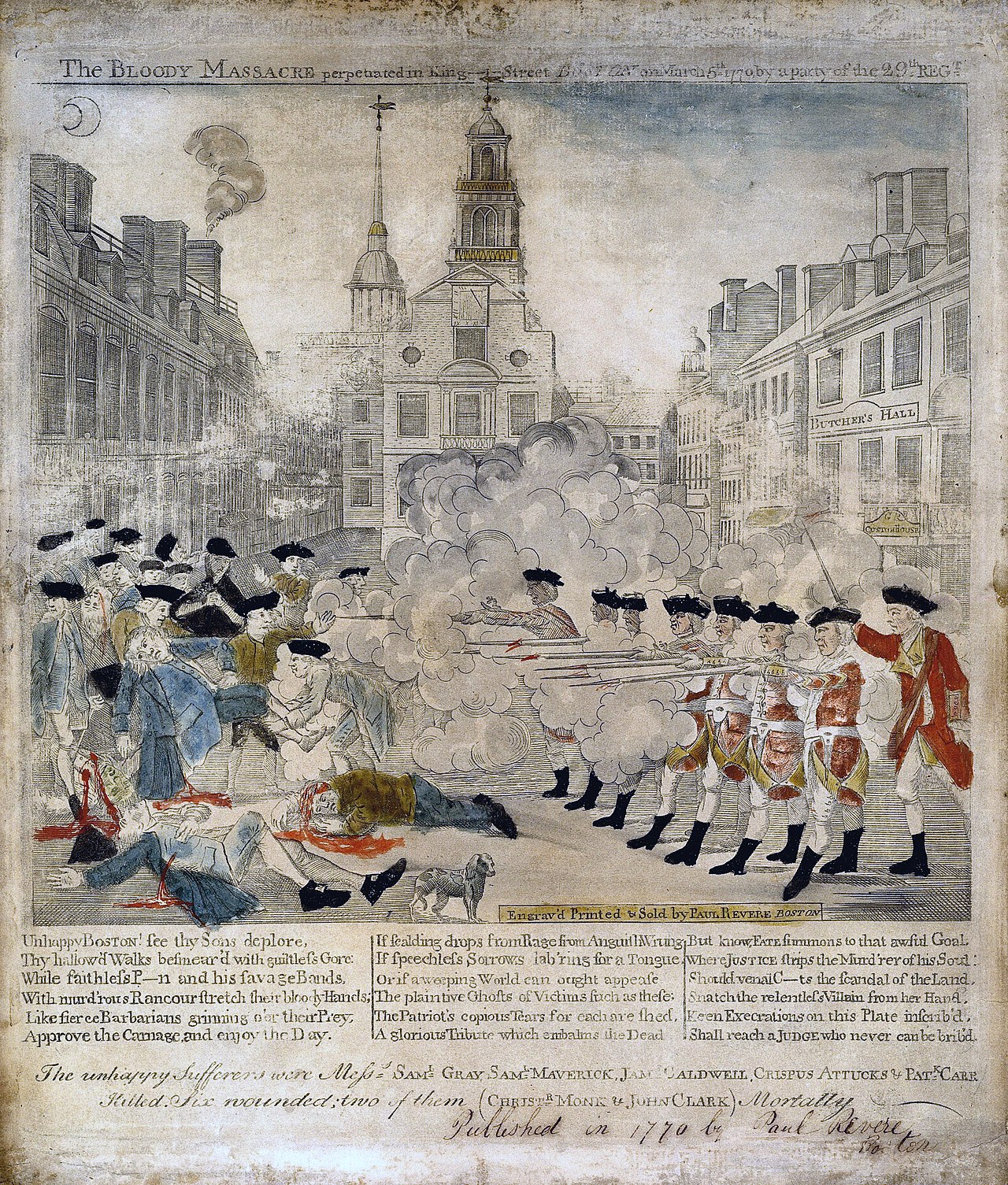





Context and causes
Tension in Boston had risen after the arrival of British troops in 1768 to enforce unpopular revenue laws and keep order. Colonists protested taxation measures such as the Townshend Acts and resented a standing military presence. Skirmishes and insults between soldiers and townspeople were common. On the night of March 5 a dispute began when a single sentry was confronted by a local youth; the altercation drew an increasingly large and hostile crowd that hurled objects and insults at the soldiers who intervened.
The incident
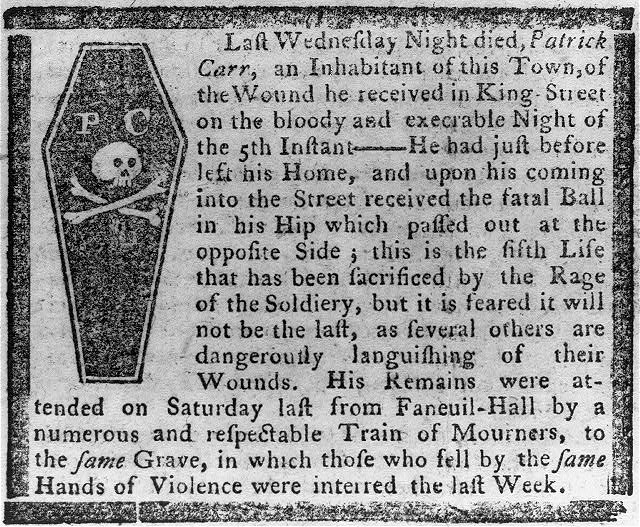
Accounts agree that a group of soldiers attempted to hold the line while being pelted with snowballs—some reports say snowballs packed with rock or clams—and struck with clubs. In the chaos someone in the crowd reportedly cried out; the soldiers, believing themselves in danger, discharged their weapons. Among those killed was Crispus Attucks, often identified as a man of African and Native American descent and commonly remembered as the first casualty. In total, five civilians died: Crispus Attucks, Samuel Gray, James Caldwell, Patrick Carr, and Samuel Maverick.
Legal aftermath and public reaction
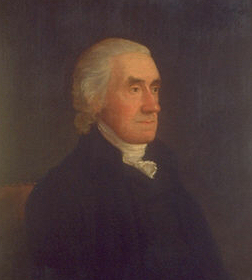
The killings produced a fierce public outcry. Colonial leaders used broadsides, sermons and engravings—most famously Paul Revere’s depiction—to portray the event as a deliberate massacre and to galvanize opposition to British authority. The soldiers were arrested and tried for murder. In a widely noted trial, future president John Adams served as defense counsel, arguing for fair treatment and acquittal on the merits of self-defense. Six soldiers were acquitted; two were convicted of manslaughter and punished by branding on the thumb.
Consequences and significance
Politically the Boston Massacre intensified hostility, deepened colonial unity in some quarters, and fed the rhetoric that led toward revolution. British authorities removed most troops from Boston in the months after the incident and repealed several of the Townshend duties—except for a tax on tea, which later became another flashpoint. Historically the episode is studied both as a local riot and as a symbolic event that colonists used to critique imperial power.
Notable facts
- The confrontation took place near the Custom House on King Street, a focal point of trade regulation enforcement.
- The term "massacre" reflected contemporary political usage and helped shape public memory as much as the facts of the night.
- Different eyewitness accounts vary on who gave the order to fire and how many shots were fired, which has left some elements of the event open to interpretation.
For further reading and primary documents consult archival collections and modern histories that examine eyewitness testimony, trial records, and the political pamphleteering that followed. The Boston Massacre remains a central incident in narratives of the American Revolutionary era because it combined street-level violence, legal contest, and powerful propaganda into a moment that helped transform public opinion.
civilians military British troops Boston Massachusetts colony clams Crispus Attucks
Questions and answers
Q: What happened during the Boston Massacre?
A: Five civilians were shot and killed by 8 British troops on March 5, 1770, in Boston.
Q: Who was involved in the Boston Massacre?
A: Five civilians, 8 British troops, and a large mob of angry people were involved in the Boston Massacre.
Q: Where did the Boston Massacre take place?
A: The Boston Massacre took place in Boston, Massachusetts, which was a British colony at the time.
Q: What caused the Boston Massacre?
A: The Boston Massacre was caused by a British soldier named Hugh White hitting a boy who had insulted his commanding officer, and the boy coming back with a large mob of angry people.
Q: What did the mob do during the Boston Massacre?
A: The mob threw snowballs with clams inside them and hit the British troops with wooden clubs during the Boston Massacre.
Q: Who was one of the first people killed during the Boston Massacre?
A: Crispus Attucks, an African-American man, was one of the first people killed during the Boston Massacre.
Q: What was the outcome of the Boston Massacre?
A: The Boston Massacre led to increased tensions between the American colonists and the British government, and contributed to the start of the American Revolution.
Tags
Related articles
Author
AlegsaOnline.com Boston Massacre (March 5, 1770) Leandro Alegsa
URL: https://en.alegsaonline.com/art/13219
Sources
- bostonmassacre.net : "Boston Massacre"
- pbs.org : "Africans in America/Part 2/Crispus Attucks"
- law.umkc.edu : "Key Figures in the Boston Massacre Trial"