
Giraffe: anatomy, behavior, habitat, and conservation
Tall African ungulate with a long neck, patterned coat and unique cardiovascular adaptations; concise overview of appearance, behaviour, taxonomy, habitat, and conservation challenges.
Overview — The giraffe is a large African mammal notable as the tallest living terrestrial animal. Giraffes inhabit a range of sub‑Saharan landscapes, including savannas, open woodlands and riverine forests, where they feed on trees and tall shrubs. They are closely related to the okapi and together form the family Giraffidae. Their range and local status vary across Africa.
Image gallery
10 Images


Physical characteristics
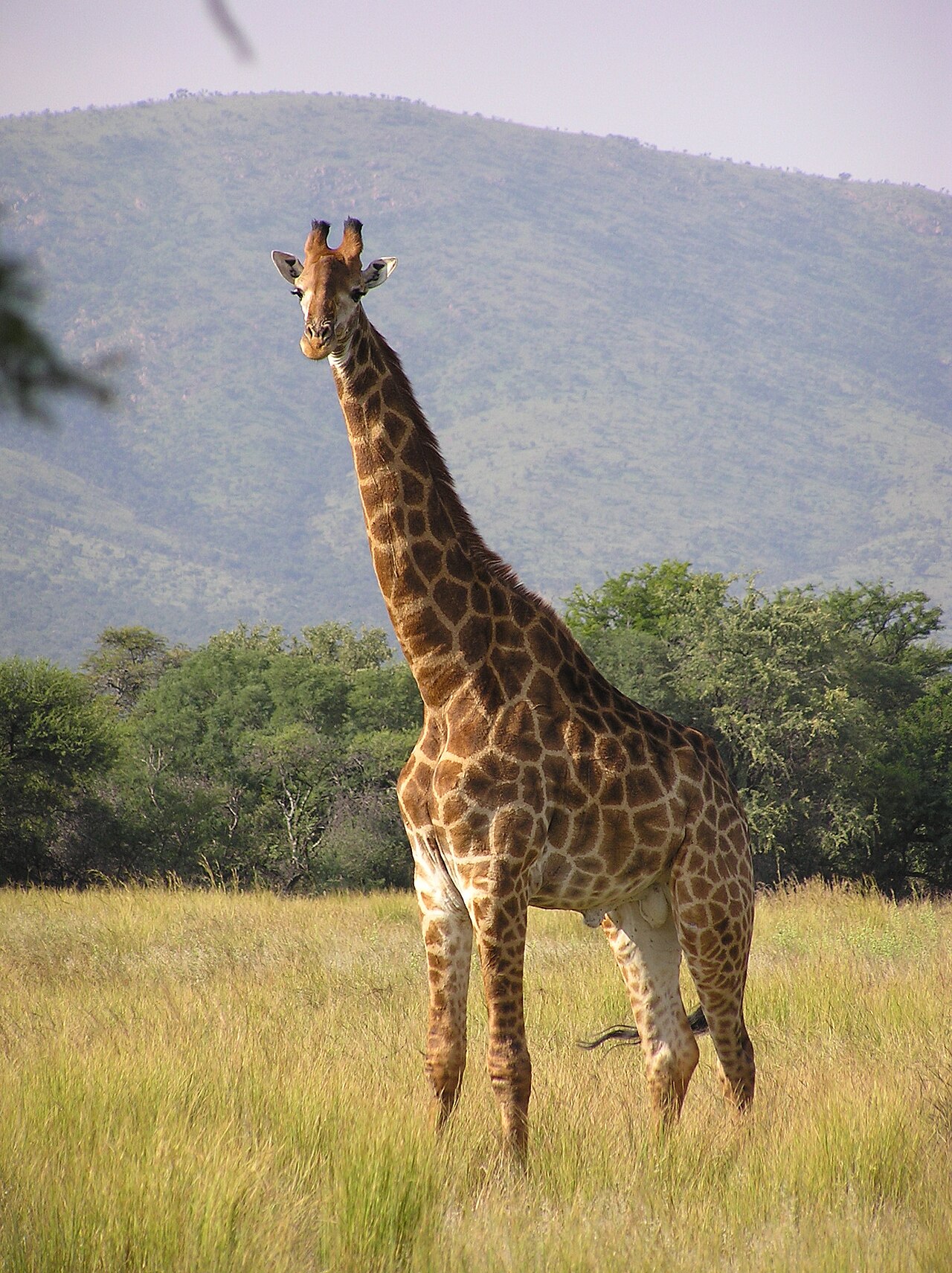
Giraffes have extremely long necks and legs, a patterned coat of patches or spots that differs among populations, and skin-covered horn-like structures called ossicones. Despite their neck length, they retain the same number of cervical vertebrae as most mammals. Their tongues are prehensile and darkly pigmented, adapted for grasping foliage and reducing sun exposure.
Distribution and habitat
Giraffes occur in varied habitats where browse is available. They are most often associated with mixed savanna and woodland that offer tall trees for feeding and areas for resting and vigilance. Local densities depend on water availability, vegetation types and human land use.
Diet and feeding
Giraffes are browsers, feeding primarily on leaves, buds and shoots; acacia and similar trees are commonly eaten. Their feeding high in the canopy allows access to resources less available to other herbivores and influences local vegetation structure.
Behaviour and social structure
Social groups are fluid, with individuals forming loose associations that change over time. Males may engage in ritualised combat called "necking" to establish dominance and access to mates. Giraffes can be vigilant and detect predators from a distance due to their height.
Reproduction and development
Females typically give birth to a single calf after a prolonged gestation. Newborns are relatively precocial and are able to stand and move shortly after birth, though they face predation risks as juveniles. Parental care is primarily by the mother, with calves sometimes forming nursery groups.
Physiology and adaptations
Giraffes possess specialised cardiovascular adaptations, including a large heart and vascular mechanisms that regulate blood flow when the head is raised or lowered. Their limb and joint anatomy supports their unusual stature and locomotion.
Taxonomy and conservation
Taxonomic understanding has evolved with genetic studies revealing complexity within the genus. Conservation status varies by population. Many local populations have declined because of habitat loss, fragmentation and hunting, while protected areas and targeted conservation programs support some groups. Effective management requires habitat protection, monitoring and community engagement.
- Related topics: classification within Giraffidae, comparisons with the okapi.
- Biology: basic mammal anatomy and high‑browsing adaptations.
- Range and conservation: regional issues across Africa.
Related articles
Author
AlegsaOnline.com Giraffe: anatomy, behavior, habitat, and conservation Leandro Alegsa
URL: https://en.alegsaonline.com/art/38943
Sources
- species.wikimedia.org : Giraffa camelopardalis
- animaldiversity.ummz.umich.edu : "''Giraffa camelopardalis'' giraffe"
- books.google.com : Walker's Mammals of the World
- ncbi.nlm.nih.gov : "Why sauropods had long necks; and why giraffes have short necks"
- doi.org : 10.7717/peerj.36
- pubmed.ncbi.nlm.nih.gov : 23638372