
Borzoi: Russian sighthound known for elegance and gentle temperament
A graceful Russian sighthound, the Borzoi (Russian Wolfhound) is noted for its long coat, speed, quiet temperament and aristocratic history. This article covers appearance, history, care and cultural role.
The Borzoi is a tall, finely built sighthound originally developed in Russia to pursue fast game across open terrain. Often called the Russian Wolfhound, the breed combines speed, a narrow skull and a long, silky coat. Enthusiasts value its elegant silhouette and comparatively placid nature, and the dog has been moved between countries and kennel registries since the late 19th century as a companion and show breed; it first appeared in foreign collections and records in the later 1800s and was soon entered into formal registries such as the national kennel lists that track purebred dogs. Contemporary breed pages and guides summarize the Borzoi’s appearance, behavior and background for prospective owners and breeders online and in print.
Image gallery
10 Images



Appearance and distinguishing features
Borzoi are large, rangy dogs with a distinctly arched backline, deep chest and long legs that reflect their role as coursing hounds. Adults typically stand well over the average height for medium breeds and carry a coat that ranges from flat and silky to wavy or slightly curly. Coat colors are varied: pure white, various combinations of white with tan, red or gray, brindle shades and darker masks can all occur. The breed standard used by many clubs emphasizes clean lines, a long head and a calm, watchful expression.
- Size: a tall frame built for stride and speed; proportions prioritize reach and lightness of bone (measurements vary by registry).
- Coat: long, fine, and often flowing; requires routine care to keep matting and debris under control (grooming guidance).
- Colors: from solid whites to mixed and brindle patterns; many recognized colors appear in breed descriptions (examples).
- Movement: smooth, ground-covering gallop suited to sight hunting and open fields (sighthound traits).
Temperament and suitability
Borzoi are often described as quietly affectionate rather than boisterous. They commonly bond closely with their household, show restraint indoors and can be reserved with strangers. Because they were bred to chase by sight, they have a strong prey drive toward small, fast animals and may not be reliable off-leash in unenclosed areas. They adapt well to life as companion animals when given regular exercise, mental stimulation and calm, consistent handling. Many breed guides recommend socialization from an early age and explain training approaches specific to sighthounds (training tips).
History and cultural role
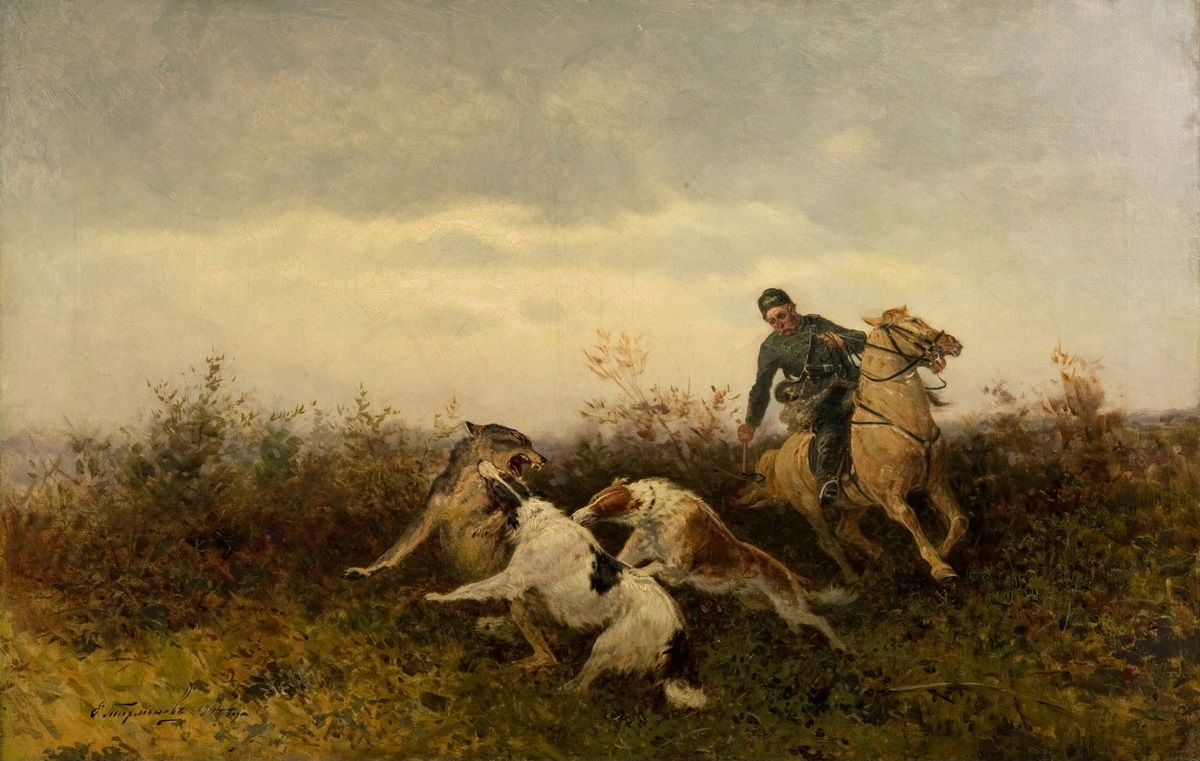
Members of this type of hound were prized by Russian nobility for centuries and were associated with hunting large game such as wolves and hares. Early descriptions of dogs very similar to the modern Borzoi appear in accounts from the 17th century and later as hunting packs kept by aristocrats; breed-type descriptions and pictorial representations circulated in both courtly and natural-history publications (historic notes). The breed’s association with the upper class influenced both protection and restriction: at times ownership carried prestige and special legal status (ownership customs).
In the late 1800s the Borzoi was introduced more widely to Western Europe and North America and entered kennel clubs and show rings abroad; by the turn of the 20th century it had a formal breed standard in several countries. The breed appears in Russian literature and art and has been used as a symbol of elegance in advertising and popular culture (literary references, cultural uses).
Health, care and modern uses
Responsible breeders focus on temperament, soundness and genetic health to reduce inherited conditions. Like many deep‑chested, large breeds, Borzoi may be at higher risk for gastric dilatation–volvulus (bloat) and should be fed and exercised with that in mind; they also benefit from joint monitoring and routine veterinary screening. Their coats require regular brushing and occasional bathing, and seasonal shedding can produce more maintenance than in short‑haired breeds. Specific health and care recommendations are available from breed clubs and veterinary sources (care advice, health resources).
- Exercise: daily walks and safe, fenced running space for short bursts of speed (activity needs).
- Grooming: weekly brushing and attention to feathering and tail fur (grooming methods).
- Training: patient, reward-based methods respect the breed’s sensitivity (training resources).
Today the Borzoi remains a distinctive companion and show dog with a long cultural lineage. Those considering the breed should consult reputable breeders and national or regional clubs for up-to-date standards and placement practices (club information, registry links), and study breed histories and literature where the dog appears as a cultural figure (historical reading, art & literature). For more detailed guidance on ownership, health screening and breeder selection, see specialized breed guides and veterinary sources (further resources).
Questions and answers
Q: What type of dog is a Borzoi?
A: A Borzoi is a type of Russian dog. It used to be called a Russian Wolf Hound.
Q: When was the breed approved by the American Kennel Club?
A: The breed was approved by the American Kennel Club one year after it was brought to the United States in 1889.
Q: How tall and heavy is a Borzoi?
A: A Borzoi is about 30 to 32 inches (76 to 81 cm) tall at the withers (its back near the shoulders). It weighs from 75 to 100 pounds (34 to 45 kg).
Q: What colors can Borzois have?
A: Borzois can have any color from solid white to brown and white, gray and white or brindle. They can also be all black.
Q: Are there many health problems associated with this breed?
A: People who take care of Borzois have done a good job of stopping health problems. As such, they do not have many of the problems other breeds have with health.
Q: Why were they popular among royalty in Russia?
A: In Russia, they were well liked by royalty because it was illegal to sell them - they were only given as gifts for those who did something special for the Tzars.
Q: How are they featured in literature and advertising today?
A: They feature in Russian novels e.g. in Tolstoy's "Anna Karenina". They are also used in advertising for luxury cars and jewelry due their elegant looks.
Related articles
Author
AlegsaOnline.com Borzoi: Russian sighthound known for elegance and gentle temperament Leandro Alegsa
URL: https://en.alegsaonline.com/art/13173