
Magic Johnson: Career, Impact, and Legacy of Earvin Johnson Jr.
Comprehensive overview of Earvin "Magic" Johnson Jr.: his life, playing career with the Los Angeles Lakers, playing style, HIV disclosure and activism, post-playing roles and lasting influence on basketball.
Overview
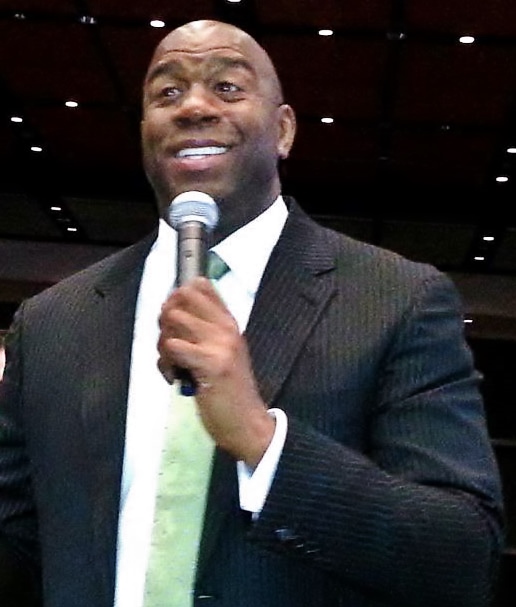
Earvin "Magic" Johnson Jr. (born August 14, 1959) is an American former professional basketball player best known for his time with the Los Angeles Lakers. He was born in Lansing and raised in Michigan. During a career that began in college and reached its peak in the NBA, Johnson became widely celebrated for his court vision, passing ability and versatility. His stature in the sport has led many observers to regard him as among the greatest point guards and playmakers in basketball history.
Image gallery
10 Images


Early life and college
Johnson's national profile rose while playing college basketball for Michigan State University. In the 1979 NCAA championship game he faced Larry Bird, a matchup that marked the start of a rivalry and later friendship that would define an era of American basketball. That title game and the attention it attracted helped propel both players into high-profile professional careers and contributed to renewed interest in the sport across the United States.
Professional career and playing style
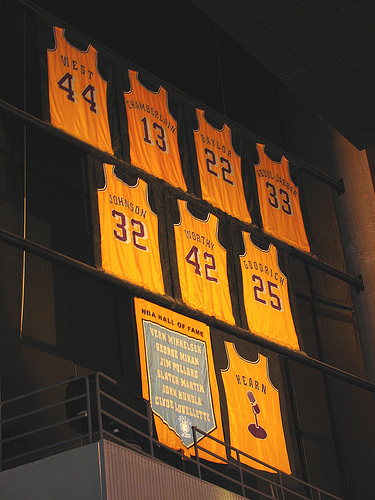
Selected by the Los Angeles Lakers, Johnson helped lead the team to multiple NBA championships, winning titles in 1980, 1982, 1985, 1987 and 1988. Though best known as a floor leader at the point guard position, he was exceptionally versatile and on occasions handled every position on the court. His trademark skills included unselfish passing, fast-break orchestration and an ability to make decisive plays in high-pressure situations.
- Championships: Five NBA titles with the Lakers.
- All-star recognition: Repeated selections to NBA All-Star games and season honors.
- International play: Member of the 1992 United States men’s national basketball team that won Olympic gold.
Health, advocacy and public life
In 1991 Johnson publicly announced he had been diagnosed with HIV. His disclosure was a watershed moment in public discussions about the disease and attracted global attention. Following the announcement he stepped back from professional play for a period, became an outspoken advocate for HIV/AIDS education and prevention, and established foundations and programs focused on awareness, testing and care.
Honors, executive roles and legacy
Johnson's contributions to basketball were recognized by inclusion among the NBA's 50 Greatest Players and by induction into the Naismith Memorial Basketball Hall of Fame. After his playing career he remained active in basketball as an ambassador and executive. In 2017 he briefly returned to the Los Angeles Lakers organization as president of basketball operations, a role he left in 2019 to renew other commitments and continue public and philanthropic work.
Notable facts and continued influence
Beyond statistics, Johnson's impact is measured by the way he reshaped expectations for point guards—combining size, passing range and leadership—and by his role in popularizing the NBA during the 1980s and early 1990s. He has engaged in business ventures, community development and public speaking while maintaining a high profile in sports media and charitable circles. Johnson's friendship and competitive rivalry with contemporaries such as Bird helped fuel a popular rivalry between the Lakers and Celtics that remains a defining storyline in NBA history.
Further reading and resources
Related articles
Author
AlegsaOnline.com Magic Johnson: Career, Impact, and Legacy of Earvin Johnson Jr. Leandro Alegsa
URL: https://en.alegsaonline.com/art/125681