
Mahatma Gandhi (Mohandas Karamchand Gandhi) — leader of Indian independence
Mohandas Karamchand Gandhi (1869–1948) led India’s independence movement through nonviolent resistance, civil disobedience, and social reform, influencing 20th-century politics and civil rights worldwide.
Overview
Mohandas Karamchand Gandhi (2 October 1869 – 30 January 1948) was a central figure in India’s struggle against British colonial rule and is widely known by the honorific Mahatma, meaning "great soul." He combined political leadership with social reform and moral persuasion to build a mass movement that sought self-rule, communal harmony, and personal discipline. Gandhi emphasized simple living, self-reliance, and techniques of nonviolent action that inspired movements around the world.
Image gallery
10 Images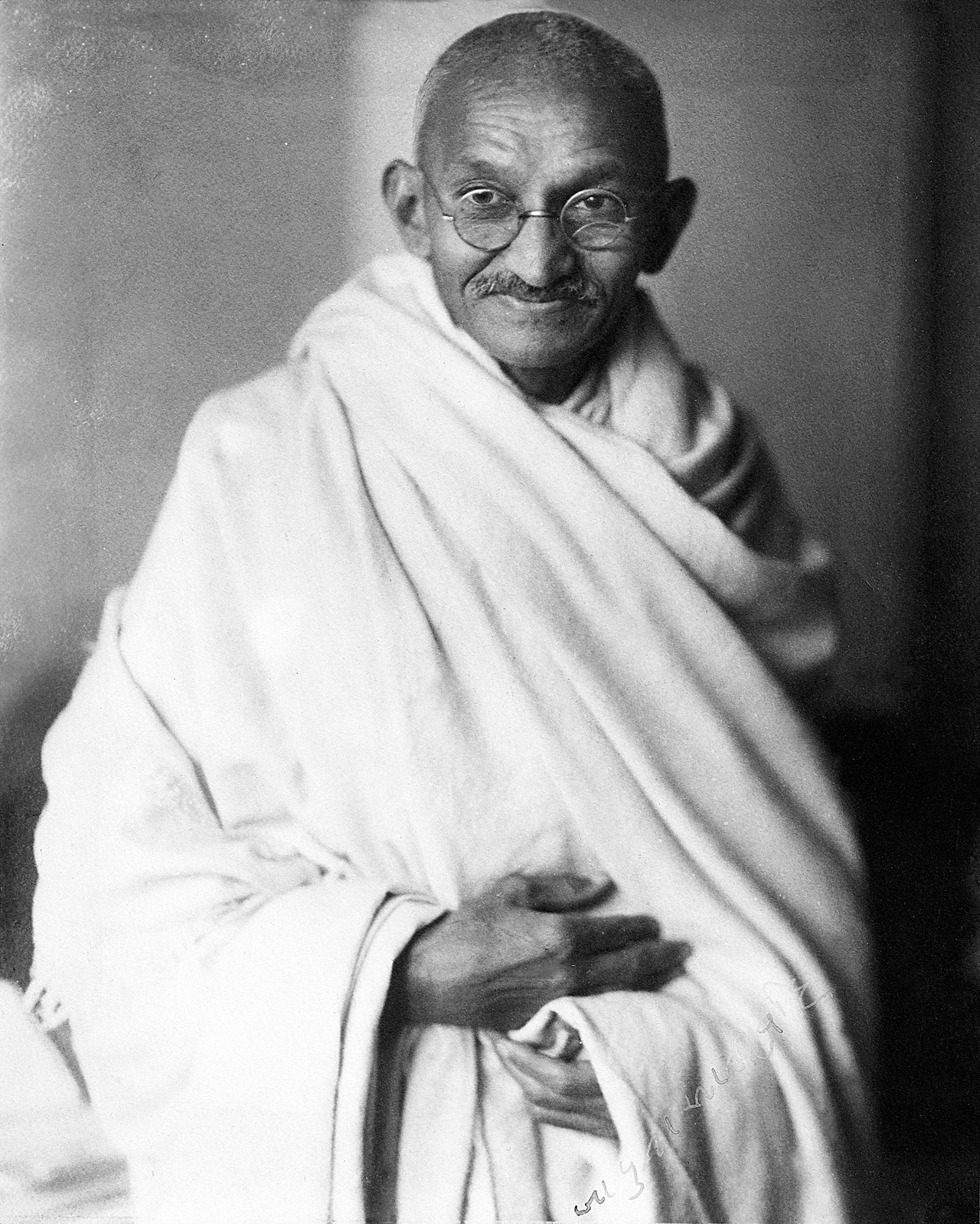


Early life and development
Gandhi trained as a lawyer in London and first practiced law in South Africa, where he experienced and resisted racial discrimination. Those years shaped his ideas about civil rights, organization, and nonviolent resistance. After returning to India, he assumed a leading role in campaigns against imperial policies and in efforts to unite diverse social groups. He was often called "Mahatma" and in India was affectionately known as "Bapu," a term of parental respect derived from Gujarati.
Philosophy and methods
Gandhi’s public approach was built on principles he called satyagraha (insistence on truth) and ahimsa (non-harm). He believed political aims should be pursued by moral means: noncooperation, civil disobedience, economic self-sufficiency, and disciplined mass action. His methods included organized refusals to obey unjust laws, boycotts of British goods, and symbolic acts such as making homespun cloth (khadi). He described his program as part of a broader struggle for nationalism that was rooted in ethical renewal rather than mere power politics.
Major campaigns and actions
- Salt March and protests against monopolies on essentials, which dramatized opposition to imperial taxation.
- Nationwide noncooperation movements that mobilized peasants, workers, and students.
- The 1942 campaign for immediate British withdrawal known as the Quit India movement, which demanded transfer of power.
These campaigns combined political mobilization with public education, fasting as a form of moral protest, and efforts to reduce social divisions.
Impact and legacy
Gandhi’s insistence on non-violent means and mass civil disobedience shaped the final decades of British rule in British-ruled India and influenced leaders and movements worldwide. Figures such as civil-rights activists later cited his example. His legacy also includes promotion of local industry, uplift of marginalized communities, and campaigns for religious harmony. His stature was acknowledged by contemporaries like Rabindranath Tagore, and debates about his strategies and politics continue among historians and activists.
Notable facts and conclusion
Gandhi’s life combined political action with spiritual discipline: public demonstrations, constructive social work, and personal austerity. He sought to transform both institutions and individual behavior. His methods aimed to put pressure on rulers without embracing violent retaliation; in practice he described many of these acts simply as conscientious protest. The movement he led drew wide participation but also provoked controversy and opposition; he was assassinated on 30 January 1948, an event that marked a turning point in independent India’s early history. For introductions to specific episodes and documents, see linked resources on civil movements and Gandhi’s writings and speeches, and for context on his influence in constitutional politics consult further materials on nonviolent political change and religious reform (Sanskrit sources on terminology and practice are often cited).
Questions and answers
Q: Who was Mohandas Karamchand Gandhi?
A: Mohandas Karamchand Gandhi was a leader of nationalism in British-ruled India who is more commonly known as Mahatma Gandhi.
Q: What does the honorific "mahatma" mean?
A: The honorific "mahatma" means "great-soul" or "venerable" in Sanskrit.
Q: When was Gandhi first called "mahatma"?
A: Gandhi was first called "mahatma" in 1914 in South Africa.
Q: What is Gandhi called in India?
A: In India, Gandhi is also called Bapu, which is a Gujarati endearment for "father" or "papa".
Q: Why is Gandhi referred to as the Martyr of the Nation?
A: Gandhi is referred to as the Martyr of the Nation since 1948, which was the year of his assassination.
Q: Who gave Gandhi the title of "Mahatma"?
A: Rabindranath Tagore gave Gandhi the title of "Mahatma".
Q: What was Gandhi's role in the movement for the independence of India?
A: Gandhi was one of the most important people involved in the movement for the independence of India. He led the independence movement through non-violent protest as a non-violent activist.
Related articles
Author
AlegsaOnline.com Mahatma Gandhi (Mohandas Karamchand Gandhi) — leader of Indian independence Leandro Alegsa
URL: https://en.alegsaonline.com/art/125689