
Jiddu Krishnamurti: Life, Teachings and Legacy
Overview of Jiddu Krishnamurti, an Indian-born philosopher and speaker who rejected organized religion and promoted psychological freedom, education, and dialogue across cultures.
Jiddu Krishnamurti (11 May 1895 – 17 February 1986) was an Indian-born public speaker and writer whose work focused on psychological inquiry, the nature of thought, and the possibility of human transformation without reliance on authority or ideology. He is commonly remembered for rejecting institutional roles and teachings that would make him a religious leader, and for presenting a practical, inquiry-based approach intended for individuals rather than movements.
Image gallery
8 Images


Philosophy and central themes
Krishnamurti emphasized direct self-knowledge and the careful observation of one's own conditioning. He argued against adherence to any fixed creed, teacher, or system, famously asserting that "truth is a pathless land". Recurring themes in his talks and writings include the examination of fear and desire, the operation of thought, the nature of authority, the relationship between the observer and the observed, and the possibility of a radical psychological change that is not produced by spiritual techniques or organized doctrine.
Life and public role
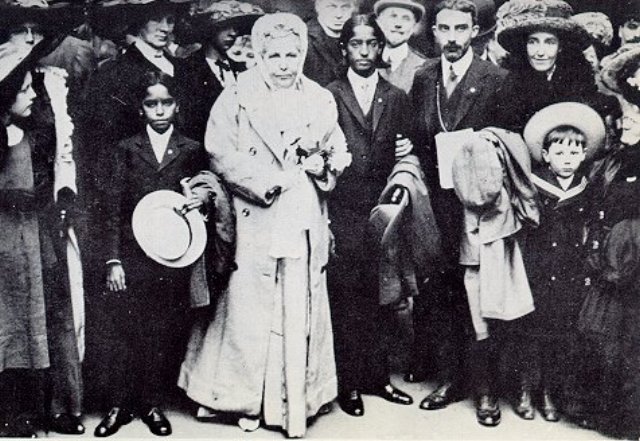
Early in his life Krishnamurti became associated with the international Theosophical movement and was promoted as a prospective world teacher by several prominent theosophists and educators. He later renounced any messianic role, dissolved the organization built around him in 1929, and distanced himself from esoteric groups and dogma. From that point on he traveled widely, giving public talks, leading dialogues, answering questions, and writing essays and books that addressed universal human concerns rather than sectarian teachings. His presentations were notable for their conversational tone and encouragement of independent inquiry.
He also engaged in sustained dialogues with scientists, philosophers, and other thinkers, exploring intersections between modern science and human consciousness. These exchanges broadened his audience and made his ideas of interest to scholars of psychology, education, and comparative religion.
Work, institutions, and influence
- Krishnamurti helped establish foundations and educational institutions to preserve his talks and promote inquiry-based learning; notable schools associated with his educational approach exist in India, Europe and the United States.
- His teachings were collected in books, audio recordings and transcripts; organizations set up by his associates continue to archive and publish those materials.
- He influenced a range of fields, including alternative education, contemplative practice, and dialogues between science and spirituality, while attracting both admirers and critics.
While many praise Krishnamurti for his insistence on freedom from psychological dependence and his clear, uncompromising questioning of assumptions, some critics have argued that his method leaves practical guidance wanting. Despite that debate, his insistence on personal responsibility, attention, and the careful investigation of thought remains a significant contribution to modern spiritual and psychological discourse.
For historical context and further reading on the earlier movement that promoted him, see Theosophy. His archive of talks and writings continues to be studied by those interested in non-dogmatic approaches to self-understanding and education.
Questions and answers
Q: Who was Jiddu Krishnamurti?
A: Jiddu Krishnamurti was an Indian-born speaker on philosophical and spiritual subjects.
Q: What were the two distinct stages in Krishnamurti's career?
A: In the first stage of his career, Krishnamurti was a pupil and eventually leader of Theosophy. In the second stage, he rejected Theosophy and every belief associated with it.
Q: What did Krishnamurti believe about truth?
A: Krishnamurti believed that truth is a pathless land and cannot be approached by any path whatsoever, religion, or sect.
Q: What is Theosophy?
A: Theosophy is a new religious movement.
Q: What did Krishnamurti reject about Theosophy?
A: In the second stage of his career, Krishnamurti rejected Theosophy and every belief associated with it.
Q: What did Krishnamurti think about approaching truth through religion or sect?
A: Krishnamurti believed that truth cannot be approached through any religion or sect.
Q: What was Krishnamurti's career focused on?
A: Krishnamurti's career was focused on speaking on philosophical and spiritual subjects.
Related articles
Author
AlegsaOnline.com Jiddu Krishnamurti: Life, Teachings and Legacy Leandro Alegsa
URL: https://en.alegsaonline.com/art/123848
Sources
- jkrishnamurti.org : jkrishnamurti.org/krishnamurti-teachings/view-text.php?tid=840&chid=5156.html
- jkrishnamurti.org : jkrishnamurti.org/krishnamurti-teachings/view-text.php?tid=48&chid=56784.html
- wikidata.orgQ179266.html : wikidata.orgq179266.html
- authority.bibsys.no : 90075641
- catalogo.bne.es : XX937017
- catalogue.bnf.fr : cb119101110
- data.bnf.fr : (data)
- cantic.bnc.cat : a10109766
- d-nb.info : 118566873
- isni.org : 0000 0001 2146 3264
- id.loc.gov : n79072898
- id.ndl.go.jp : 00446360
- aleph.nkp.cz : jn19981001685
- data.nlg.gr : 63931
- nl.go.kr : KAC199615491