
Karl-Otto Apel: Transcendental Pragmatics and Moral Discourse
German philosopher Karl-Otto Apel (1922–2017) developed 'transcendental pragmatics', arguing that the presuppositions of communication ground ethical norms and rational argumentation.
Overview
Karl-Otto Apel (15 March 1922 – 15 May 2017) was a German philosopher best known for developing what he called "transcendental pragmatics." His work explores how the conditions required for meaningful communication can provide a foundation for rationality and ethics. Apel wrote extensively on language, argumentation, and the idea that moral norms have a basis in the implicit commitments of discourse. He spent much of his career at the University of Frankfurt am Main and remained an influential voice in continental philosophy, especially in debates about justification, normativity, and the critical role of communication.
Image gallery
2 Images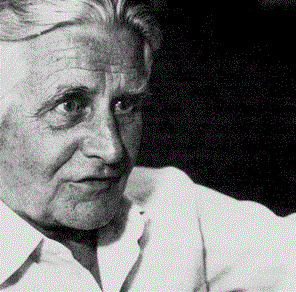

Transcendental pragmatics: central ideas
Apel's central methodological move is to combine a transcendental strategy with analytic attention to language use. Rather than beginning with isolated moral intuitions or purely empirical facts, he asked what must be presupposed if agents are to engage in sincere, rational, and intersubjective communication. From that starting point he derived normative implications. Key themes include:
- Transcendental conditions of discourse: certain norms and commitments are unavoidable if communication and argumentation are to be possible at all.
- Practical orientation: communicative acts are inherently oriented toward mutual understanding and therefore carry normative weight.
- Performative critique: revealing performative contradictions—when a claim undermines the conditions of its own assertion—serves as a philosophical diagnostic tool.
- Argumentative grounding of ethics: moral norms are justified by appeals to the unavoidable presuppositions of rational discourse rather than by mere subjective preference.
Relation to discourse ethics and contemporaries
Apel's work overlaps with and complements other traditions that seek rational foundations for ethics through communication, notably the discourse ethics associated with Jürgen Habermas. While Habermas developed a procedural account of ideal speech situations and communicative rationality, Apel emphasized the transcendental presuppositions that make any argument possible and insisted on the normative consequences of those presuppositions. He engaged critically and constructively with several contemporaries, refining debates about relativism, universalism, and the justification of moral claims. His approach aims to counter skepticism about normativity by showing that certain ethical commitments are implicit in the very practice of giving and asking for reasons.
Career and recognition
Apel taught and published for many decades, gaining recognition in European philosophical circles for his rigorous combination of linguistic, ethical, and epistemological inquiry. He was named a Member of the Academia Europaea in 1989 and became a Full Member of the Academia Scientiarum et Artium Europaea in 1993; more information about institutional honors can be found at the relevant academy page. In 2001 he received the Order of Merit of the Federal Republic of Germany. He retired as Professor Emeritus from the University of Frankfurt and continued to write and participate in scholarly debates until his death in 2017.
Impact, uses, and notable distinctions
Apel's ideas have been influential in several domains: moral philosophy, philosophy of language, and argumentation theory. By offering a way to derive normative claims from the structure of communicative practice, his work provides resources for responding to cultural relativism and moral skepticism. Scholars working on the ethics of discourse, public reason, and the philosophical underpinnings of democratic argumentation often draw on Apel's analyses. Notable methodological contributions include his use of transcendental argumentation in a pragmatic register and the strategic use of performative contradiction as a critique of inconsistent positions.
Selected writings and further reading
Among Apel's influential texts is the collection "Understanding and Explanation: A Transcendental-Pragmatic Perspective," alongside numerous essays in which he elaborated his theoretical framework and engaged with other contemporary thinkers. For readers interested in the intersection of language, normativity, and ethics, Apel's corpus offers a systematic attempt to tie moral justification to the unavoidable features of rational discourse while remaining attentive to historical and philosophical context.
Questions and answers
Q: Who was Karl-Otto Apel?
A: Karl-Otto Apel was a German philosopher and Professor Emeritus at the University of Frankfurt am Main.
Q: What was Karl-Otto Apel's philosophical approach called?
A: Karl-Otto Apel's philosophical approach was called "transcendental pragmatics" (Transzendentalpragmatik).
Q: What were some of Karl-Otto Apel's notable works?
A: Some of Karl-Otto Apel's notable works include Understanding and Explanation: A Transcendental-Pragmatic Perspective and Theory of Communicative Action.
Q: When was Karl-Otto Apel made a Member of the Academia Europaea?
A: Karl-Otto Apel was made a Member of the Academia Europaea in 1989.
Q: When was Karl-Otto Apel awarded the Order of Merit of the Federal Republic of Germany?
A: Karl-Otto Apel was awarded the Order of Merit of the Federal Republic of Germany in 2001.
Q: When did Karl-Otto Apel pass away?
A: Karl-Otto Apel passed away on May 15th, 2017.
Q: How old was Karl-Otto Apel at the time of his passing?
A: Karl-Otto Apel was 95 years old at the time of his passing.
Related articles
Author
AlegsaOnline.com Karl-Otto Apel: Transcendental Pragmatics and Moral Discourse Leandro Alegsa
URL: https://en.alegsaonline.com/art/123310
Sources
- suhrkamp.de : suhrkamp.de/buch/transzendentalpragmatik-t-9783518286814
- zeit.de : "Philosoph: Karl-Otto Apel ist tot"
- science.orf.at : "Philosoph Karl-Otto Apel gestorben"