
List of tallest structures in the world: overview, types, and notable records
An encyclopedic guide to the tallest man-made structures — categories, measurement methods, notable examples, history and why different types are listed together.
Overview
This topic covers the tallest constructed objects on Earth, including present-day and historical examples across every structural class. The compilation is arranged by absolute height so that guyed masts, towers, skyscrapers and offshore platforms can be compared on a single scale. Many entries are television broadcasting masts, but the list also records freestanding towers such as the CN Tower, tall high-rise buildings like well-known skyscrapers, and other unusual tall structures.
Image gallery
1 Image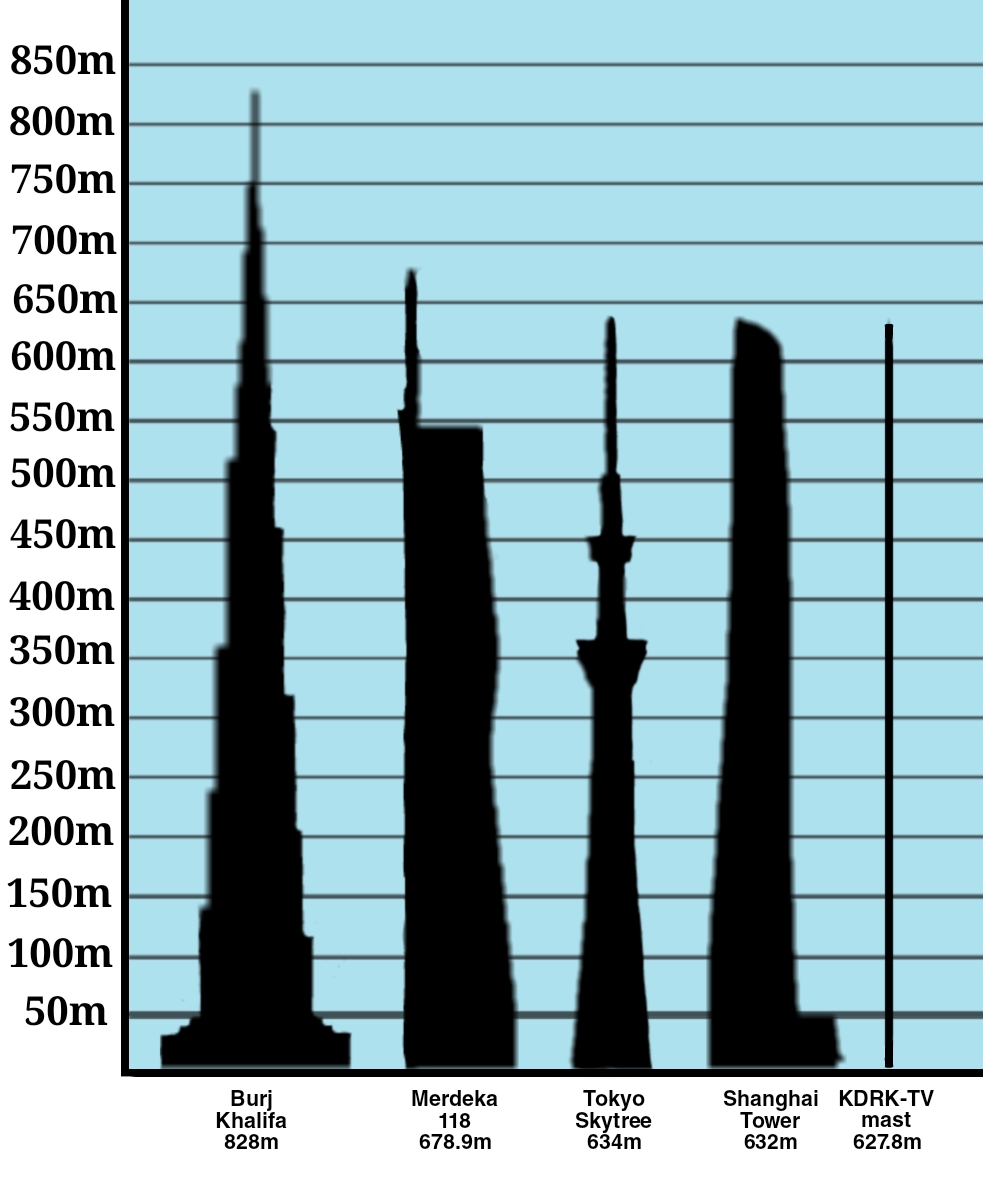
Types and characteristics
Tall structures fall into several broad categories, each with distinct engineering and functional features. Common types include:
- Guyed masts: slender towers stabilized by tensioned cables and often used for radio and TV transmission.
- Freestanding towers: self-supporting concrete or steel towers designed for observation, broadcasting or mixed use.
- High-rise buildings and skyscrapers: habitable floors stacked vertically with elevators and mechanical systems.
- Offshore structures: fixed or floating platforms that can have tall legs or masts, such as oil rigs (oil platforms).
- Utility towers and bridge pylons: tall steel lattice or concrete supports used for power transmission (electrical towers) and long-span bridges.
Measurement and ranking
Ranking structures by height requires clear rules. Some lists use the highest point of any structure (pinnacle height), which counts antennas and lightning rods; others use architectural height, which excludes removable antennas. Because different classes combine functional appendages and habitable volume, a single absolute-height ordering is often provided alongside category-specific lists to preserve meaningful comparisons.
History and notable examples
Throughout history engineers have pushed vertical limits for communication, observation and prestige. Early tall structures included church spires and minarets; the modern era introduced radio masts and steel towers. Well-known examples often cited in lists include the Burj Khalifa in the role of the tallest completed building worldwide, and famous masts and towers that have set records or become landmarks. Some record-holders no longer exist due to demolition or collapse, demonstrating the transient nature of engineering records.
Uses and importance
Tall structures serve practical and cultural roles: they host antennas for broadcasting and mobile networks (telecommunication), provide viewing platforms and tourist attractions, support long-distance power transmission and enable offshore resource extraction. Masts originate from an older maritime term for ship masts, which once carried sails and today lends its name to land-based radio masts and aerials.
Distinctions and facts
When consulting a list of the tallest structures, be aware of distinctions that affect rankings: whether antennae are included, whether the structure is freestanding or guyed, and whether the measurement is to the highest point or to architectural top. For those studying extreme-height engineering, separate lists are useful — for example, one for freestanding towers, one for habitable buildings, and one for guyed masts — while a combined absolute-height list provides a comprehensive view of human reach into the vertical dimension.
References, technical definitions and catalogues of historic and current structures are maintained by various engineering organizations and archives; web resources and dedicated databases provide sortable tables and photographs for readers who wish to explore individual entries further.
Questions and answers
Q: What is the list of tallest structures in the world organized by?
A: The list of tallest structures in the world is organized by absolute height.
Q: What type of structures are most commonly included on this list?
A: Most of the structures included on this list are television broadcasting masts.
Q: Are there any other types of structures included on this list besides masts?
A: Yes, there are also tower-type structures (like the CN Tower) and high rise buildings (like the Sears Tower), as well as other types like oil platforms, electrical towers, and bridge towers.
Q: What is a mast?
A: A mast is a man-made support structure, commonly used on sailing ships as support for sails, or on land as radio masts and towers used to support telecommunication equipment such as radio antennas ("aerials" in the UK).
Q: How tall do some of these structures reach?
A: Some of these tallest structures can reach heights up to thousands of feet.
Q: What purpose do these tall masts serve?
A: These tall masts typically serve to support telecommunication equipment such as radio antennas ("aerials" in the UK).
Tags
Related articles
Author
AlegsaOnline.com List of tallest structures in the world: overview, types, and notable records Leandro Alegsa
URL: https://en.alegsaonline.com/art/125172