
Louise Bourgeois: sculptor, installation artist, and chronicler of memory
French-American artist Louise Bourgeois (1911–2010) made influential sculptures and installations exploring family, sexuality, memory and trauma across a seven-decade career.
Overview
Louise Bourgeois (1911–2010) was a French-born artist who spent most of her adult life in New York and became widely known for large-scale sculpture and immersive installation work. Trained in drawing and painting, she developed a distinctive practice that moved fluidly between sculpture, textile work, prints and installation, and addressed deeply personal themes alongside broader psychological and social concerns. Her reputation grew steadily in the later decades of the twentieth century and into the twenty-first, when retrospective exhibitions and public commissions brought sustained international attention.
Image gallery
7 Images


Forms, materials, and techniques
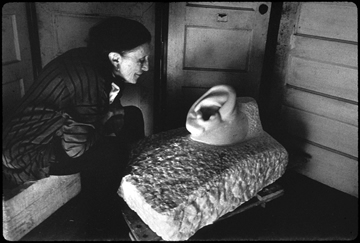
Bourgeois worked in a wide range of materials, including bronze, marble, wood, plaster, latex, fabric and found objects. She used traditional sculptural processes and domestic techniques such as sewing and quilting, combining them into hybrid forms. Her practice included small-scale intimate pieces, large monumental sculptures and room-sized "cells"—enclosed environments that invited viewers into concentrated emotional worlds. She also produced thousands of drawings and prints that documented ideas, dreams and obsessions at different stages of a work's development.
Themes and notable works
Recurring concerns in her work were family dynamics, memory, sexuality, anxiety and the body. She explored these topics through repeated motifs: houses and enclosed spaces, organic growths, phallic or genital forms, and most famously spiders, which she described as ambivalent maternal figures. Major projects that brought her broad recognition include the monumental spider sculptures (often titled "Maman"), the series of "Cells" from the 1990s onward, and earlier theatrical pieces such as Destruction of the Father. Her output combined autobiographical reference with archetypal imagery to probe vulnerability, protection and aggression.
Life and development
Born and raised in Paris, Bourgeois was shaped by an upbringing in a family that ran a tapestry restoration workshop and by events in her personal life that she later addressed in art. She moved to the United States as a young adult and became part of the New York art world, where her work evolved from mid-century abstraction toward more figurative and psychologically charged forms. Over decades she maintained a rigorous studio practice and revisited themes repeatedly, producing bodies of work that felt like ongoing investigations rather than isolated statements.
Reception and influence
Bourgeois received growing critical acclaim and institutional recognition late in her life, with major retrospectives, public commissions and international exhibitions that secured her place in modern and contemporary art histories. Critics and artists have cited her frank engagement with personal history and emotion as influential for feminist art, body-oriented sculpture and installation practices. Collections worldwide now hold her work, and her image—especially the spider—has entered popular and scholarly discussions about memory, motherhood and materiality.
Further reading and resources
- Biography and timeline
- Major sculpture projects
- Installation and "Cell" series
- Prints, drawings and textiles
- Exhibitions and retrospectives
- Themes: family, sexuality, memory
- Further galleries and archives
For readers seeking context, her work rewards viewing in person where scale, material texture and the spatial relationships of her installations can be fully appreciated. Her oeuvre remains widely studied for its emotional directness, technical variety and persistent engagement with the experience of being human.
Related articles
Author
AlegsaOnline.com Louise Bourgeois: sculptor, installation artist, and chronicler of memory Leandro Alegsa
URL: https://en.alegsaonline.com/art/125351