
BMW in Formula One: history, engines, teams and legacy
Overview of BMW’s involvement in Formula One from the 1950s through turbo and modern eras, key engines and teams, notable achievements, and the marque’s lasting influence on F1 engineering.
The German automobile manufacturer BMW has had an intermittent but influential presence in Formula One since the sport’s world championship began. Over seven decades the company has appeared in a variety of roles: as an entrant in the early years, as a dominant engine supplier during the turbo era, as a works partner to established teams at the turn of the century, and finally as a full factory constructor. BMW’s F1 story spans pioneering power units, a drivers’ world championship, a Grand Prix victory for a factory team, and a withdrawal that left a notable engineering legacy.
Image gallery
10 Images




Distinctive engines and technical approach
BMW’s contributions to F1 have often been defined by its engines. In the early 1980s the company developed the M12/13 four‑cylinder turbocharged engine. Built to be compact and extremely powerful for its displacement, that design became one of the benchmark turbo units of the era and was used by several teams. Decades later, BMW returned with naturally aspirated V10 units for its factory partnerships. Across eras BMW emphasized engineering sophistication, supplying bespoke powerplants tailored to the needs of its partner teams or to the factory effort when it competed as BMW Sauber.
Chronology: early entries, turbo era, return and works team
- Early participation: BMW entered Grand Prix events intermittently in the 1950s and 1960s, sometimes competing to Formula Two regulations rather than full Formula One specification.
- Turbo era and a drivers’ title: In the 1980s BMW’s turbo engine powered Brabham and other teams. The Brabham-BMW combination produced top-level results, including a drivers’ world championship in the early 1980s.
- Return as an engine partner: BMW re-entered F1 in 2000 as an engine supplier to Williams, providing V10 engines through much of the early 2000s, a period that delivered podiums and race wins for the partnership.
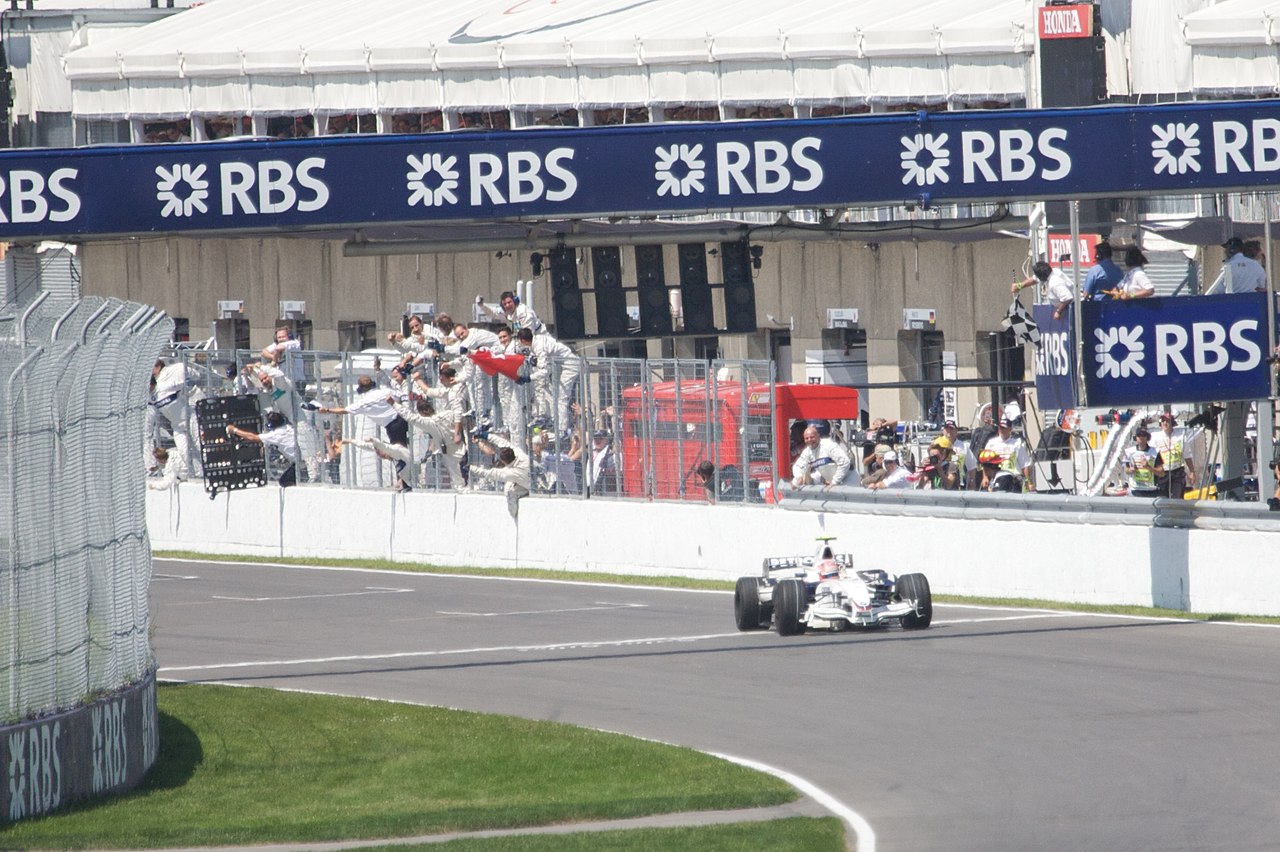
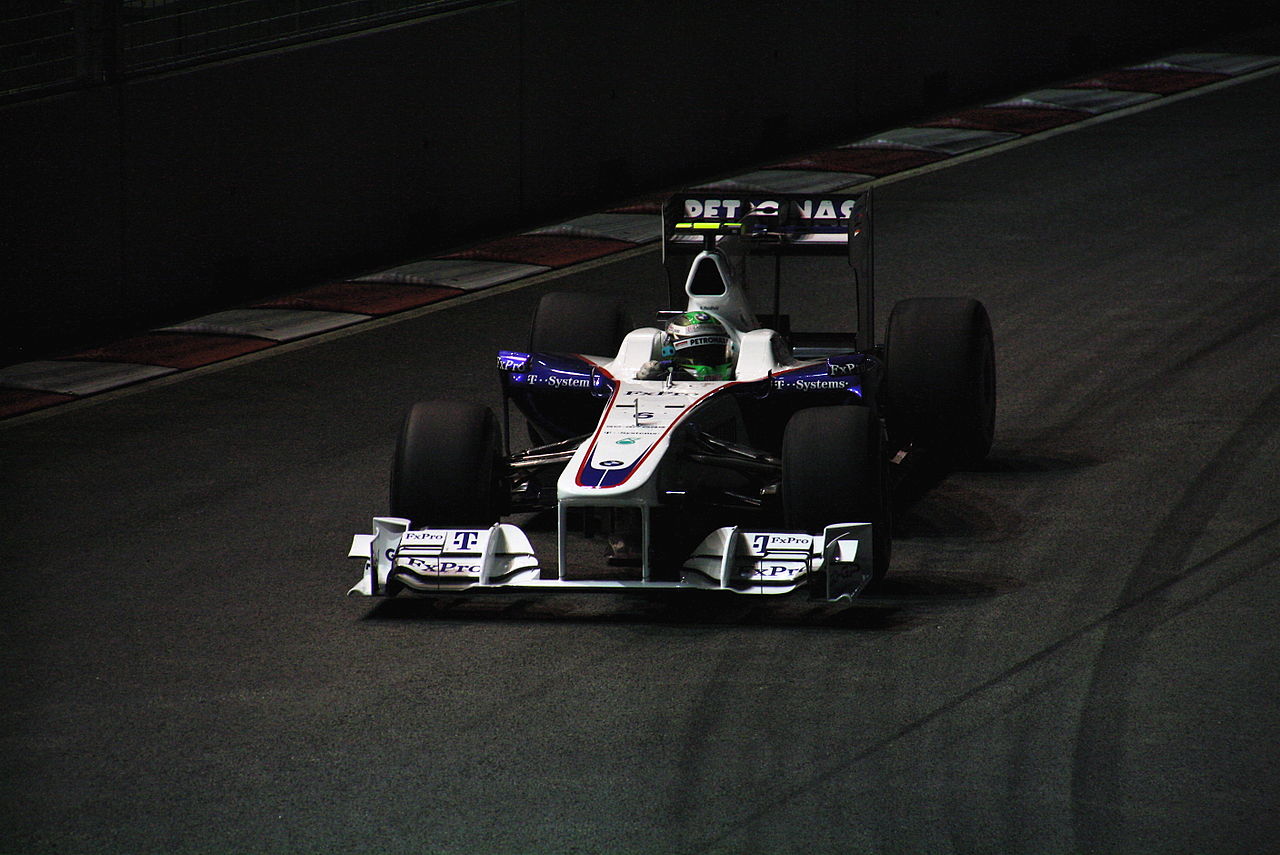
- BMW Sauber (2006–2009): Seeking full constructor status, BMW purchased Sauber and ran the factory BMW Sauber team for several seasons. The team matured into a regular front‑running outfit and achieved a landmark Grand Prix victory in 2008.
- Withdrawal: After the 2009 season BMW announced its departure from Formula One and transferred ownership of the team back to its original founder.
Uses, importance and legacy
BMW’s time in Formula One had multiple impacts. Technically, its turbo and later V10 engines pushed the boundaries of power, packaging and fuel economy for their times. Competitively, BMW-powered cars achieved race wins and a drivers’ championship, and the BMW Sauber constructor proved capable of beating established teams. Strategically, BMW’s factory involvement highlighted the costs and marketing considerations that accompany modern F1 participation; the decision to exit reflected wider industry and corporate calculations about motorsport investment.
Notable distinctions and facts
BMW is one of several manufacturers to alternate between supplying engines to independent teams and running a full factory effort. Its M12/13 turbo is particularly remembered among enthusiasts as one of the most potent small‑capacity engines ever used in Grand Prix racing. The factory BMW Sauber project demonstrated how a manufacturer could turn a privateer team into a competitive works operation in a relatively short span.
Further reading and resources
- BMW and Formula One overview
- History of the World Drivers' Championship
- Formula Two and its relation to F1
- BMW M12/13 engine technical notes
- Turbocharging in F1
- Brabham team background
- Profile of Nelson Piquet
- 1983 Formula One season
- Arrows team history
- Benetton in Formula One
- F1 rule changes and team movements
- Ban on turbocharged engines
- BMW returns to F1 in 2000
- Williams team partnership
- V10 engine era in F1
- End of the Williams–BMW engine deal
- Sauber team origins
- BMW Sauber project launch
- BMW Sauber final seasons
- BMW Sauber competitive peak
- Robert Kubica profile
- 2008 Canadian Grand Prix
- Nick Heidfeld and team results
Questions and answers
Q: What year did BMW enter Formula One?
A: BMW entered Formula One in 1950, at the beginning of the World Drivers' Championship.
Q: What type of engine did BMW build for the Brabham team in the 1980s?
A: In the 1980s, BMW built an inline-four turbocharged engine called the BMW M12/13 for the Brabham team.
Q: When was turbocharged engines banned from Formula One?
A: Turbocharged engines were banned from Formula One in 1989.
Q: When did BMW return to Formula One?
A: BMW returned to Formula One in 2000.
Q: Who won a race for the Sauber team when it was owned by BMW?
A: Robert Kubica won a race for Sauber when it was owned by BMW, at the 2008 Canadian Grand Prix.
Q: How long did the partnership between Williams and BMW last?
A: The partnership between Williams and BMW lasted until after 2005 season.
Q: When did Peter Sauber take back ownership of his former team? A: Peter Sauber took back ownership of his former team after 2009 season, when BMW withdrew from F1.
Tags
Related articles
Author
AlegsaOnline.com BMW in Formula One: history, engines, teams and legacy Leandro Alegsa
URL: https://en.alegsaonline.com/art/12438
Sources
- forix.autosport.com : "The BMW-derived specials that appeared in war-struck Germany"
- forix.autosport.com : "The last of the German locals"
- news.bbc.co.uk : "BMW nets Intel sponsorship"
- news.bbc.co.uk : "Villeneuve sets Magny Cours pace"
- news.bbc.co.uk : "BMW ordered to remove nose fins"
- timesonline.co.uk : "It's the end of the road for Villeneuve"
- grandprix.com : "Glock signed as BMW second driver"
- grandprix.com : "The new BMW F1.07"
- formula1.com : "Interview with Mario Thiessen"
- news.bbc.co.uk : "Kubica escapes injury after crash"
- news.bbc.co.uk : "Heidfeld and Kubica stay at BMW"
- news.bbc.co.uk : Kubica and Heidfeld stay with BMW · webcitation.org
- autosport.com : "BMW will quit F1 at the end of 2009"