
Karl Schwarzschild: Life, Schwarzschild Solution, and Legacy
Karl Schwarzschild (1873–1916), German physicist and astronomer who derived the first exact solution of Einstein's field equations, introducing the Schwarzschild metric and radius used in relativity and black hole theory.
Overview
Karl Schwarzschild (9 October 1873 – 11 May 1916) was a German physicist and astronomer who produced the first exact, nontrivial solution to Albert Einstein's field equations of general relativity. His result clarified how a spherically symmetric mass influences the surrounding gravitational field and provided the basic mathematical form later used to describe idealized nonrotating black holes.
Image gallery
10 Images
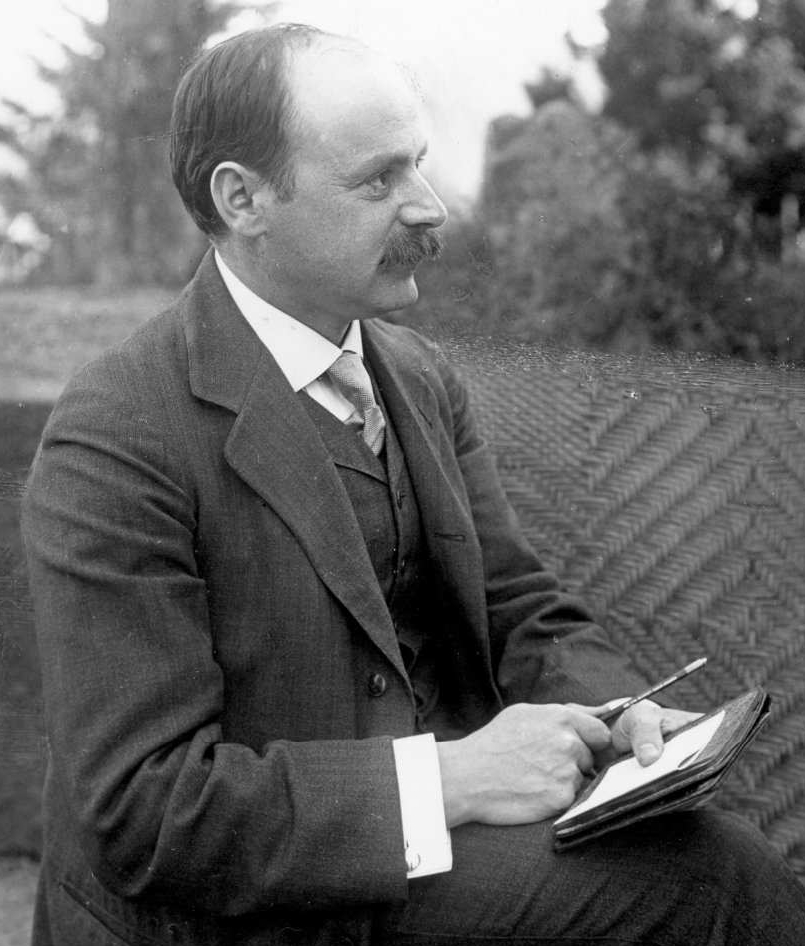

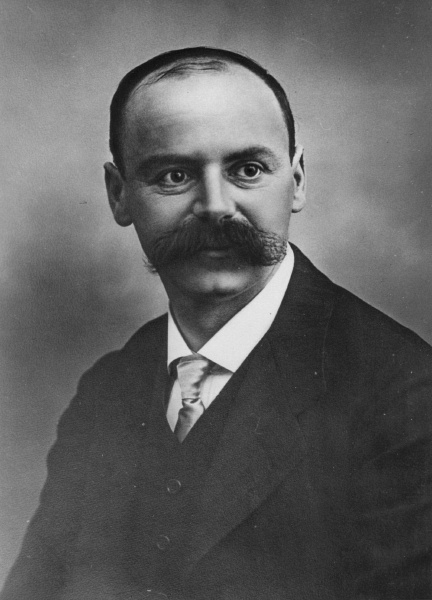




Biography and historical context
Schwarzschild published his solution in 1916 while serving during the First World War. He was active as both a theoretical scientist and an observational astronomer. His work arrived soon after Einstein presented the field equations in 1915 and remains notable for being the first exact analytic solution. Schwarzschild died in 1916 from an illness contracted while on military service; his early death limited further contributions but his 1916 papers had lasting influence.
The Schwarzschild solution and metric
In standard spherical coordinates (t, r, θ, φ) the Schwarzschild metric for the exterior of a static, spherically symmetric mass can be written in familiar shorthand as a spacetime interval:
ds^2 = -c^2(1 - r_s/r) dt^2 + (1 - r_s/r)^{-1} dr^2 + r^2 dθ^2 + r^2 sin^2θ dφ^2.
Here c denotes the speed of light, r is the radial coordinate, t is the coordinate time, and r_s is the Schwarzschild scale associated with the mass. The metric describes the vacuum region outside a spherical mass in the idealized nonrotating, uncharged case.
Physical meaning and geodesics
The metric separates time, radial and angular parts in a way that makes several physical effects explicit. The factor multiplying dt^2 encodes gravitational time dilation: clocks deeper in the gravitational potential run more slowly relative to distant clocks. Radial distances and light travel times are modified by the reciprocal factor (1 - r_s/r)^{-1}. Test particles and light follow geodesics determined by this geometry; their motion yields observable effects such as the bending of light and perihelion advance of planetary orbits when applied to astrophysical systems.
Schwarzschild radius and horizon
- The Schwarzschild radius r_s defines a characteristic scale: formally, the factor (1 - r_s/r) vanishes at r = r_s. In the idealized solution this surface corresponds to an event horizon for sufficiently compact masses and is central to the modern notion of a black hole.
- For r > r_s the metric describes the exterior vacuum; the apparent singularity at r = r_s is a coordinate singularity in Schwarzschild coordinates and can be removed by passing to other coordinate systems (for example Kruskal–Szekeres coordinates introduced later by other researchers).
- At r = 0 the solution indicates a true curvature singularity where classical general relativity ceases to give a physical description without further extension or quantum considerations.
Extensions, applications and legacy
The Schwarzschild metric is a fundamental reference model in relativistic astrophysics. It is used as a first approximation for nonrotating stars, compact objects and as a pedagogical example in studies of gravitational redshift, light deflection and orbital dynamics. More general solutions — such as the Kerr metric for rotating masses or the Reissner–Nordström metric for charged masses — extend Schwarzschild's idealized case. Detailed discussions of coordinate choices and radial definitions can be found in technical reviews of radial coordinates and horizon structure.
Further reading and resources
For historical background and access to primary literature see archives and compilations of Schwarzschild's papers on his publications. Introductory expositions and lecture notes provide derivations and physical interpretation of the Schwarzschild radius and the metric. Reviews of observational implications and modern astrophysical applications are available in textbooks and survey articles that treat Einstein's equations and classical tests of relativity related to electromagnetic and magnetic phenomena.
Further technical discussion of geodesic motion, conserved quantities and perturbations appears in specialized monographs and review articles; educational portals offer visualizations and step-by-step derivations about Schwarzschild, with supplementary notes on units and constants used in relativity and observational context for compact objects in astronomy. For a focused mathematical introduction see sources that treat Einstein's field equations and the original derivation of the solution, and materials that explain coordinate choices and extension methods for the gravitational field.
Related articles
Author
AlegsaOnline.com Karl Schwarzschild: Life, Schwarzschild Solution, and Legacy Leandro Alegsa
URL: https://en.alegsaonline.com/art/123334
Sources
- zelmanov.ptep-online.com : Biography of Karl Schwarzschild
- arxiv.org : arxiv.org
- Karl Schwarzschild