
Karl von Frisch: Pioneer of Bee Communication and Sensory Biology
Karl von Frisch (1886–1982), Austrian ethologist who decoded the honey bee waggle dance, showed bees perceive color and polarized light, and shared the 1973 Nobel Prize for work on animal behavior.
Overview
Karl Ritter von Frisch (20 November 1886 – 12 June 1982) was an Austrian zoologist and ethologist whose experimental studies of insect senses and communication helped establish modern behavioral biology. He is best known for decoding the honey bee waggle dance and for showing how bees use visual and olfactory cues to navigate and find food. For these and related discoveries he shared the Nobel Prize in Physiology or Medicine in 1973 with Konrad Lorenz and Niko Tinbergen.
Image gallery
7 Images
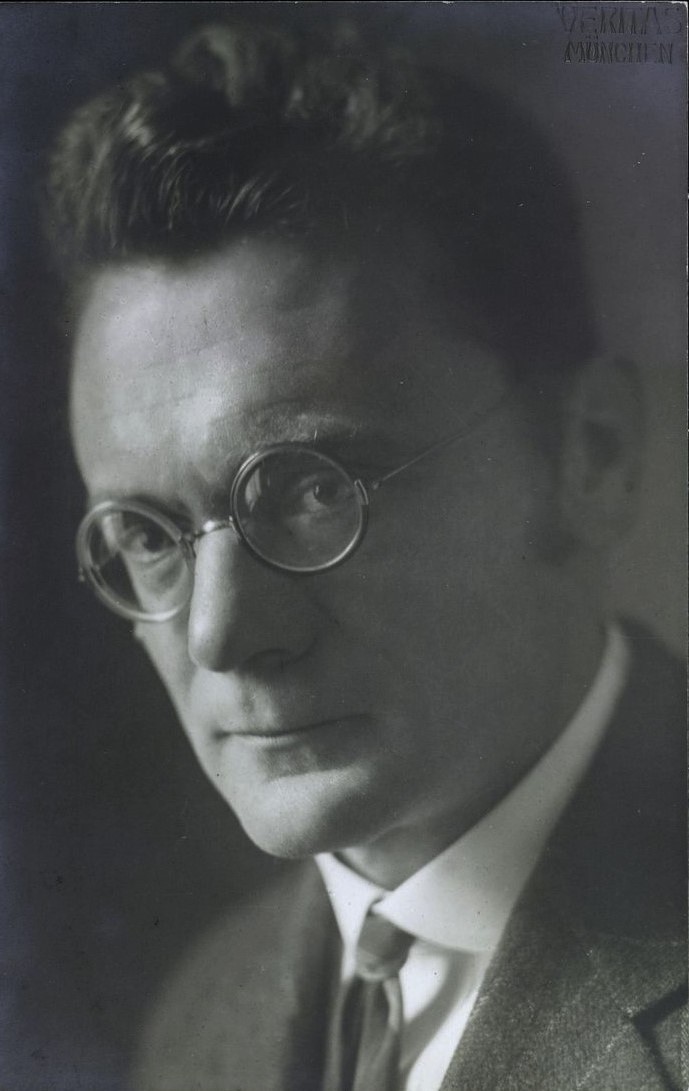


Early life and career
Von Frisch trained in zoology and physiology and carried out field and laboratory studies that combined naturalistic observation with carefully controlled experiments. His work emphasized measurable behavior and reproducible methods. Although his research focused most famously on the European honey bee, his approaches influenced studies across animal behavior and sensory physiology.
Research methods
Von Frisch used simple but rigorous techniques: establishing controlled feeding stations at known distances and bearings, marking individual foragers to follow their behavior, and manipulating light or scent conditions to test hypotheses. He separated potential cues (odor, visual direction, dance movement) to determine which signals carried spatial information. These methodological choices helped demonstrate that dance movements, not only scent traces, provided a reliable map to resources.
The waggle dance
Von Frisch translated the meaning of the waggle dance, the patterned movements performed by returning foragers inside the hive. He showed that the angle of the waggle run relative to the vertical corresponds to the angle between the food source and the sun, and that the duration of the waggle encodes distance. While scent helps recruits identify the type of flower and confirm the source, the dance itself transmits directional and distance information so that nestmates can locate nectar and pollen sources they have not previously visited.
Sensory discoveries
Beyond dance communication, von Frisch demonstrated several sensory capabilities in bees: discrimination of colors, sensitivity to patterns of polarized light in the sky used for orientation, and keen olfactory perception to detect floral scents. These findings established that insects possess sophisticated sensory and navigational systems that support complex foraging strategies.
Reception, debate and confirmation
When first proposed, von Frisch’s interpretation of the waggle dance met skepticism because it implied a symbolic spatial code in an insect. Over subsequent decades, researchers refined experimental controls and replicated key demonstrations under varied conditions. The essential conclusions about dance language and bee sensory abilities became widely accepted, and later studies using modern techniques have confirmed and extended his insights.
Legacy and influence
Von Frisch’s work had broad implications for ecology, agriculture and conservation: understanding how bees communicate locations of floral resources informs pollination biology and the management of pollinator services. His experimental style—combining careful field observation with hypothesis-driven laboratory tests—became a model for ethology and behavioral ecology. The waggle dance remains a textbook example of animal communication and collective information use.
Selected themes and notable facts
- Communication: The waggle dance conveys both direction relative to the sun and distance information by duration.
- Sensory biology: Bees perceive color, polarized light patterns, and complex floral scents.
- Methods: Controlled feeding stations, marked individuals and manipulations of light and odor were central tools.
- Awards: Shared the 1973 Nobel Prize in recognition of foundational discoveries in animal behavior.
Von Frisch’s careful combination of field realism and experimental control established a legacy that endures in studies of animal communication, cognition and the biology of pollinators.
Questions and answers
Q: Who was Karl von Frisch?
A: Karl von Frisch was an Austrian ethologist.
Q: What was Karl von Frisch's contribution to the study of honey bees?
A: Karl von Frisch studied the communication and senses of honey bees, and was the first to translate the meaning of the waggle dance.
Q: What did honey bees indicate through the waggle dance?
A: Honey bees indicated where they have found nectar and other details through the waggle dance.
Q: What did Karl von Frisch's theory regarding the waggle dance indicate?
A: Karl von Frisch's theory regarding the waggle dance indicated how honey bees communicate with each other regarding the location of nectar sources.
Q: Was Karl von Frisch's theory widely accepted at the time?
A: No, Karl von Frisch's theory was disputed by other scientists and greeted with skepticism at the time.
Q: Was Karl von Frisch recognized for his work on honey bees?
A: Yes, Karl von Frisch received the Nobel Prize in Physiology or Medicine in 1973, jointly with Niko Tinbergen and Konrad Lorenz.
Q: Has Karl von Frisch's theory about the waggle dance been proven correct?
A: Yes, only recently was it definitively proved to be an accurate theoretical analysis.
Related articles
Author
AlegsaOnline.com Karl von Frisch: Pioneer of Bee Communication and Sensory Biology Leandro Alegsa
URL: https://en.alegsaonline.com/art/123338