
Bleach (chemical agents for whitening, stain removal, and disinfection)
Bleach describes chemicals that remove or decolorize stains and can disinfect. Common modern types are chlorine- and oxygen-based; historical sulfur methods are older. Covers chemistry, uses, and safety.
Overview
Bleach is a broad term for substances used to remove color from materials, to restore whiteness, or to destroy microorganisms. Many bleaching agents act by oxidizing colored molecules so that they no longer absorb visible light, though some industrial bleaches work by reduction or other chemical reactions. The category encompasses a variety of chemical groups with different strengths, selectivities, and hazards.
Image gallery
3 Images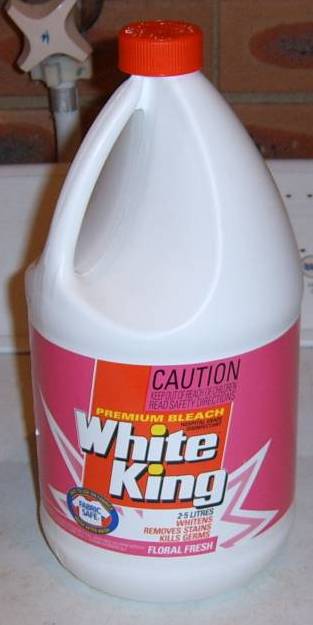


Types and typical chemicals
Modern bleaches are commonly grouped by their active chemistry. Two major families are chlorine-based bleaches and oxygen-based bleaches. Historically, sulfur-based techniques also played an important role in traditional methods of whitening fabrics and papers, and continue to have niche uses (sulfur-based bleaching).
- Chlorine-based: examples include household sodium hypochlorite and calcium hypochlorite; effective and fast-acting for whitening and disinfection.
- Oxygen-based: include hydrogen peroxide, peracids, and peroxide-generating compounds; generally milder and more compatible with colored fabrics.
- Reducing bleaches: used in some textile and photographic processes where reduction rather than oxidation is required.
How bleaching works
Most common bleaches remove or alter chromophores — the molecular structures that produce color — through chemical reactions. Oxidizing bleaches break double bonds or add oxygen, changing light absorption. Because strong oxidizers can also damage fibers and react with organic matter, formulators balance concentration, pH, and temperature to achieve the desired effect without excessive material degradation.
Uses and importance
Bleaches are used across household, industrial, and municipal settings: laundry and textile processing, paper and pulp manufacturing, water and wastewater treatment, surface disinfection in healthcare, and odor control. Many bleaches exhibit biocidal effects and are used specifically for sanitation purposes; refer to their disinfectant properties when selecting a product.
Safety, handling, and environmental notes
Bleaching chemicals can be corrosive, irritating, or toxic in concentrated form and can produce hazardous gases if mixed with incompatible substances (for example, acids or ammonia). They may also form persistent halogenated byproducts in the environment when chlorinated compounds react with organic matter. Proper storage, dilution, appropriate personal protective equipment, and avoiding prohibited mixtures are standard precautions.
Distinctions and practical guidance
Not all stain removal is achieved by bleaching; some stains are better removed by enzymatic cleaners or solvents. Choice of bleach depends on the substrate, colorfastness, regulatory requirements, and whether disinfection is needed. For more technical summaries and product comparisons see additional resources: chemical families, chlorine bleaches, oxygen bleaches, historical sulfur methods, and disinfection guidance.
Related articles
Author
AlegsaOnline.com Bleach (chemical agents for whitening, stain removal, and disinfection) Leandro Alegsa
URL: https://en.alegsaonline.com/art/12134