
Boiling tube (laboratory glassware)
A boiling tube is a larger, heat-resistant glass tube used in laboratories to heat, boil, and carry out reactions on larger sample volumes. Often made of borosilicate (Pyrex) glass, it resists thermal stress.
A boiling tube is a simple piece of laboratory glassware: a tubular vessel, larger in diameter and length than a standard test tube, designed to tolerate strong heating and to allow liquids to boil without splashing or overflowing. Its open top and rounded base make it convenient for direct heating over a flame or in a water bath when moderate to high temperatures are required.
Image gallery
5 Images


Design and materials
Typical boiling tubes are made from borosilicate glass, commonly sold under the trade name Pyrex, which offers improved resistance to thermal shock compared with ordinary glass. They are thicker and larger than test tubes so that larger volumes can be handled and vapour formation is less likely to cause violent ejection of liquid. The term "hard glass tube" is sometimes used in older texts to describe the same item.
Uses and examples
Boiling tubes are used whenever a larger amount of liquid must be heated but a full flask or beaker is unnecessary. Typical tasks include boiling small batches of solvent for distillation experiments, heating reaction mixtures, carrying out qualitative tests that produce gases, and preparing samples prior to further analysis. When a greater larger volume is required than a test tube can safely contain, a boiling tube is a common substitute.
Practical handling and safety
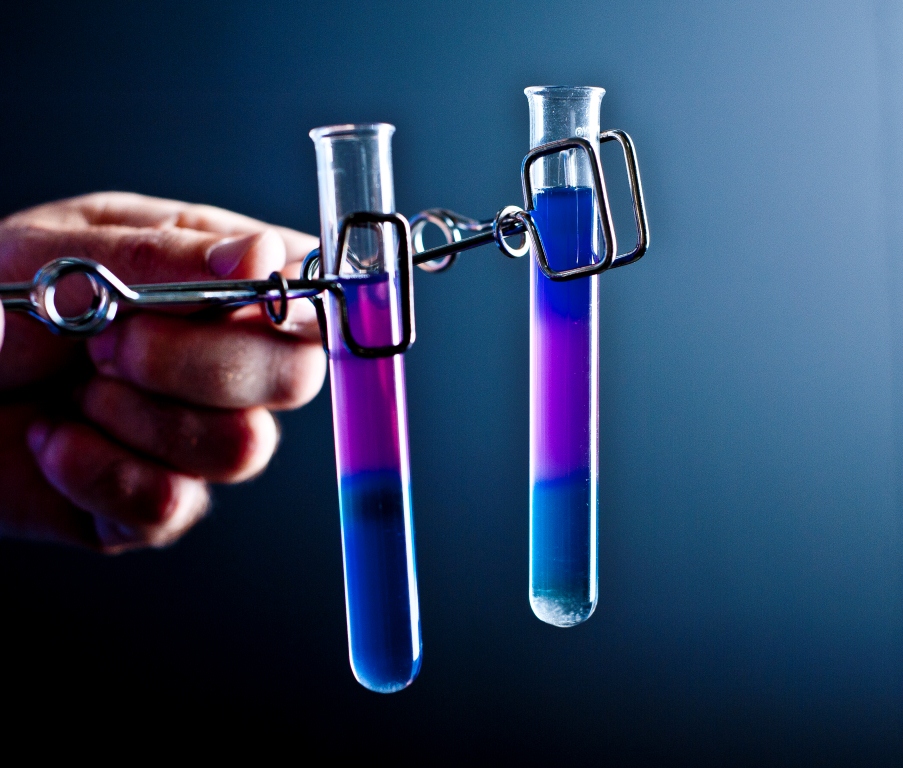
- Always heat boiling tubes with a clamp or in a test-tube holder; support prevents burns and breakage.
- Use boiling chips or magnetic stirring to reduce "bumping"—sudden, vigorous boiling that can expel contents.
- Point the open end away from people and work surfaces when heating to avoid splashes.
- Avoid rapid temperature changes; even borosilicate glass can crack if cooled too quickly.
How it differs from related glassware
Compared with a standard test tube, a boiling tube is simply larger and more robust for heating. It differs from a boiling flask (round-bottom flask) in shape and intended use: flasks are better for even heating and reflux, while boiling tubes are for small-scale, direct heating and quick qualitative work. Boiling tubes are not graduated for precise volume measurement.
Because of their simplicity, boiling tubes remain common in teaching laboratories and fieldwork where portability and ease of use matter. Their low cost and compatibility with standard holders and clamps make them a practical choice whenever moderate quantities need to be heated safely and visibly.
Questions and answers
Q: What is a boiling tube?
A: A boiling tube is a large tube made of glass, used in the laboratory to strongly heat substances.
Q: How is a boiling tube different from a test tube?
A: A boiling tube is larger in size than a test tube, allowing substances to boil freely inside. Boiling tubes can also be used as a replacement for test tubes when a larger volume is desired.
Q: Why are boiling tubes commonly made from Pyrex glass?
A: Boiling tubes are commonly made from Pyrex glass because it can tolerate high temperatures.
Q: What is the purpose of a boiling tube in the laboratory?
A: The purpose of a boiling tube is to strongly heat substances.
Q: Can a boiling tube be used for a small amount of substance?
A: Yes, a boiling tube can be used for a small amount of substance.
Q: What is another name for a boiling tube?
A: Another name for a boiling tube is hard glass tube.
Q: What is the benefit of using a boiling tube instead of a test tube?
A: The benefit of using a boiling tube is that it allows for a larger volume of substance to be used and the substance can boil freely inside.
Related articles
Author
AlegsaOnline.com Boiling tube (laboratory glassware) Leandro Alegsa
URL: https://en.alegsaonline.com/art/12718