
Geoffrey of Monmouth — medieval chronicler and shaper of Arthurian legend
12th-century cleric and author whose Historia Regum Britanniae shaped the medieval Arthurian tradition; influential, controversial, and treated by modern scholars as largely literary rather than strictly historical.
Overview
Geoffrey of Monmouth (c. 1095–c. 1155) was a cleric and writer active in twelfth‑century Britain. He is commonly identified as a clergyman and a writer, probably of Welsh background and associated with ecclesiastical circles on the Welsh borders. Late in life he was recorded as bishop of St Asaph (a date in 1152 is often given), though documentary evidence about his episcopate is limited and sometimes uncertain.
Image gallery
3 Images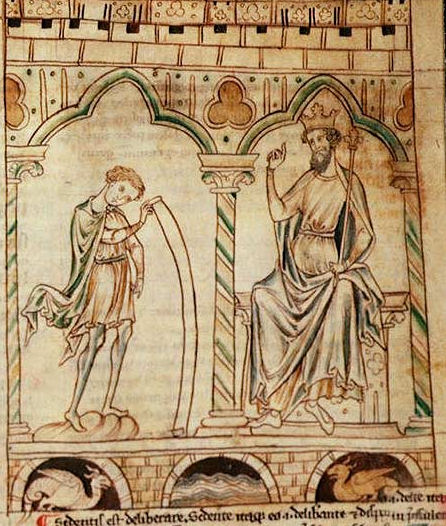


Major works
Geoffrey's most famous composition is the Latin chronicle Historia Regum Britanniae (The History of the Kings of Britain), produced around 1136. Written in medieval Latin, it offers a continuous narrative of British rulers from mythical origins through to the early Anglo‑Saxon period. Geoffrey also wrote shorter pieces, most notably the poetic Vita Merlini, which expands on prophetic and magical elements surrounding the figure of Merlin.
Content and claims
The Historia assembles legends, genealogies and imaginative episodes into a sweeping account that introduced or popularized many motifs later central to Arthurian romance. Geoffrey's narrative gave prominence to King Arthur and provided material that later authors linked with places and institutions such as Camelot and the Knights of the Round Table. Geoffrey presented his work as derived from older sources—he claimed to have translated or used a vernacular book in the British tongue—but modern scholars debate how much derives from earlier tradition and how much reflects Geoffrey's own invention and literary reworking.
Method and style
Rather than producing critical history in the modern sense, Geoffrey compiled a narrative that mixes saga, pseudo‑history and moral exempla. His Latin is direct and readable for its time, and he favoured dramatic episodes, dynastic frameworks and providential interpretation. This approach made his text congenial to medieval audiences who sought grand national narratives and moral instruction as well as entertainment.
Reception and criticism
The Historia quickly became influential: it was translated, adapted and cited by medieval writers across Britain and continental Europe. Some contemporaries and near‑contemporary scholars applauded it as a national chronicle, while others were sceptical. By the late twelfth century critics such as William of Newburgh argued that many of Geoffrey's tales—especially those about Arthur and his predecessors—were invented or heavily embellished rather than reliable history.
Influence and legacy
Despite questions over historicity, Geoffrey's work exercised an enormous cultural influence. It provided a structural outline and many narrative elements that later writers remodelled: authors such as Wace and Layamon adapted his material into vernacular verse, and continental romances and chronicles incorporated its themes. The resonance of his account extended into later literary culture; for example, Shakespeare drew on the same body of British legendary material when dramatizing stories like King Lear and Cymbeline.
Manuscripts, translations and scholarship
The Historia survives in numerous medieval manuscripts and in many medieval translations and adaptations. Modern scholarship treats it as a foundational literary text for the Arthurian tradition and a useful source for studying medieval ideas about kingship, ethnicity and national pasts, while also emphasising caution about using it for factual reconstruction of early British history. Critical editions and translations are widely available and continue to provoke debate about Geoffrey's sources, methods and intentions.
Selected works and facts
- Historia Regum Britanniae (c. 1136) — Geoffrey's principal prose chronicle.
- Vita Merlini — a shorter Latin poem focusing on Merlin and prophetic material.
- Geoffrey's account helped standardize many Arthurian motifs that became central to medieval romance and later literature.
- Scholars continue to discuss the balance in his work between transmitted tradition and literary invention.
For a general introduction to Geoffrey's life, work and the debates his writings have provoked, see contextual resources on his clerical role (clergy), his career as an author (author profile), his probable Welsh associations (Welsh origins), the St Asaph bishopric (St Asaph) and studies of the Arthurian material (Arthur, Camelot, the Round Table) as well as discussions of later reception in drama and poetry (King Lear, Cymbeline).
Related articles
Author
AlegsaOnline.com Geoffrey of Monmouth — medieval chronicler and shaper of Arthurian legend Leandro Alegsa
URL: https://en.alegsaonline.com/art/119509