
Bolingbroke Castle
Ruined medieval castle at Old Bolingbroke, Lincolnshire, best known as the birthplace of Henry IV and for its surviving stone walls and towers that mark a late medieval stronghold.
Overview
Bolingbroke Castle stands in the village of Old Bolingbroke in Lincolnshire. Once a fortified residence of local lords and later associated with the Lancastrian family, the site survives as a recognizable ruin. Its most widely noted claim to fame is that it was the birthplace of Henry IV, a fact that gave the king his familiar byname, "Henry Bolingbroke."
Image gallery
3 Images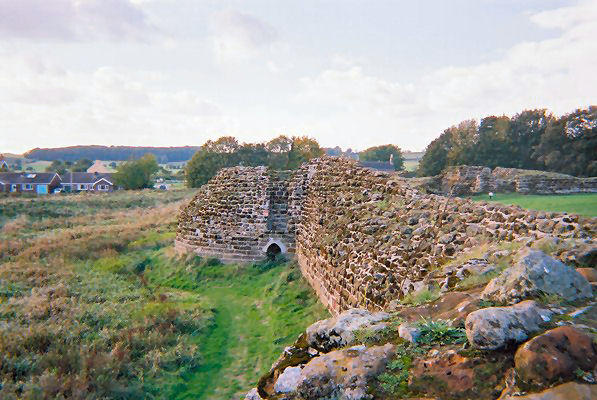


Characteristics and remains
The castle was a medieval stone stronghold. Today visitors encounter fragments of curtain wall, a gatehouse and masonry that indicate the footprint of domestic buildings and defensive works. The remaining fabric allows a sense of the original layout without restoring the whole site to a complete structure.
- Material: predominantly stone masonry.
- Surviving elements: portions of wall and tower bases, gate features.
- Setting: located within agricultural landscape of Lincolnshire.
History and development
Established in the medieval period, Bolingbroke Castle functioned both as a fortification and a noble household. Over centuries its military importance declined and the buildings fell into disuse. Like many English castles, it moved from active defensive use to ruination through neglect and the changing needs of landowners.
Birthplace of a king and cultural role
The castle is best known as the birthplace of the future king who became known by the place-name. That connection with the Lancastrian dynasty has given the site a prominent place in English historical memory. The association appears in historical accounts and has been noted in later cultural treatments of the period.
Preservation and visiting
As a ruin, Bolingbroke Castle is of interest to local history and archaeology. Conservation efforts focus on stabilizing surviving masonry and interpreting the site for visitors. For practical visitor information and local context see resources linked for Lincolnshire at Old Bolingbroke, Lincolnshire.
Related articles
Author
AlegsaOnline.com Bolingbroke Castle Leandro Alegsa
URL: https://en.alegsaonline.com/art/12767