
Elizabeth Woodville: queen consort, mother of the Tudors, and controversial political figure
Elizabeth Woodville (c.1437–c.1492) was queen consort to Edward IV. Her secret marriage, family patronage, and the fate of her sons made her a central figure in the Wars of the Roses and in Tudor dynastic origins.
Elizabeth Woodville, born Elizabeth Wydeville around 1437 at Grafton Regis in Northamptonshire, became one of the most discussed women of fifteenth-century England. As the wife of King Edward IV she was queen consort during a turbulent phase of the Wars of the Roses. As the mother of Edward V and of Elizabeth of York, who later married Henry Tudor, she linked Yorkist blood to the new Tudor dynasty. Her life illuminates the political importance of marriage, the workings of patronage, and the precariousness of royal succession in late medieval England.
Image gallery
3 Images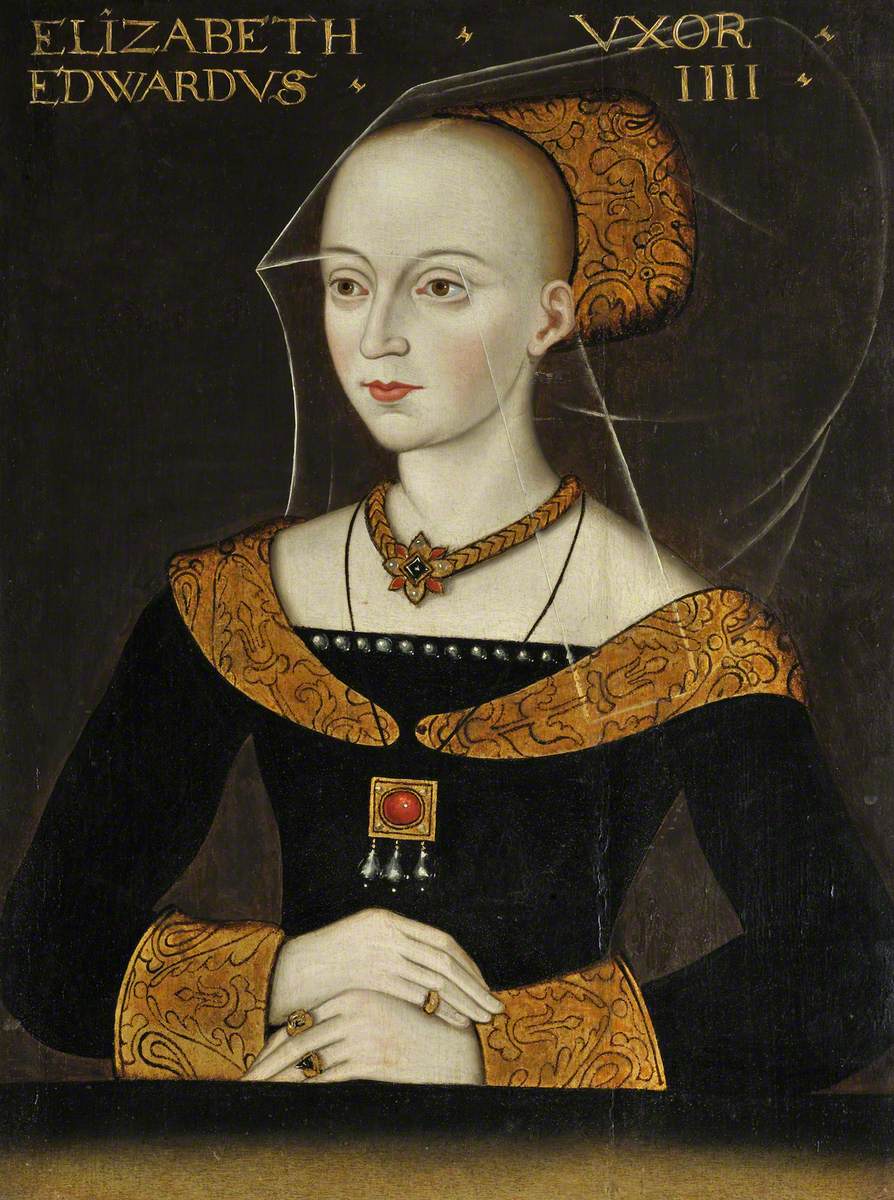


Family background and early life
Elizabeth was the eldest surviving daughter of Sir Richard Woodville and Jacquetta of Luxembourg. Jacquetta had been connected to the higher nobility through a previous marriage and a continental upbringing; her remarriage to Sir Richard, a knight of lesser rank, was regarded as socially unequal and attracted attention. The Woodvilles formed a large extended household, and Elizabeth’s early marriage to a member of the gentry, Lord Grey, produced two sons and placed her in the class of widowed gentlewomen before she met Edward. These circumstances—her continental maternal connections, her status as a widow with children, and the size of her family—shaped contemporary perceptions of her suitability for a royal marriage.
Secret marriage and queenship
The marriage between Elizabeth and Edward IV was contracted in secret in 1464. The union surprised many contemporaries because it did not follow the diplomatic expectations of a sovereign seeking a foreign alliance or a match that would unite powerful noble houses. Once revealed, the marriage produced a swift elevation in status for Elizabeth and her relatives: Woodvilles were married into noble families, received offices, and benefited materially from royal favour. That rapid rise provoked resentment among established magnates who regarded the Woodvilles as upstarts.
Rivalry with Warwick and exile
Central to the political turbulence that followed was the enmity between the crown and Richard Neville, the Earl of Warwick. Warwick had significant influence over Edward’s early reign and had preferred a foreign marriage to secure alliances. The concentration of Woodville influence at court helped to widen the breach between Warwick and the king, leading at times to open rebellion. During one reversal of fortune, when the Lancastrian claimant Henry VI briefly regained the throne, Elizabeth sought sanctuary at Westminster Abbey. Sanctuary was a customary refuge that provided protection from arrest within church precincts, and while there she gave birth to her eldest surviving son, later styled Edward V.
Children, dynastic importance and the contested succession
Elizabeth and Edward had a large family by the standards of the day, commonly counted as ten children, though the exact number sometimes varies in different accounts. Chief among them were their eldest son, who became known as Edward V, and their eldest surviving daughter, Elizabeth of York, who was later married to Henry VII. Several other children made advantageous marriages or entered public life and served as links between the royal household and the nobility. The sudden death of Edward IV in 1483 left a fragile succession: Edward V, still a boy, was placed under the protection of his uncle Richard, Duke of Gloucester, who assumed power as lord protector and shortly thereafter declared himself king. The two young princes were lodged in the royal residence known as the Tower of London, and their subsequent disappearance from public view became one of the most enduring controversies of the age. Contemporary and later observers accused Richard III of ordering their murder; modern historians debate the evidence, acknowledging that the princes’ fate remains uncertain and politically charged.
Later years and reconciliation with the new dynasty
After Richard III’s defeat in 1485 and the accession of Henry VII, who consolidated his claim by marrying Elizabeth’s daughter, Elizabeth Woodville’s political fortunes altered. The marriage of Elizabeth of York to Henry VII was an important dynastic settlement that fused rival claims and helped to stabilise the kingdom after decades of factional warfare. Though no longer at the centre of royal government, Elizabeth Woodville retained status as a dowager figure and lived out her final years away from court politics. She died in the early 1490s, her later life marked by a mixture of retirement and occasional petitions to the crown for the welfare of her family.
Patronage, reputation and historical assessment
As queen, Elizabeth engaged in patronage typical of high-status women of her time: she supported religious houses, made charitable gifts, and participated in the ceremonial life of the court. Critics in her own age and in later centuries emphasised the rapid promotion of her relatives and accused her of nepotism; defenders have argued that she acted as any queen might to protect and advance her children in an era when kinship ties were political power. Historians have thus offered differing portraits: a shrewd and ambitious matriarch who secured openings for her family, or a figure constrained by the limited formal powers available to queens but influential through networks of marriage and favour.
Legacy and cultural memory
Elizabeth Woodville’s life has been the subject of sustained historical interest because it touches on central themes of late medieval England: contested succession, the role of women at court, and the use of marriage as political strategy. Through her daughter’s marriage to Henry VII she became an ancestor to the Tudor dynasty and, by extension, to subsequent English monarchs who traced descent through the Tudor line. Her image has been adapted in literary and popular portrayals, often emphasising romance, scandal or court intrigue. Modern scholarship tends to weigh sources carefully, recognising the partisan nature of contemporary chronicles and the complex motives of actors in a deeply factional political culture.
Further notes
Because many primary sources from the period are partisan and fragmentary, some aspects of Elizabeth Woodville’s life—particularly the precise number and fate of all her children, and the details of court transactions—remain debated. Her story is frequently used in histories of the Wars of the Roses to exemplify how personal alliances and family networks shaped the contest for power in late medieval England.
If readers wish to follow individual threads — the reign of Edward IV, the short rule of Edward V, the marriage of Elizabeth of York to Henry VII, the temporary readeption of Henry VI, sanctuary at Westminster Abbey, the actions of Richard, Duke of Gloucester, or the significance of the Tower of London in dynastic politics — these topics each connect back to the central role Elizabeth Woodville occupied during a decisive generation of English history.
Related articles
Author
AlegsaOnline.com Elizabeth Woodville: queen consort, mother of the Tudors, and controversial political figure Leandro Alegsa
URL: https://en.alegsaonline.com/art/118339