
Edward V of England
King of England for a short period in 1483; one of the "Princes in the Tower" who disappeared and whose fate remains a subject of historical debate.
Overview
Edward V (born 2 November 1470) was the elder son of King Edward IV and Elizabeth Woodville. He became king on 9 April 1483 at the age of twelve but was never crowned. Within weeks his reign ended when his uncle, Richard, Duke of Gloucester, assumed power and was proclaimed King Richard III. Edward's subsequent disappearance from the Tower of London and presumed murder remain among the best-known mysteries of late medieval England.
Image gallery
5 Images

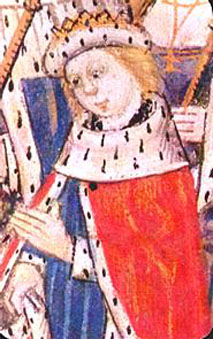


Early life and accession
Edward spent his childhood in an influential Yorkist royal household. On his father's death in April 1483 he succeeded as monarch, but as a minor he was placed under the care of a council and the Duke of Gloucester was named Lord Protector. The court atmosphere grew tense, with factional rivalries between relatives of Edward's mother and powerful nobles.
Confinement and disappearance
Before his intended journey to his coronation, Edward and his younger brother Richard, Duke of York, were lodged in the Tower of London—then used as both a royal residence and secure fortress. The two boys were seen less and less in public. By late summer or autumn of 1483 they had vanished from contemporary record. No contemporaneous account gives a conclusive explanation; later chroniclers and historians have treated their deaths as probable, but not proven.
Theories, evidence and legacy
Several explanations have been proposed: that Richard III ordered their deaths, that other nobles such as the Duke of Buckingham were responsible, or that rival claimants or foreign agents were involved. In 1674 two small skeletons were found beneath a staircase in the Tower and reburied in Westminster Abbey; modern scientific testing has not definitively identified them as the princes. The story shaped Tudor propaganda and later literature: Shakespeare's portrayal of Richard III as their murderer strongly influenced public memory.
Notable facts
- Edward V's reign lasted only a few months and he was never crowned.
- Parliament passed the Titulus Regius, which declared Edward IV's children illegitimate; this decision was later annulled when Henry VII took the throne.
- The disappearance of the "Princes in the Tower" remains a major unresolved question in English medieval history.
Related articles
Author
AlegsaOnline.com Edward V of England Leandro Alegsa
URL: https://en.alegsaonline.com/art/118174
Sources
- englishmonarchs.co.uk : "Edward V - the Princes in the Tower"
- bbc.co.uk : "BBC - History - Edward V (c.1470 - 1483)"
- royal.gov.uk : "History of the Monarchy > The Yorkists > Edward V"
- middle-ages.org.uk : "Edward V - Princes in the Tower"
- hrp.org.uk : "Historic Royal Palaces > Home > Tower of London > History and stories > Palace people > Prisoners > Meet the prisoners > Prisoners > Edward V"