
Ed Miliband — British Labour politician and former party leader
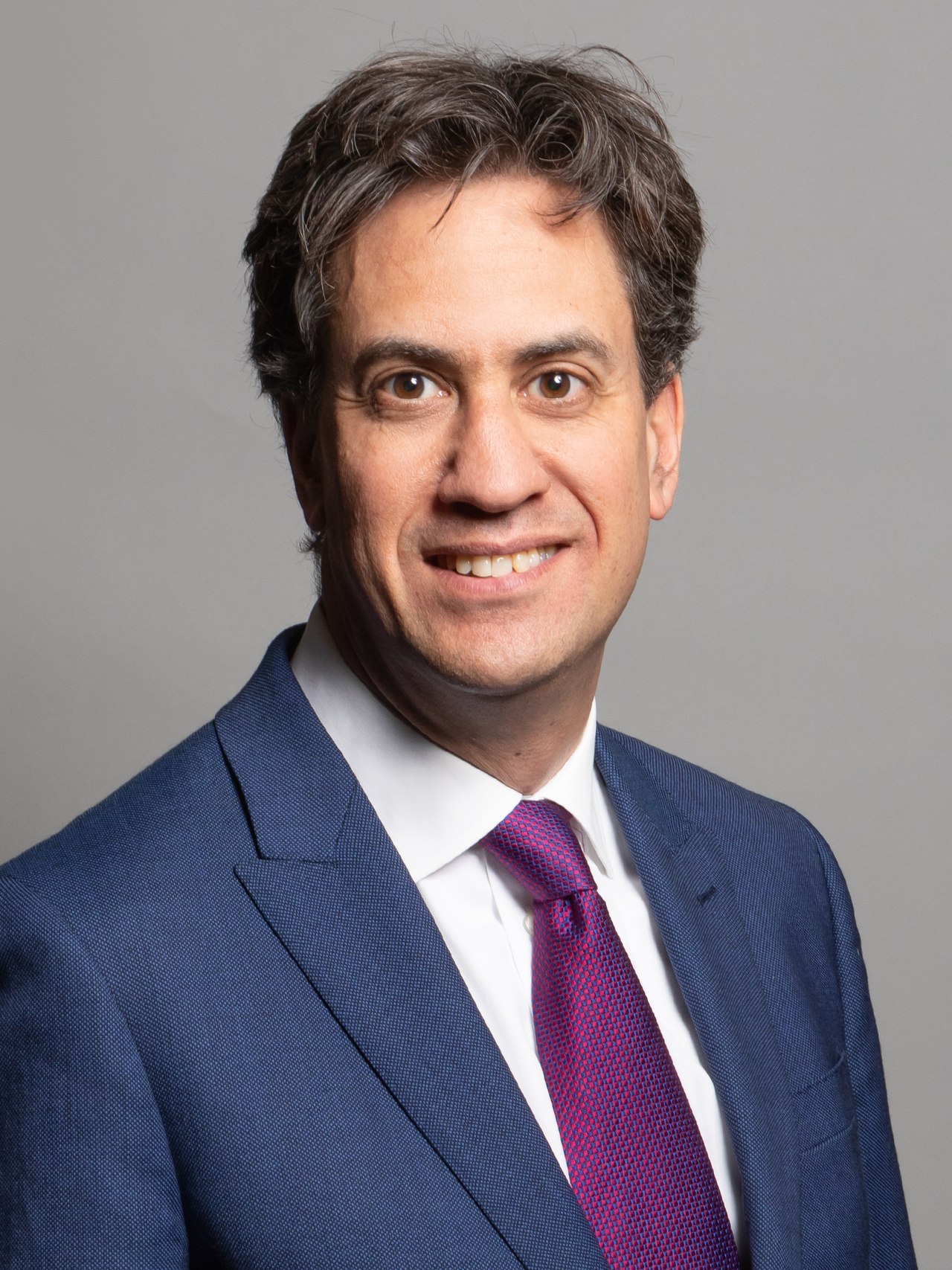
Ed Miliband (born 1969) is a British Labour politician who served as Leader of the Labour Party and Leader of the Opposition (2010–2015). He has been MP for Doncaster North since 2005 and was Energy Secretary 2008–2010.
Overview
Edward Samuel "Ed" Miliband (born 24 December 1969) is a British Labour Party politician who served as Leader of the Labour Party and Leader of the Opposition from 2010 to 2015. He has represented the constituency of Doncaster North in the House of Commons since he was first elected in 2005. Before becoming leader he held government office, most notably as Secretary of State for Energy and Climate Change between 2008 and 2010. Miliband is known for emphasising economic fairness, action on climate change and social justice.
Image gallery
10 Images




Early life and education
Miliband was born in University College Hospital, London, and raised in the Primrose Hill area. He is the younger son of emigrants from Poland, and his family background is often noted for its intellectual and political profile: his father, Ralph Miliband, was a well-known political theorist. Ed Miliband studied at the London School of Economics, where he completed postgraduate work in economics and social policy. His education and family shaped an early interest in public policy and political debate.
Early career and entry to Parliament
After university Miliband worked as a researcher and adviser to senior figures in the Labour Party, gaining experience in policy development and political strategy. He was selected as the Labour candidate for Doncaster North and won the seat at the 2005 general election. In Parliament he served on committees and in frontbench roles before being brought into government in the later years of the Labour administration.
Ministerial roles (2008–2010)
In the government that followed Gordon Brown's leadership, Miliband was appointed to a cabinet-level post as Secretary of State for Energy and Climate Change. In that role he was responsible for policies addressing energy security, emissions reduction and measures designed to encourage investment in low-carbon energy. Climate and energy policy during this period became a more prominent element of mainstream political debate, and his portfolio reflected that shift.
Leadership of the Labour Party (2010–2015)
Following Labour's 2010 electoral defeat, Miliband stood in the contest to succeed the outgoing leader and narrowly defeated his older brother to become leader of the party. His leadership programme emphasised tackling inequality, strengthening public services and pursuing environmentally sustainable economic policy. He sought to broaden Labour's appeal while arguing for redistribution and higher ethical standards in public life. The party did not regain power under his leadership and he resigned after the 2015 general election.
Later parliamentary activity
After stepping down as leader, Miliband continued to serve as MP for Doncaster North. He has remained active in parliamentary debates and policy discussions, widely regarded as a prominent voice on energy and climate issues, as well as on questions of economic fairness and social policy. As a senior figure with experience in government and party leadership, he has also been a frequent commentator on Labour strategy and national politics.
Political positions and public profile
Miliband is associated with centre-left Labour politics, combining concern for redistribution with support for regulatory approaches to markets in selected areas such as energy. He supported continued UK membership of the European Union while leader of the party and has consistently highlighted the importance of tackling climate change. His public image combined policy-focused argument with efforts to present Labour as serious about competence in government.
Personal life
Miliband is married and has children. He comes from a family that is often referenced in discussions of British intellectual life and politics. His brother, David Miliband, is also a prominent public figure and former foreign secretary; the two brothers competed in the 2010 Labour leadership election, which attracted wide public and media attention.
Electoral record and legacy
Ed Miliband has been re-elected repeatedly in Doncaster North since 2005. His period as Labour leader is often discussed in the context of the party's search for identity after the New Labour years and before subsequent leadership changes. Observers note his efforts to place climate and inequality near the centre of Labour's agenda and to argue for a distinct social democratic response to economic challenges.
Further reading and references
For more on Miliband's biography, political positions and parliamentary activity, see these reference pages and profiles:
- Profile: British politician
- Personal and political biography
- Labour Party history and structure
- Doncaster North constituency details
- Early life and birthplace
- London background and upbringing
- Family and heritage
- Intellectual influences
- Ralph Miliband: family background
- London School of Economics
- Academic focus: economics and policy
- Work as an adviser to Labour ministers
- Advising Gordon Brown and government roles
- Contested 2010 leadership election (David Miliband)
- Succession and Jeremy Corbyn
Related articles
Author
AlegsaOnline.com Ed Miliband — British Labour politician and former party leader Leandro Alegsa
URL: https://en.alegsaonline.com/art/118202
Sources
- bbc.com : "Ed Miliband is new Labour leader"